



A Monsoon of Two Minds
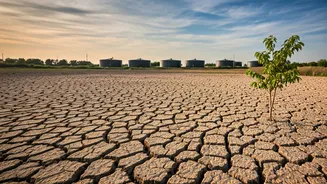
The single biggest factor for India's water health is the Southwest Monsoon. This year, the story is one of concern. The India Meteorological Department (IMD) has reported that June 2026 was one of the driest in over a century, ending with a rainfall
deficit of around 39-40%. Looking ahead, the forecast for July — typically the wettest and most crucial month for agriculture — is for "below-normal" rainfall. The IMD predicts rainfall could be less than 94% of the long-term average, citing the strengthening El Niño conditions as a primary cause. While a low-pressure system is expected to bring some much-needed rain in the first week or so of July, helping with crop sowing, the overall outlook for the month remains subdued.
The View From the Reservoirs
So, how does a weak start to the monsoon affect the country's savings account for water? According to the latest data from the Central Water Commission (CWC), the picture is mixed. As of mid-to-late June, the live storage in India's 166 major reservoirs was at about 28% of total capacity. While this is lower than the same period last year, it is notably above the 10-year average for this time of year, thanks to good rainfall in previous seasons. However, these national averages mask significant regional disparities. Reservoirs in Northern and Central India are in a relatively comfortable position, with storage levels higher than both last year and the long-term average.
Regional Disparities Bite Hard
The national comfort is not shared everywhere. Eastern and Southern India are feeling the pressure, with reservoir levels below both last year's figures and the normal seasonal average. This has created pockets of significant concern. In some regions, the lack of rain has led to widespread crop failures and a rapid depletion of local water bodies. The situation is particularly acute in some of India's biggest cities. Mumbai, for instance, saw its reservoir levels dip to below 7% of capacity in late June, forcing authorities to impose water cuts. This highlights a crucial point: for millions of urban residents, the national average means little when their local supply is dwindling.
The Urban Water Challenge
Cities like Delhi, Bengaluru, and Chennai have been grappling with acute water shortages, exposing the vulnerability of aging infrastructure. The problem is twofold: a demand-supply gap that is projected to widen significantly by 2030, and the physical loss of water through leaky pipes and inefficient systems. Furthermore, rapid urbanisation has often come at the cost of natural water bodies. Bengaluru, for example, is confirmed to have lost a vast majority of its lakes and ponds over the past few decades to built-up areas. Yet, solutions are within reach. Experts point to the massive potential of rainwater harvesting, restoring urban wetlands, and, crucially, treating and reusing wastewater to supplement supply for non-potable uses.
Beyond the Immediate Crisis
This year's monsoon deficit serves as another urgent reminder of India's long-term water challenges. The increasing frequency of extreme weather events, coupled with relentless groundwater extraction, means that simply hoping for a good monsoon is no longer a viable strategy. The path forward requires a systemic shift. This includes embracing a 'circular water economy' where wastewater is treated as a resource, implementing 'smart' water management in cities to cut down losses, and promoting agricultural practices that are less water-intensive. National initiatives like the Jal Shakti Abhiyan aim to push conservation and rainwater harvesting at the grassroots level, turning water management into a shared community responsibility.