






The Hidden Risk of Sharing Your Aadhaar
When you give a photocopy or even the original Aadhaar card for identity verification at a hotel, you are sharing more than just your name and address. Your complete 12-digit unique identity number is recorded. While hotels are required to verify guest
identities, the storage and handling of these documents can create risks. Recent warnings from bodies like the Future Crime Research Foundation (FCRF) highlight that this data can be exploited for identity theft, financial fraud, and other cybercrimes if it falls into the wrong hands. Many entities that ask for your Aadhaar may not be legally authorized to store the full number, making the casual sharing of this sensitive information a significant privacy concern.
What is a Masked Aadhaar?
A Masked Aadhaar is a version of your e-Aadhaar where the first eight digits of your Aadhaar number are hidden, typically replaced by 'XXXX-XXXX'. Only the last four digits remain visible. This document, provided by the Unique Identification Authority of India (UIDAI), still contains all other essential details for identity verification, including your name, address, photograph, and a scannable QR code. The key difference is that it prevents the disclosure of your full unique ID number, significantly reducing the risk of it being misused. It is a legally valid document digitally signed by UIDAI, designed specifically for situations where you need to prove your identity without revealing your complete Aadhaar number.
Why It's a Safer Choice for Hotels
Using a Masked Aadhaar for hotel check-ins strikes the perfect balance between compliance and privacy. The hotel can verify your identity using your name, photo, and the last four digits of the number, but they do not gain access to the full 12-digit number that could be used for more sensitive transactions. This aligns with the principle of data minimisation—sharing only the necessary information required for a specific purpose. UIDAI and various regulations encourage the use of Masked Aadhaar precisely for these kinds of interactions to protect citizens from potential fraud. Since the QR code remains scannable, establishments can still perform digital verification if needed, without ever storing your complete number.
How to Download Your Masked Aadhaar
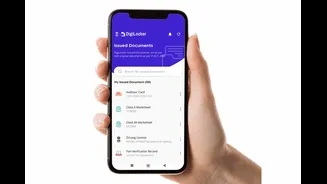
Getting your Masked Aadhaar is a straightforward process that you can do online in minutes. You will need the mobile number that is registered with your Aadhaar account to receive a One-Time Password (OTP). 1. Go to the official UIDAI portal (myaadhaar.uidai.gov.in). 2. Navigate to the 'Download Aadhaar' service. 3. Enter your 12-digit Aadhaar number and the security captcha, then click 'Send OTP'. 4. You will then see an option or a checkbox that says, “Do you want a masked Aadhaar?”. Make sure to select this option. 5. Enter the OTP you received on your registered mobile number and click 'Verify & Download'. The downloaded file will be a password-protected PDF. The password is the first four letters of your name in all caps, followed by your year of birth in YYYY format. You can also download it via the mAadhaar app or DigiLocker.
Is Masked Aadhaar Accepted Everywhere?
Masked Aadhaar is a legally valid form of identity proof for most purposes, including hotel check-ins, travel verification, and SIM card applications. UIDAI itself has clarified its validity for situations where identity needs to be proven without full authentication. While it is widely accepted, there are some limitations. Certain government welfare schemes or financial services that require mandatory full KYC (Know Your Customer) processes, such as opening a bank account or for income tax purposes, may still require the complete Aadhaar number. However, for a hotel check-in, a Masked Aadhaar is perfectly suitable and should be accepted. If a hotel insists on the full Aadhaar, it is often due to their internal policy rather than a legal mandate.