





The Alluring Headline Number
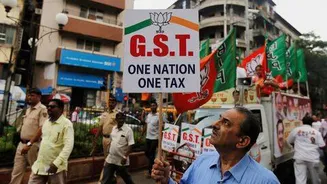
The Goods and Services Tax (GST) is a consumption-based tax levied on most goods and services sold for domestic consumption. When collections are high, it's generally seen as a positive indicator. It suggests that more transactions are happening, businesses
are reporting higher sales, and the economy is buzzing with activity. For July 2026, gross GST revenue saw a significant 15.4% year-on-year jump, reaching ₹2.11 lakh crore. This continues a trend of strong collections, often crossing the ₹2 lakh crore mark, which the government and many commentators point to as evidence of economic resilience and effective tax compliance. On the surface, more tax revenue means more money for public services and a healthier fiscal position, which is undeniably good news.
Why The Big Number Isn't Enough
However, treating the total GST collection as a complete economic report card is like judging a movie by its box office earnings—you know it's popular, but you don't know if it's a masterpiece or just a well-marketed blockbuster. The total GST figure is an aggregate. It lumps together every transaction, from a family buying a new refrigerator to a large corporation purchasing machinery for a new factory. It doesn't distinguish between the different kinds of economic demand that are driving these sales. For a true understanding of the economy's health and its future trajectory, we need to know who is spending and on what.
Consumption vs. Investment Demand
Broadly, an economy is powered by two main engines: consumption demand and investment demand. Consumption demand is driven by households buying goods and services for their personal use—think groceries, cars, clothes, and holidays. It reflects current public sentiment and spending power. Investment demand, on the other hand, is driven by businesses spending money on capital goods—factories, machinery, technology—to increase their future production capacity. While robust consumption is vital, as it makes up nearly 60% of India's GDP, sustainable long-term growth requires a strong investment cycle. Investment creates jobs, improves productivity, and builds the capacity to meet future consumption demand. An economy overly reliant on just one of these can be unbalanced.
Digging Deeper for Clues
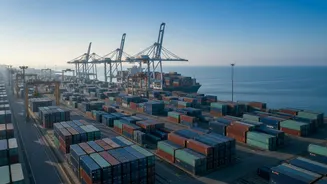
So, if the main GST number is a blended signal, where do economists look for clarity? They look at a wider dashboard of indicators. One key detail within the GST data itself is the split between GST on domestic transactions and GST on imports. The July 2026 data, for instance, showed a 10.1% rise in domestic GST but a much sharper 28.8% jump in GST from imports. This could imply that a significant portion of demand is being met by foreign goods rather than domestic production. Beyond GST, analysts track data like the Purchasing Managers' Index (PMI), which surveys business activity. A high Services PMI alongside a weaker Manufacturing PMI might suggest that consumption in services is strong, but industrial and investment activity is lagging. Similarly, bank credit growth—specifically loans to industry—is a strong indicator of whether businesses are borrowing to invest and expand.
What is Driving India's Engine Now?
Currently, the data suggests India's economic engine is being powered more by consumption than by private investment. While household spending remains resilient, especially in urban areas, some experts express caution about the underlying momentum. The significant growth in GST from imports has raised questions about whether domestic manufacturing is keeping pace with demand. While strong consumption is a positive sign of consumer confidence, policymakers are keen to see a revival in the private investment cycle. A healthy mix, where today's consumption encourages businesses to invest for tomorrow, is the hallmark of a truly robust and sustainable economic expansion.