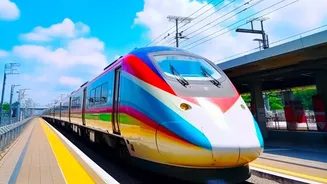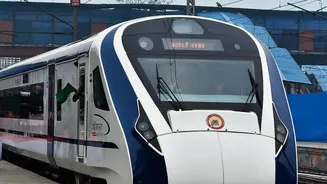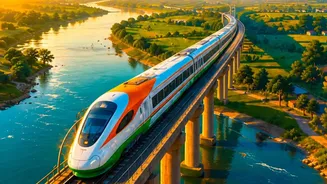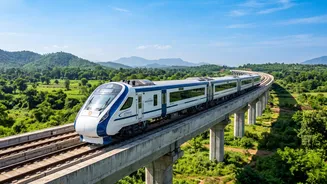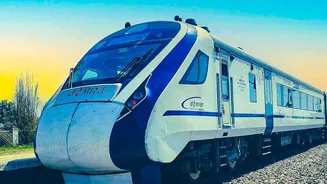






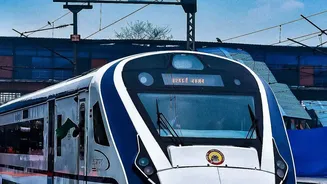
India's ambition to join the elite club of nations with high-speed rail is fast approaching a major milestone. The country's first-ever bullet train is slated to begin its inaugural run in 2027, marking a transformative moment for its infrastructure.
The First Run: Surat to Bilimora
Railway Minister Ashwini Vaishnaw has confirmed that the first section of the Mumbai-Ahmedabad High-Speed Rail (MAHSR) corridor is targeted for a symbolic launch on August 15, 2027. This initial operational segment will connect Surat and Bilimora in Gujarat, a stretch of approximately 50 kilometres. Recent reports indicate that the target for commercial operations on a slightly longer 100-km section between Surat and Vapi is now set for the final quarter of 2027. Progress on the ground is tangible, with the crucial overhead electrical equipment on the Surat-Bilimora section recently being energised, a critical step before trial runs can commence. These trials for India's indigenous B28 trainsets are expected by mid-2027. This phased rollout ensures that parts of the corridor become operational as they receive safety clearances, allowing the public to experience the benefits sooner.
The Grand Vision: Connecting Mumbai and Ahmedabad
The inaugural run is just the first step in a much larger undertaking. The full MAHSR corridor spans 508 kilometres, linking India's financial capital, Mumbai, with the major economic hub of Ahmedabad. The project, a collaboration with Japan, utilizes its world-renowned Shinkansen technology, designed to operate at speeds up to 320 km/h. Once fully operational, which is anticipated by 2029, the bullet train will slash travel time between the two cities to just over two hours, a dramatic reduction from the current six to eight hours by conventional rail or road. The corridor will feature 12 stations, including key stops at Vadodara, Vapi, and Thane, and will even include India's first undersea rail tunnel beneath Thane Creek.
A Journey of Challenges
Bringing a project of this magnitude to life has not been without its difficulties. Originally launched in 2017 with a target completion of 2022, the project faced significant delays. The most persistent hurdles have been land acquisition, particularly in parts of Maharashtra, and the complexities of securing environmental and site clearances. These delays, compounded by the COVID-19 pandemic, have led to substantial cost escalations. The project's initial estimate of around ₹1.1 lakh crore has reportedly risen to approximately ₹2.02 lakh crore. Despite these obstacles, construction has moved forward at a rapid pace, especially in Gujarat, where a significant portion of the elevated viaducts, piers, and station civil work is now complete.
An Engine for Economic Growth
Beyond the speed and convenience, the bullet train is positioned as a powerful catalyst for economic development. The National High Speed Rail Corporation Limited (NHSRCL), the agency implementing the project, anticipates massive job creation during the construction phase and thousands of permanent jobs in operations and maintenance. The corridor is expected to spur development in towns and cities along its route, boosting real estate, tourism, and business opportunities. By creating a high-speed link between two of India's most dynamic economic zones, the project aims to enhance productivity and facilitate smoother business travel, effectively creating a single economic powerhouse region. Furthermore, it promotes a more sustainable mode of transport, with significantly lower carbon emissions per passenger compared to air or car travel.
The Blueprint for a National Network
The Mumbai-Ahmedabad corridor is not just a standalone project; it is the blueprint for a national high-speed rail network. The experience, technology, and manufacturing ecosystem developed for this first corridor are intended to be standardized and replicated across the country. The Union Budget for 2026-27 announced an ambitious plan for seven new high-speed rail corridors, spanning nearly 4,000 kilometres. Proposed routes include Delhi-Varanasi, Mumbai-Pune, and a southern technology loop connecting Chennai, Bengaluru, and Hyderabad. This long-term vision aims to fundamentally transform inter-city travel, enhance national connectivity, and fuel economic growth for decades to come, with the 2027 launch serving as the critical starting point.