


The Golden Rules of Vrat Eating
Religious fasting in India, such as during Navratri or Sawan, comes with specific dietary guidelines. Typically, regular grains like wheat and rice, lentils, and certain spices are avoided. The focus shifts to 'satvik' foods, which are considered pure
and light on the digestive system. This is where ingredients like makhana, kuttu, and rajgira come in. They are not technically cereals, which makes them permissible, and they are packed with nutrients to sustain you through the day. Other staples include fruits, milk products, certain vegetables like potatoes and pumpkin, and rock salt (sendha namak) for seasoning.
Makhana: The Puffed Powerhouse
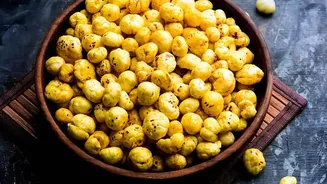
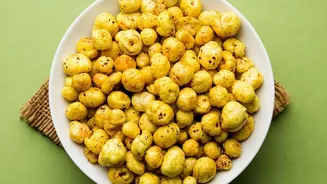
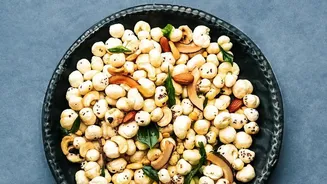
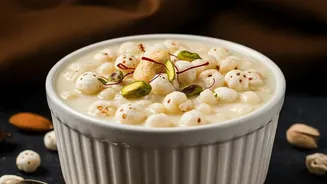
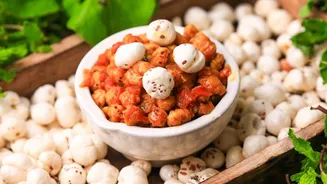
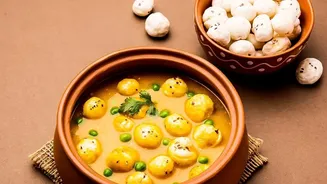
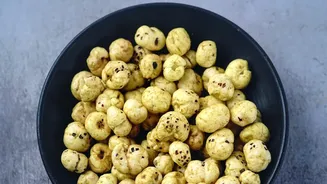
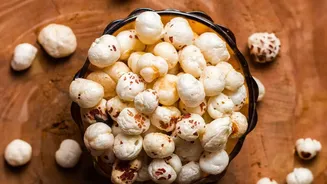
Also known as fox nuts or lotus seeds, makhana is a lightweight, crunchy, and incredibly versatile snack. Harvested from the prickly water lily plant, these seeds are roasted until they pop. They are an excellent source of protein and fibre, which helps you stay full for longer, making them ideal for managing hunger during a fast. Makhana is also low in calories and rich in essential minerals like magnesium, potassium, and calcium. How to use it: The simplest way to enjoy makhana is by roasting a bowlful in a teaspoon of ghee with a sprinkle of rock salt and black pepper. For a more substantial meal, you can add it to a light tomato-based curry or make a creamy, satisfying kheer by simmering roasted makhana in milk with nuts and cardamom.
Kuttu: The Versatile Pseudo-Grain
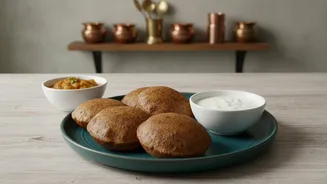
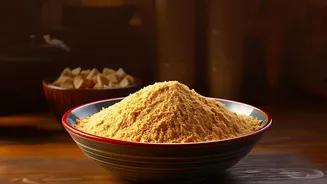
Kuttu, or buckwheat, is a staple during fasting periods, especially in North India. Despite its name, it is not related to wheat and is naturally gluten-free. It is technically the seed of a fruit, which is why it's permitted for vrat meals. Kuttu is prized for its high protein and fibre content, which aids in digestion and provides sustained energy, preventing the sluggishness that can sometimes accompany fasting. It also contains important minerals like magnesium and phosphorus. How to use it: Kuttu is most commonly available as flour (kuttu ka atta). This flour can be used to make pooris, parathas, or cheelas (thin pancakes). The dough is often prepared by mixing the flour with mashed potatoes or arbi (colocasia) to help with binding. Due to its 'warming' nature, it's often recommended to be paired with cooling foods like curd.
Rajgira: The Royal Amaranth
Rajgira, or amaranth, is another pseudo-cereal that has been a part of Indian cooking for centuries. Its name translates to 'royal grain', and it is revered for its impressive nutritional profile. It is a fantastic source of plant-based protein, even more so than many common grains, and is packed with calcium, iron, and magnesium. Being rich in fibre and naturally gluten-free, rajgira is easy to digest and helps maintain stable energy levels. How to use it: Like kuttu, rajgira is widely used in its flour form (rajgira ka atta) to make soft rotis and pooris. Puffed rajgira seeds can be used to make chikki or ladoos with jaggery for a healthy sweet treat. It can also be cooked into a porridge or khichdi, providing a wholesome and filling meal that aligns perfectly with fasting principles.