




Why Your Desk Job Hurts Your Back
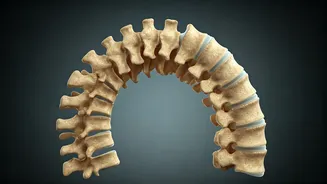
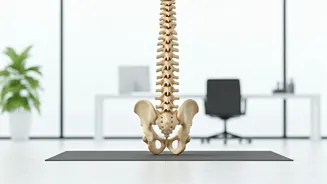
Sitting for prolonged periods places significant, sustained pressure on your lumbar spine, the five vertebrae in your lower back. Think of the discs between these vertebrae as small, fluid-filled cushions. All day, gravity and your posture compress these cushions,
squeezing them and potentially leading to misalignment or bulging. This compression restricts the flow of nutrients and oxygen to the discs, hindering their ability to stay healthy and resilient. Over time, this constant pressure can result in chronic stiffness, aches, and a general feeling of being compressed.
An Introduction to Spinal Decompression
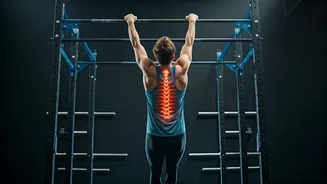
Spinal decompression is a technique designed to relieve this pressure. It involves gently stretching the spine to create negative pressure within the discs. This process can help retracted or bulging disc material move back into place and promotes the movement of water, oxygen, and nutrient-rich fluids into the discs to facilitate healing. While professional therapies exist, a simple and accessible method for achieving gentle decompression is the passive hang, also known as a dead hang. By hanging from a bar, you use your own body weight and gravity to create traction and lengthen the spine.
How to Perform a Passive Hang Safely
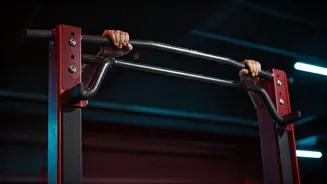
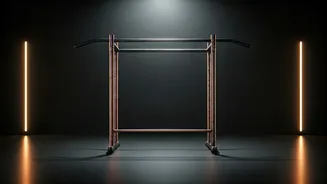
Performing a passive or dead hang is simple, but proper form is crucial to ensure safety and effectiveness. Start by finding a sturdy, secure overhead bar, like a pull-up bar or playground equipment. If needed, use a box or bench to easily reach the bar without jumping. Grip the bar with your hands slightly wider than your shoulders, with your palms facing away from you. Carefully step off the box and let your body hang, keeping your arms straight. The key is to relax your entire body, especially your back and shoulders, and resist the urge to engage your muscles or swing. Beginners should aim to hang for just 10 to 20 seconds, focusing on deep breathing. You can gradually work your way up to holds of 30 to 60 seconds as your grip strength and comfort level improve.
More Than Just Back Relief
While spinal decompression is a primary benefit, hanging offers a host of other advantages. It is an excellent exercise for improving grip strength, which is essential for many daily activities. The stretch also benefits shoulder health, improving mobility and flexibility by stretching the rotator cuff and lat muscles. Regular hanging can help correct postural issues, particularly the 'computer slouch' that develops from hunching over a desk, by opening up the chest and upper back. This contributes to better overall alignment and can prevent future pain.
Important Precautions and Who Should Avoid Hangs
Hanging is not suitable for everyone. Individuals with specific pre-existing conditions should exercise caution or avoid this exercise entirely. This includes people with shoulder instability, rotator cuff injuries, severe neck or back pain, high blood pressure, glaucoma, or certain spinal conditions like severe herniated discs or spinal instability. It is also not recommended for those with cardiovascular issues or who have had recent surgery. The most important rule is to listen to your body. If you feel any sharp, shooting pain, numbness, or tingling in your arms or legs, stop immediately. A supported hang, where your feet remain lightly on the floor or a box, is a great way to start and control the intensity.