

A Living Piece of History
Riding the Nilgiri Mountain Railway (NMR) is less a commute and more a trip through a time portal. Inaugurated in its complete form in 1908, this engineering marvel was built by the British to connect the plains of Mettupalayam with their summer retreat
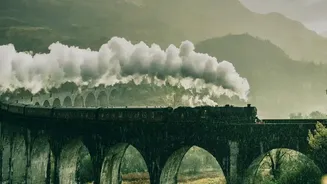
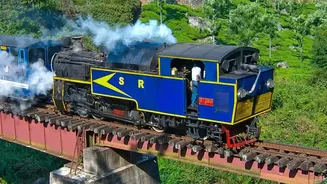
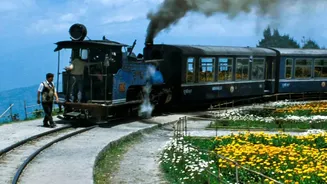
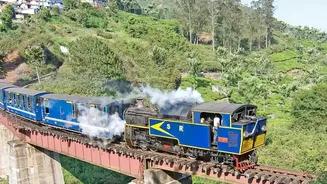
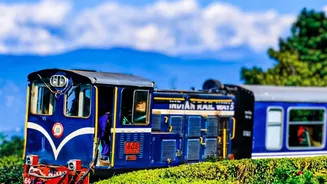
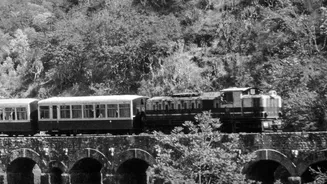
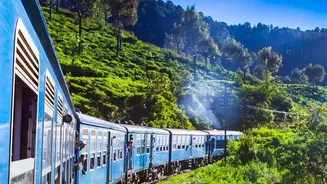
in the cool hills of Ooty. Its inclusion as a UNESCO World Heritage site in 2005 was not just for its age, but for its remarkable living heritage. The train still uses the traditional cardboard Edmondson tickets at station counters, and the charming blue and cream wooden carriages evoke a sense of bygone elegance. As the train chugs along the metre-gauge track, the rhythmic sounds and gentle sways offer a powerful dose of nostalgia, connecting modern travellers to a century of history that unfolds with every kilometre.
The Engineering Marvel
What makes the NMR truly unique is its ingenious engineering, designed to conquer Asia's steepest railway gradient. Between Mettupalayam and Coonoor, the train employs a 'rack and pinion' system—the only one of its kind in India. This system uses a toothed rail between the tracks that meshes with a cogwheel on the locomotive, allowing the train to push itself up impossibly steep slopes. For this arduous climb, the railway relies on magnificent X-Class steam locomotives, many of which were built in Switzerland. Hearing the powerful chug of the steam engine as it tackles the gradient is an auditory thrill, a testament to the Victorian-era ingenuity that remains fully operational today.
Unforgettable Scenery Along the Way
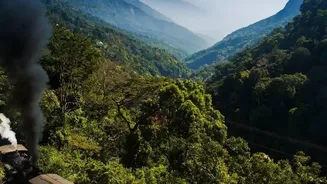
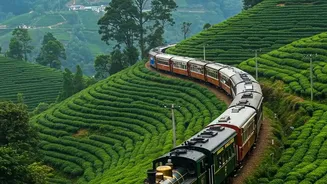
The nearly five-hour journey from Mettupalayam to Ooty is a feast for the eyes, showcasing the breathtaking biodiversity of the Nilgiri Biosphere Reserve. The train begins its journey across the hot plains, crossing the wide Bhavani River before the ascent begins. Soon, the landscape transforms into dense shola forests, vibrant green tea plantations, and misty mountains. The train passes through 16 tunnels and crosses over 250 bridges, each offering a new and dramatic vista of deep valleys and rolling hills. Key stations like Coonoor, Wellington, and Ketti provide charming glimpses into local life. For the best views of the valley on the way up, seasoned travellers recommend grabbing a seat on the right side of the carriage.
Sightseeing That Won’t Break the Bank
Despite its world-famous status, the NMR remains an incredibly accessible and budget-friendly experience. As of early 2026, a second-class ticket for the scenic stretch from Mettupalayam to Coonoor costs around ₹200. The fare for the full journey from Mettupalayam to Ooty in second class is similarly affordable, often costing less than ₹300 per person. Even a first-class ticket, which offers cushioned seats, typically costs around ₹600 for the entire route. When compared to the cost of hiring a private taxi for the same winding mountain road, which can run into several thousand rupees, the toy train offers unparalleled value. It delivers a world-class heritage and sightseeing experience for a fraction of the price of other transport options.
How to Plan Your Journey
Booking a ticket on the NMR requires some advance planning, as seats sell out weeks, and sometimes months, in advance. The most reliable way to book is through the official IRCTC website or the IRCTC Rail Connect app. Remember to use the station codes: MTP for Mettupalayam and UAM for Udagamandalam (Ooty). The main train departs from Mettupalayam at 7:10 AM daily. There are also multiple services running just between Coonoor and Ooty, which use a diesel engine and are easier to book on shorter notice. Whether you take the full steam-powered climb or the shorter scenic leg, arriving at the station about 30 minutes early is recommended to soak in the atmosphere before you board.