

Planning Your Celestial Escape
Before you pack your bags, understand the two biggest adversaries of a good stargazing night: city lights and moonlight. Light pollution from urban areas creates a pervasive glow that washes out all but the brightest stars. To truly see the cosmos, you need
to find a location with minimal artificial light, often rated on a Bortle Scale from 1 (pristine darkness) to 9 (inner-city sky). Secondly, plan your trip around the new moon. A full moon is beautiful, but its brightness acts like a natural streetlamp, obscuring faint stars and the magnificent Milky Way. Checking a lunar calendar is as important as checking the weather forecast. Once you have a dark, moonless night, give your eyes at least 20-30 minutes to fully adapt to the darkness, and avoid looking at your phone screen.
Spiti Valley, Himachal Pradesh: High-Altitude Wonder
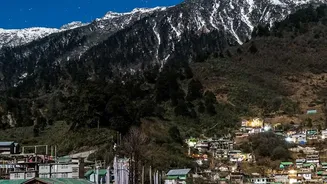
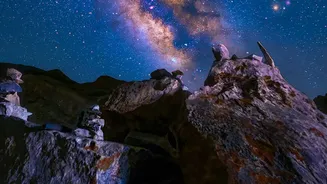
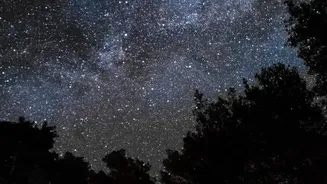
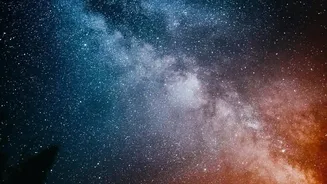
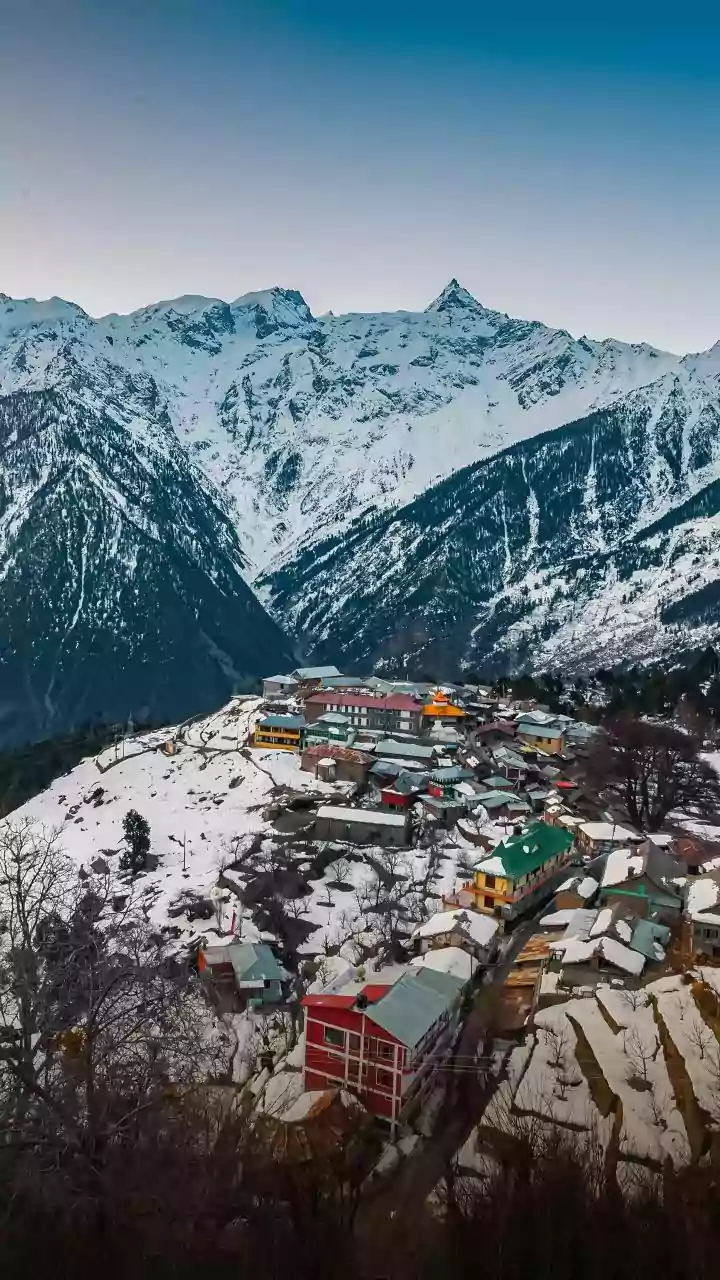
Often called 'Little Tibet', the high-altitude cold desert of Spiti Valley offers some of the clearest and darkest skies in India. Sitting above 4,000 metres, you are above much of the atmospheric dust and moisture that can obscure views at lower elevations. The result is a breathtaking panorama where the Milky Way is so vivid it can seem almost within reach. Villages like Langza, Kaza, and Kibber are renowned stargazing hubs with near-zero light pollution. The best time to visit for stargazing is from May to October, with July through September offering the clearest nights, though temperatures can drop sharply after sunset. This is when the galactic core is most visible, creating unforgettable silhouettes against ancient monasteries.
Hanle, Ladakh: India's Official Dark Sky Reserve
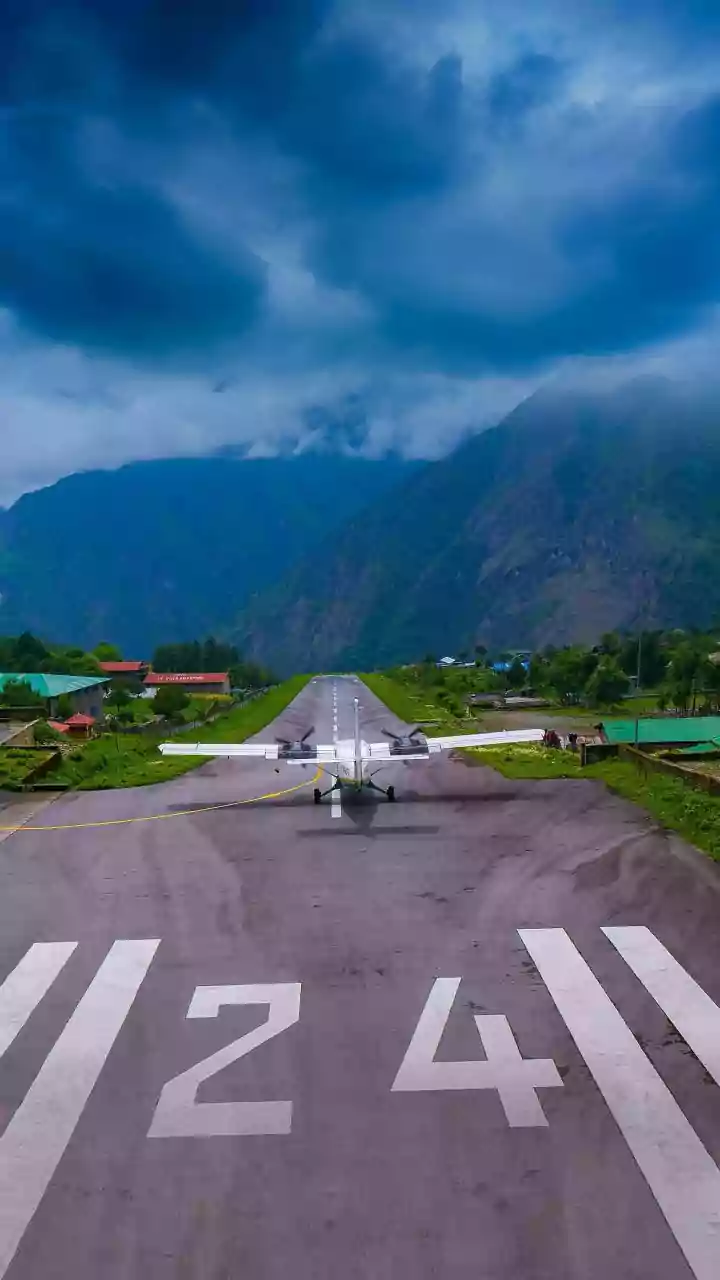
For the most dedicated stargazers, Hanle in Ladakh is the ultimate destination. In 2022, it was officially designated as India's first Dark Sky Reserve, recognising its exceptionally dark and clear skies. Located at an altitude of 4,500 metres, this remote region is home to the Indian Astronomical Observatory, one of the world's highest. While public access to the main telescope is restricted, the surrounding area provides an unparalleled celestial theatre. Due to its high altitude and arid climate, Hanle boasts over 250 clear nights a year. On a moonless night here, the sky is so dark that the Milky Way can cast a faint shadow. A trip to Hanle requires an Inner Line Permit and acclimatisation to the altitude, but the cosmic spectacle is worth every bit of the effort.
Rann of Kutch, Gujarat: A Surreal Salt Desert Sky
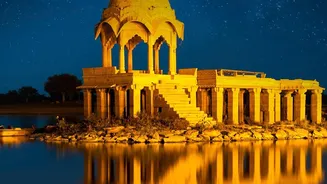
The Great Rann of Kutch offers a stargazing experience that is utterly unique. Its vast, flat salt desert provides an uninterrupted 180-degree view of the horizon. Far from major cities, the region has extremely low light pollution, making it an astronomer's paradise. The best time to visit is during the winter months, from November to February, which coincides with the popular Rann Utsav. During this period, the dry, crisp air ensures excellent visibility. While a new moon night is best for spotting faint objects, a full moon night offers its own magic, as the moonlight reflects off the white salt flats, creating an ethereal, glowing landscape. Lying on the cool salt crust under a blanket of stars is a profound experience that connects you to the cosmos.
Coorg, Karnataka: Stargazing in the Western Ghats
You don't have to travel to the Himalayas or a desert to find dark skies. Nestled in the Western Ghats, Coorg (Kodagu) offers excellent stargazing opportunities for those in South India. The region's coffee and spice plantations, situated at altitudes between 900 and 1,800 metres, provide pockets of deep darkness away from city lights. While the monsoon season (June to September) brings clouds, the skies from October to May are often clear and ideal for astronomy. Several homestays and resorts around Madikeri and Virajpet cater to stargazers, offering open spaces perfect for setting up a telescope or simply lying back and watching the stars appear over the misty hills. There is even an observatory in the region for guided sessions.
Your Essential Stargazing Toolkit
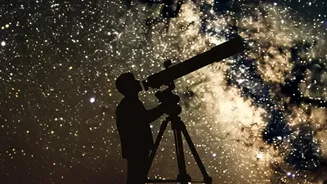
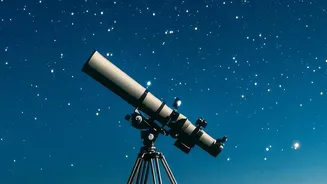
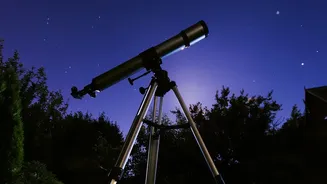
While the naked eye is enough to enjoy a starry night, a few tools can elevate the experience. A good pair of binoculars is a great starting point for viewing star clusters and the craters of the moon. For those wanting a closer look, a portable tabletop telescope can reveal planets and distant nebulae. On the digital front, stargazing apps like SkyView, Star Walk, or Stellarium can help you identify constellations, planets, and satellites in real-time by simply pointing your phone at the sky. Finally, remember to dress warmly, especially in high-altitude or desert locations, as temperatures can plummet after dark. And if you need a light, use a red torch, as red light is less damaging to your night vision.