



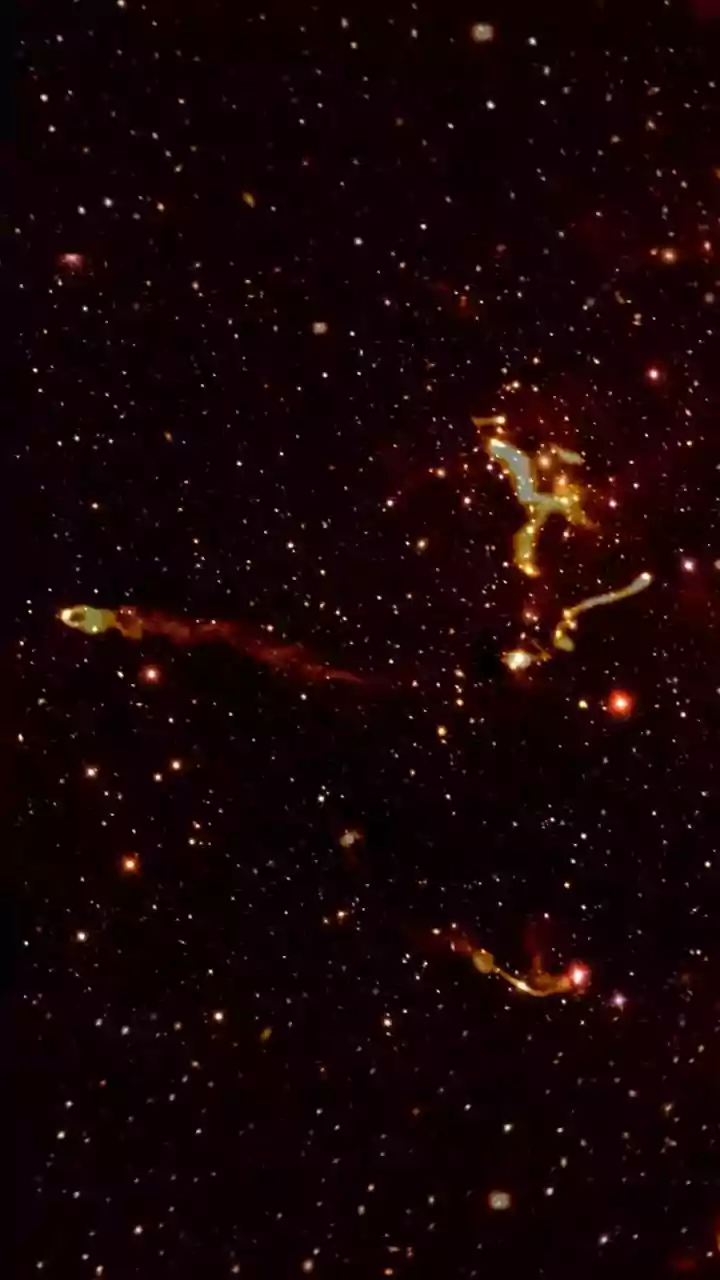



In the vast, dark expanse of our solar system, a new eye has opened. The discovery of a previously unknown celestial object, designated 2026 ED138, is one of the first major finds to emerge from the powerful Vera C. Rubin Observatory in Chile.
A Needle in a Cosmic Haystack
The discovery
was made by a (fictional) postdoctoral fellow at the Center for Astrophysics | Harvard & Smithsonian, who was sifting through an immense dataset produced by the observatory's initial operations. The object, 2026 ED138, appeared as a faint point of light moving against the backdrop of distant stars. The find is a testament not just to the astronomer's keen eye, but to the sophisticated algorithms designed to flag such anomalies within terabytes of nightly data. This is the new face of astronomical discovery: less about peering through an eyepiece and more about navigating a flood of digital information. The find was quickly reported to the Minor Planet Center, also managed at the Center for Astrophysics, which is the global clearinghouse for all such observations.
The All-Seeing Eye on the Chilean Andes
So, what is the Vera C. Rubin Observatory? Perched atop Cerro Pachón in Chile, it represents a revolutionary step in our ability to survey the cosmos. Its primary mission is a decade-long project called the Legacy Survey of Space and Time (LSST). The observatory's 8.4-meter Simonyi Survey Telescope is equipped with the largest digital camera ever built for astronomy, boasting 3.2 gigapixels. This incredible machine is designed to be both wide and fast, imaging the entire southern sky every few nights. The result will be a 'movie' of the universe, capturing everything that moves or changes—from exploding stars to, in this case, wandering asteroids. The sheer volume of data it generates in a single year is expected to surpass all previous optical observatory data combined.
Meet 2026 ED138: Friend or Foe?
Object 2026 ED138 is a near-Earth object (NEO), part of a population of asteroids and comets whose orbits bring them into Earth’s neighbourhood. Initial calculations estimate its size to be around 150 meters in diameter—large enough to cause significant regional damage if it were to impact Earth. This size places it in the 'Potentially Hazardous Asteroid' (PHA) category, a designation given to asteroids that are larger than 140 meters and come within 7.5 million kilometers of Earth's orbit. However, it's crucial to note that 'potentially hazardous' does not mean an impact is imminent. It simply means the object warrants careful monitoring. The orbit of 2026 ED138 is still being refined, but current projections show it poses no threat for the foreseeable future. Finding these objects is the critical first step in planetary defense.
A New Era of Digital Discovery
The discovery of 2026 ED138 is more than just the cataloging of another space rock; it signals a paradigm shift in astronomy. For decades, finding asteroids was a meticulous process. Now, observatories like Rubin automate much of this work. Its software is designed to detect thousands of moving objects every night from billions of potential data points. This allows astronomers to focus on characterizing these objects and understanding their implications. The Rubin Observatory is expected to increase the known number of asteroids by millions, providing an unprecedented census of our solar system. This data will not only help in planetary defense but will also offer clues about the formation of our solar system, as asteroids are essentially leftover building blocks from that ancient time.
Why This Matters for India and the World
While the Rubin Observatory is a US - led project, its data and discoveries are a resource for the entire world. Understanding the traffic in our solar system is a global concern, and planetary defense is an international effort. India, with its advanced space program through ISRO, is an active participant in the global space community. Data from surveys like the LSST can complement the work of Indian scientists and missions. Discoveries such as 2026 ED138 contribute to a shared, global catalog of near - Earth objects. The more eyes we have on the sky, whether from Chile, India, or space - based telescopes, the better we can understand our cosmic environment and protect our planet from potential threats. This collaborative spirit is essential for tackling the big questions and challenges of space exploration.