


What is the 'Swicy' Wave?
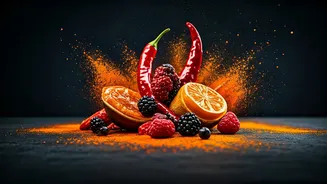
Say hello to 'swicy' — the culinary term for the delightful collision of sweet and spicy. This isn't just about adding sugar to chilli; it's a nuanced balancing act where sweetness, often from honey, jaggery, or fruit, mellows the fiery kick of chillies,
creating a more complex and addictive flavour profile. [3, 13] While the name might be a recent viral trend, the concept is deeply rooted in many cuisines, including Indian cooking. [5] From the tangy tamarind chutneys that accompany samosas and chaats to regional specialities, the combination of sweet and heat has always been a part of India's flavour DNA. [3, 5] Now, this classic pairing is being reimagined, leading a global trend that has found a fervent following in India. [4, 5]
The Tofu Takeover
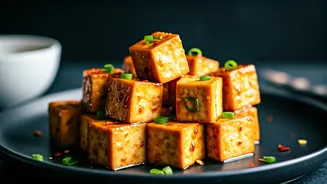
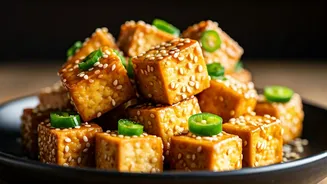
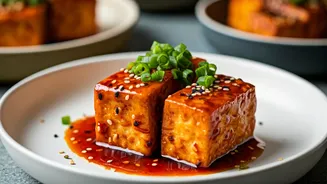
At the forefront of this trend is Honey-Chilli Tofu. Once dismissed as a bland substitute for paneer, tofu is experiencing a significant surge in popularity across India. [14, 15] Driven by a growing interest in health-conscious, plant-based diets, consumers are embracing tofu for its high protein content, versatility, and cholesterol-free properties. [6, 8] Firm tofu, in particular, is perfectly suited for dishes like this; its neutral taste acts as a blank canvas, absorbing the bold flavours of the sauce, while its texture becomes wonderfully crispy when fried or air-fried. [29] The dish itself—crispy tofu cubes tossed in a glossy, flavour-packed sauce—is a masterclass in textural and sensory delight, making it the perfect poster child for the modern swicy movement. [26]
A History of Heat and Sweet
Long before 'swicy' became a buzzword, Indian cuisine was mastering the art of flavour contrasts. Gujarati cuisine, for example, is famous for its delicate balance of sweet and sour notes. [3] Parsi dishes like Dhansak often incorporate sweet and sour elements, while across the country, street food would be incomplete without the interplay of sweet tamarind and spicy green chutneys. [9, 18] Think of guava sprinkled with chilli salt, or the Maharashtrian snack Bakarwadi, which features a crispy, spiralled dough filled with a sweet and spicy mixture. [7] The current swicy wave isn't an import but rather a global rebranding of a flavour principle that Indian kitchens have instinctively understood for generations. [5]
Beyond the Tofu
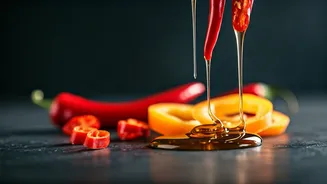
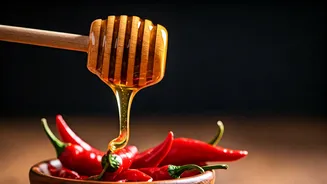
While Honey-Chilli Tofu may be leading the charge, the swicy trend extends far beyond. The viral sensation of 'hot honey'—honey infused with chilli—has become a popular drizzle for everything from pizza to fried chicken. [11, 19] Restaurants and home cooks are experimenting with Korean-inspired flavours like Gochujang, a fermented chilli paste with sweet undertones, in everything from fries to marinades. [13, 22] Even beverages are getting the swicy treatment, with mixologists crafting chilli-infused watermelon margaritas and pineapple spritzers. [23] This reflects a broader shift where Indian consumers, especially younger generations, are more open to global flavours that offer bold and exciting experiences. [22]
Why We Crave It Now
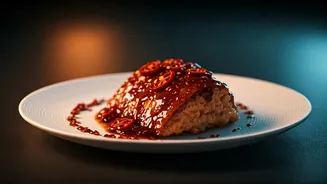
Several factors are fueling our current obsession with swicy. The increasing globalisation of our palates, driven by travel and the internet, has exposed us to a world of new flavours. [22] Furthermore, these dishes are incredibly photogenic; the glossy sheen of a honey-chilli glaze is practically designed for social media. [23] There's also a growing desire for more complex and multi-layered taste experiences. [20] After years of focusing on singular flavour notes, the modern diner craves food that provides a journey in every bite—a journey that the thrilling push-and-pull of sweet and spicy delivers perfectly. This trend isn't just about novelty; it's about a collective hunger for food that is comforting yet exciting. [19]