


Peering Through the Cosmic Dust
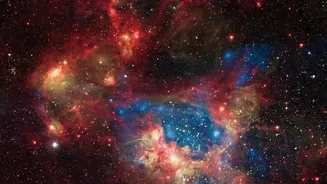
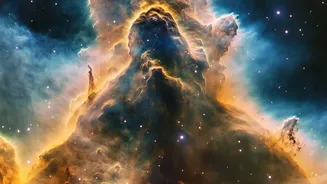
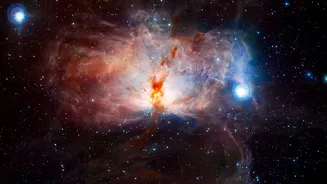
The biggest challenge in studying star formation has always been the very material that creates them: vast, dense clouds of dust and gas. To telescopes that see in visible light, like the Hubble Space Telescope, these nurseries are mostly dark and impenetrable.
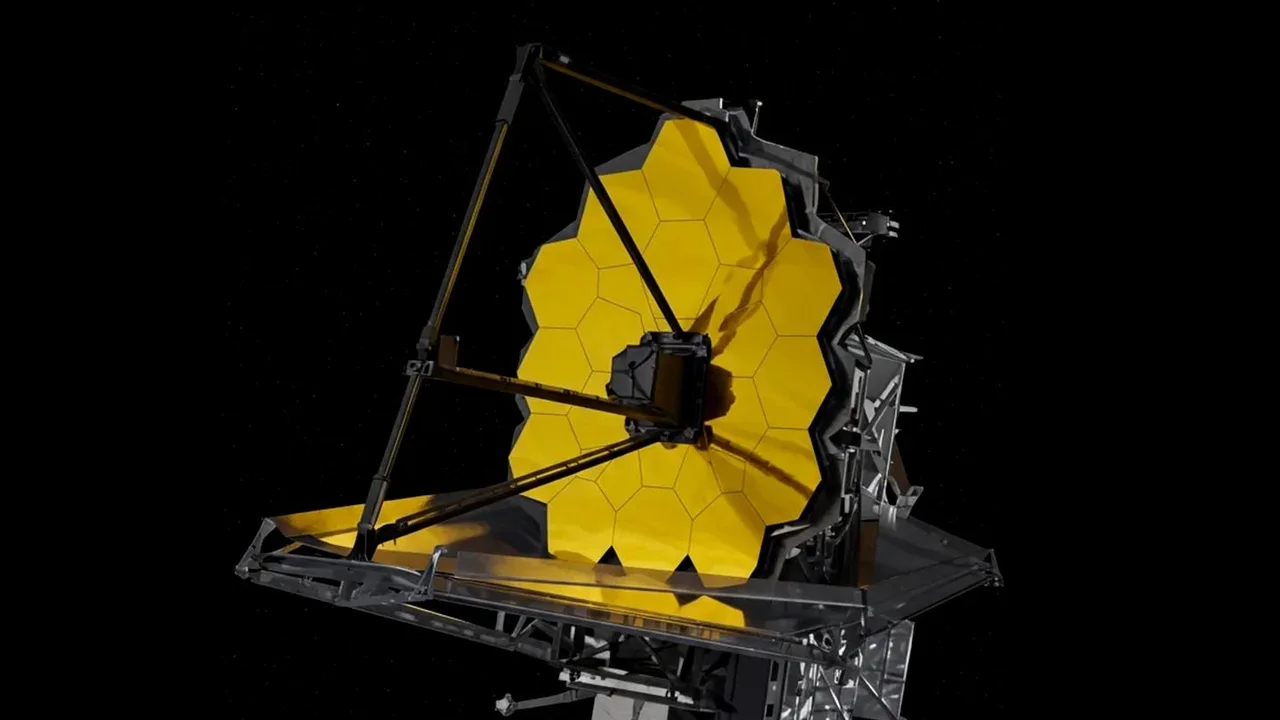
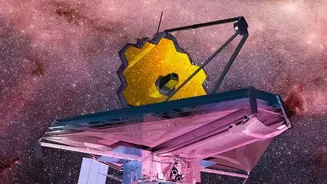
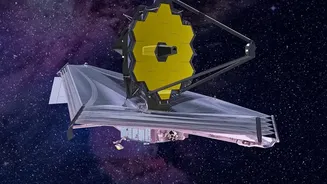
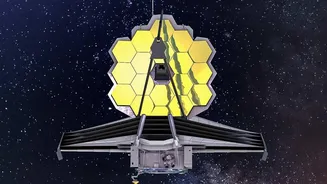
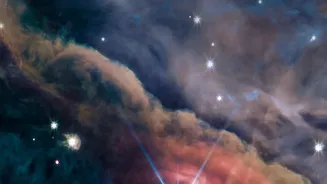
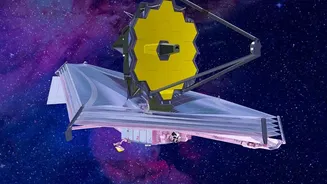
The James Webb Space Telescope, however, is designed to see the universe in infrared light. This allows it to peer through the obscuring dust, much like how infrared cameras can see through smoke. This fundamental capability has given scientists an unprecedented, clear view into the very heart of stellar creation, revealing young stars that were previously hidden. It's like lifting a veil on one of the universe's most fundamental processes.
Witnessing the Chaos of Starbirth
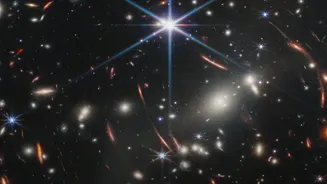
Once inside the nursery, JWST is showing that the birth of a star is anything but peaceful. Its high-resolution images capture infant stars, known as protostars, in stunning detail. These are hot, clumpy objects still gathering mass from the surrounding cloud. Many are seen firing off powerful jets and outflows of gas at high speeds. When these jets slam into the nearby gas and dust, they create brilliant shockwaves, known as Herbig-Haro objects. Webb's instruments can study these turbulent outflows, revealing how a newborn star begins to shape its immediate environment, clearing out material and influencing how its neighbouring stars might form. These detailed observations of energetic ejections are helping to refine models of how stars transition from messy infants to stable, hydrogen-burning adults.
Uncovering the Chemical Ingredients for Planets
Beyond just taking pictures, the JWST is a powerful chemical laboratory. Its advanced spectrographs can analyse the light passing through these cosmic nurseries to identify the molecules within them. What it has found is a treasure trove of chemical compounds that are the building blocks for planets and, potentially, life. In the cold, dark clouds around protostars, Webb has detected not just simple molecules like water ice and carbon dioxide, but also complex organic molecules, including methanol, ethanol, and even benzene. These discoveries show that the raw ingredients for life are present very early in the process of star formation, even before planets have formed. This suggests that future planets will inherit this rich chemical cocktail, providing a head start for the development of habitable worlds.
Challenging and Refining Old Theories
The clarity of Webb’s vision is providing so much new data that it is forcing scientists to revisit and update long-held theories of star formation. For example, recent observations detected unexpected high-energy ultraviolet (UV) radiation around several protostars, something these young stars shouldn't be capable of producing on their own. The source of this UV light is still a mystery, but its presence affects the chemistry of the surrounding gas and must now be factored into star formation models. Furthermore, combined studies using Webb and other telescopes have shown how different sizes of dust grains behave within protoplanetary disks—the spinning disks of material where planets form. These kinds of detailed findings provide crucial new constraints that make scientific models of star and planet formation more accurate than ever before.