
From Cluttercore to Calm
Not long ago, the height of interior style was 'cluttercore' or 'maximalism', a vibrant aesthetic that celebrated the accumulation of personal objects. The goal was to create a rich, layered display that told a story, with every inch of a shelf filled
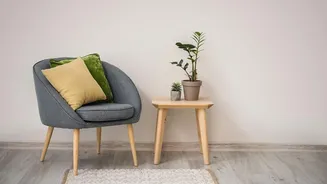
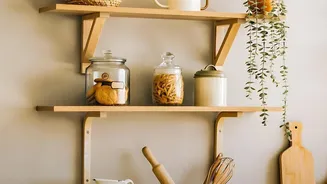
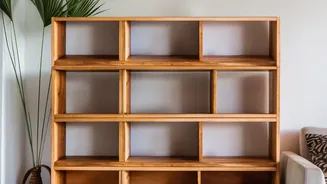
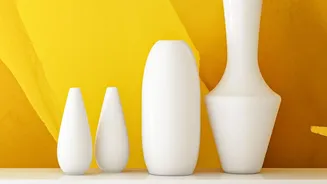
with books, trinkets, and personality. While beautiful in its own right, this 'more is more' approach is now seeing a significant reversal. Designers and home decorators are increasingly embracing a philosophy that champions negative space. This isn't about barren, empty shelves, but about intentionally leaving open areas to create breathing room, allowing the eye to rest and appreciate individual items more fully. The shift is away from looking like a shop display and towards a more serene, curated, and personal environment.
The Psychology of Breathing Room
This trend isn't happening in a vacuum. It’s part of a broader cultural pivot towards wellness and mindfulness in our homes. In a world of constant digital noise and visual stimulation, people are seeking to create sanctuaries of calm. An over-filled shelf, while expressive, can contribute to a sense of visual chaos. The move towards incorporating empty space is a direct response to a collective desire for mental clarity. It borrows from design philosophies like the Japanese concept of 'Ma', which values the interval or space between things. By consciously creating these pauses in our decor, we are building a more peaceful and less demanding environment that allows for focus and tranquility. It's a rebellion against the idea that our homes need to be perpetually performing for an audience.
Making Objects Matter More
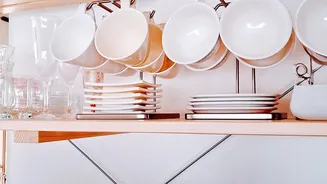
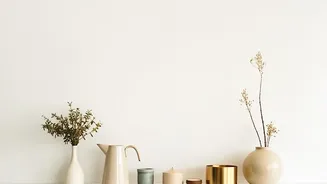
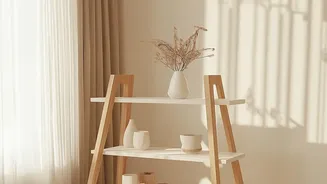
Ironically, having fewer items on a shelf can make each one more significant. When objects are crammed together, even the most beautiful pieces can get lost in the visual noise. Leaving space around a vase, a sculpture, or a stack of books elevates it, turning it from simple decoration into a focal point. This approach encourages a more thoughtful curation process. Instead of asking 'What else can I fit here?', the question becomes 'Does this piece deserve its own space?'. This intentionality means the items you choose to display are the ones that truly hold meaning, sparking joy or telling a story without having to compete for attention. Practical pieces, like beautiful mugs or bowls, can also double as decor when given the space to shine.
How to Embrace the Space
Adopting this style doesn't require a complete overhaul. Start by editing. Take everything off your shelves and only put back the items you truly love. Group objects together in odd numbers, like threes or fives, to create visually pleasing vignettes. Play with height and texture—place a small, smooth object next to a taller, more textured one. You can stack books horizontally to create a platform for a smaller item. Most importantly, be deliberate about leaving gaps. An entire shelf might hold just one large art piece or a small, asymmetrical grouping. Step back often to see how the overall balance feels, ensuring that the empty spaces feel just as intentional as the filled ones.
It’s Not Minimalism, It’s ‘Essentialism’
It's crucial to distinguish this trend from stark minimalism. Minimalism often focuses on removing almost everything, which can sometimes feel cold or impersonal. This new wave is better described as 'essentialism' or 'intentionalism'. The goal isn't to live with less for its own sake, but to surround yourself only with what is essential to your story and your sense of peace. The result is a space that feels layered and personal, but also clean and composed. It’s a middle path between the austerity of true minimalism and the charming chaos of maximalism, offering a balanced approach that feels both sophisticated and deeply authentic to the person who lives there.