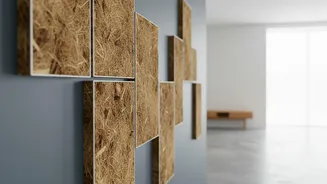







From Farm Waste to Urban Oasis
Imagine a quieter, more peaceful apartment. Now, imagine achieving that peace using something as humble as rice or coconut husks. Compressed husk insulation panels are innovative building materials made from agricultural byproducts. Instead of being burned
or sent to a landfill, this organic waste is collected, cleaned, and pressed under high heat and pressure to form dense, sturdy boards. These panels represent a major step forward in sustainable construction, turning a disposal problem into a high-value solution for modern living. For urban India, where both agricultural residue and noise pollution are abundant, this innovation offers a uniquely local and eco-conscious way to create tranquility at home.
The Science of a Quieter Home
So, how does a panel made of husks stop the sound of traffic or noisy neighbours? The answer lies in its structure. Unlike solid, flat surfaces that reflect sound waves, these panels are made of natural fibres, creating a porous and irregular internal structure. When sound waves hit the panel, they travel into this maze of fibres, where they are forced to bounce around, losing energy with each interaction. This process, known as sound absorption, effectively traps the sound and converts its energy into a minuscule amount of heat, dampening the noise that reaches your ears. This makes them particularly effective against the mid-to-high frequency sounds that define urban clamour, like voices, televisions, and honking horns.
Husk Panels vs. Plastic Foam
For years, the go-to material for acoustic and thermal insulation has been plastic foam, like polyurethane or polystyrene. While effective, these materials come with significant environmental baggage. They are derived from petroleum, their manufacturing is energy-intensive, and they are not biodegradable, contributing to plastic pollution. Husk panels, on the other hand, are a clear winner for sustainability. They are made from a renewable resource—agricultural waste—and are biodegradable at the end of their life. Acoustically, while dense foams can block sound, fibrous husk panels often excel at absorbing it, which reduces echo and creates a more pleasant-sounding room.
More Than Just Soundproofing
The benefits of switching to husk-based insulation extend far beyond just peace and quiet. These panels are also excellent thermal insulators. Their natural structure helps keep your home cooler in the summer and warmer in the winter, potentially reducing your reliance on air conditioning and lowering electricity bills. Furthermore, these panels contribute to healthier indoor air quality. They are typically made without the volatile organic compounds (VOCs) found in many synthetic materials, which can be harmful to human health. By choosing husk panels, you are not only soundproofing your apartment but also making it more energy-efficient and healthier for your family.
Is It Practical for Your Apartment?
As sustainable construction gains momentum in India, these innovative materials are becoming increasingly accessible. Startups and eco-conscious architects are beginning to incorporate panels made from rice husks, coconut coir, and sugarcane bagasse into their projects. While the initial cost might be comparable to or slightly higher than some traditional foams, the long-term savings on energy bills and the undeniable environmental and health benefits present a compelling case. For homeowners looking to renovate or builders planning new urban residential projects, asking about agricultural waste-based insulation is a proactive step towards building quieter, greener, and more comfortable homes for the future.