

Our Sun, A Volatile Neighbour
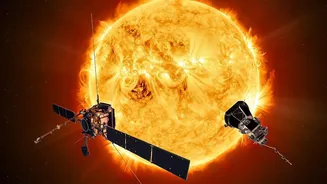
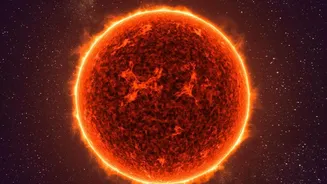
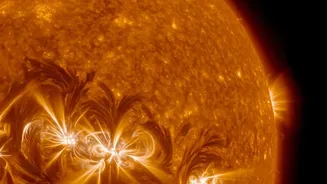
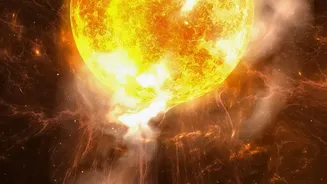
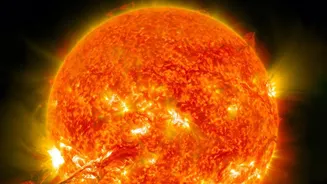
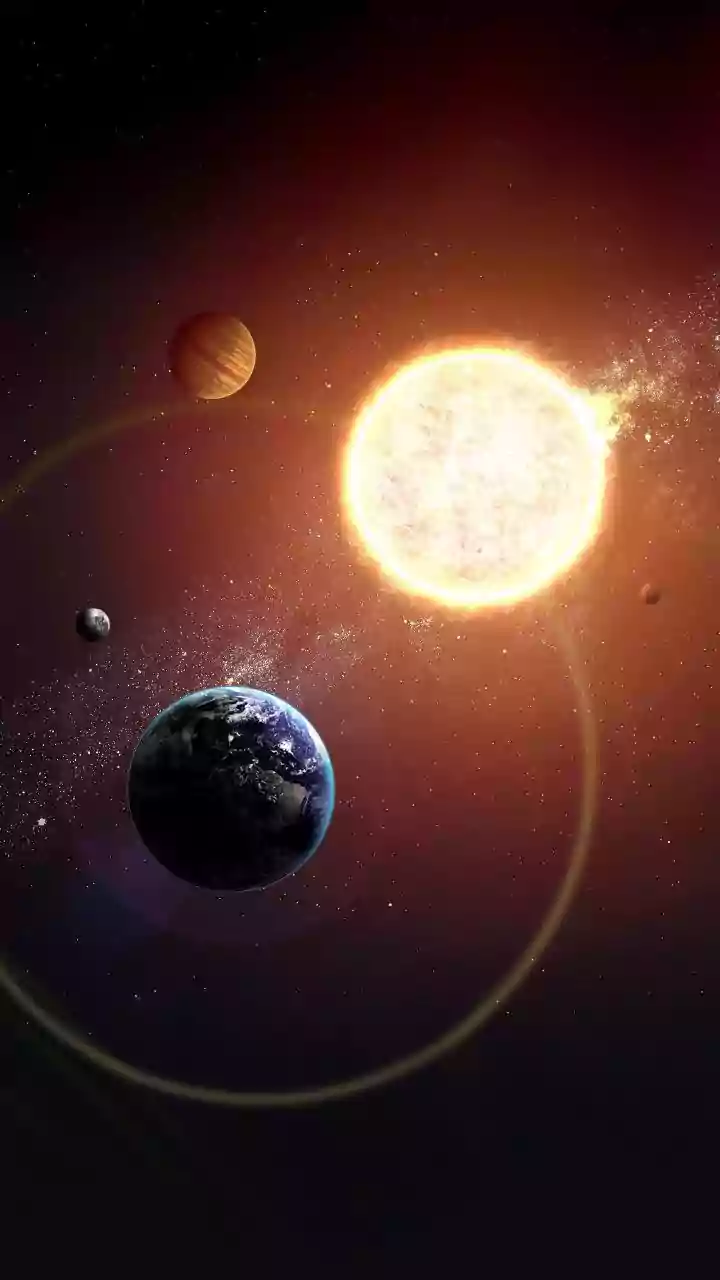
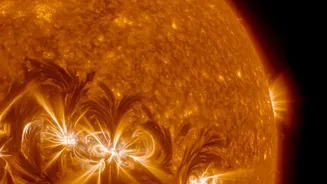
The Sun, the star that makes life on Earth possible, has a turbulent nature. It frequently unleashes colossal clouds of plasma and magnetic fields known as Coronal Mass Ejections (CMEs). These eruptions travel outwards through the solar system at incredible
speeds. If a CME is aimed at Earth, it can take anywhere from 18 hours to a few days to reach us, colliding with our planet's protective magnetic shield. While this shield, the magnetosphere, protects life on the surface, the interaction can trigger powerful geomagnetic storms that have significant consequences for our technology in orbit and on the ground. News from August 11, 2026, confirms a CME that erupted on August 8 is expected to reach Earth on August 12, putting aurora watchers and satellite operators on alert. Events like these can disrupt radio transmissions and even damage electrical power grids.
The Fragile Orbits of Modern Life
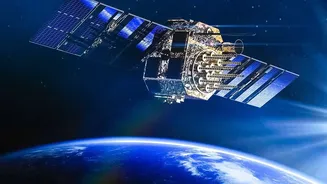
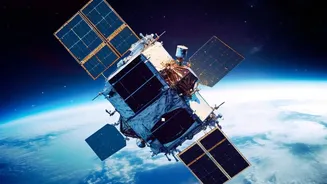
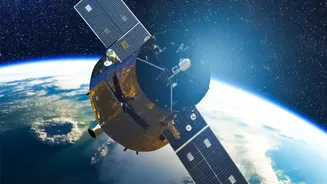
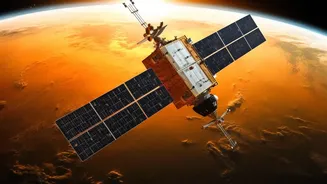
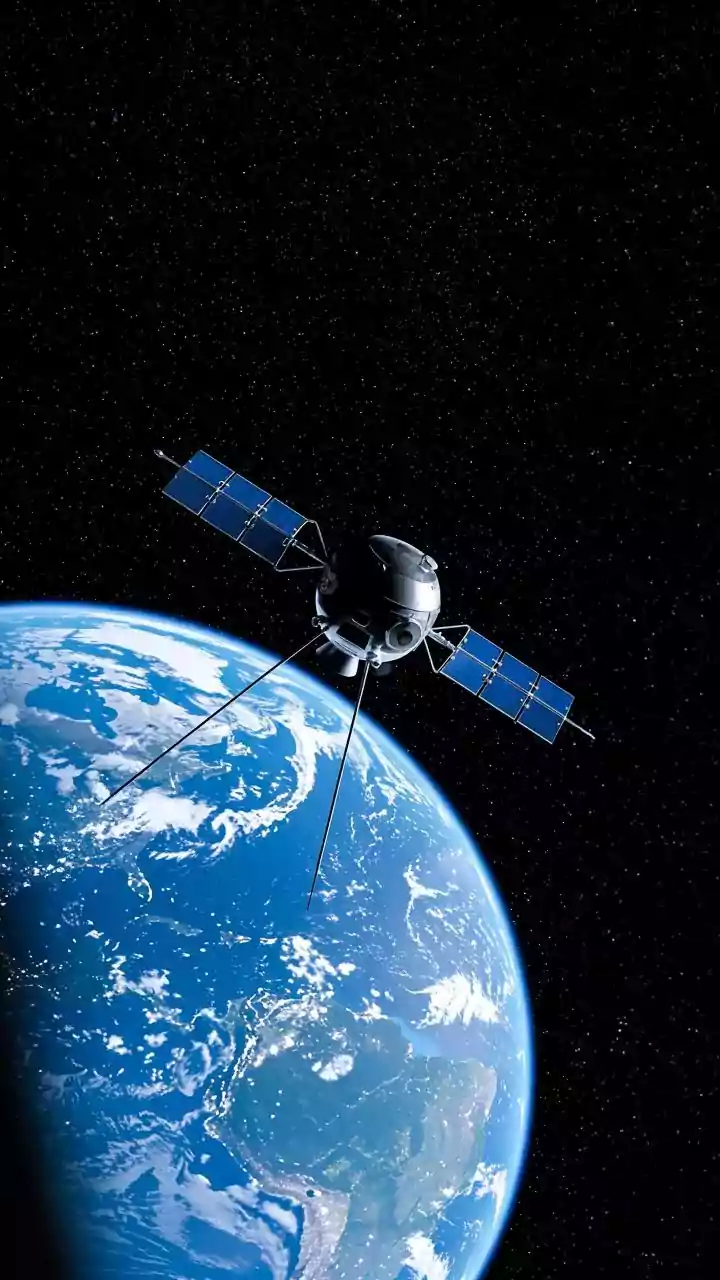
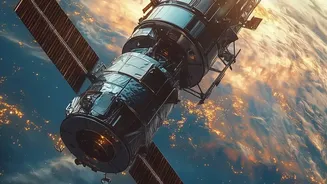
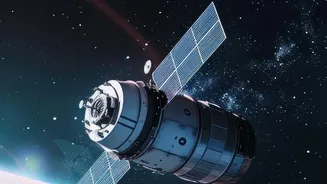
Our reliance on satellites is almost absolute. They are the unseen backbone of global communication, financial transactions, weather forecasting, and GPS navigation. However, this critical infrastructure is highly vulnerable to space weather. When a CME strikes Earth's magnetosphere, it can have several damaging effects on satellites. One major issue is atmospheric drag. The energy from the storm heats Earth's upper atmosphere, causing it to expand. This expansion increases the density of the air at the altitudes of low-Earth orbit (LEO) satellites, creating more drag that can cause them to lose altitude and require course corrections. In a dramatic example from February 2022, a geomagnetic storm caused the loss of 38 commercial satellites. Furthermore, high-energy particles carried by a CME can damage sensitive electronics, causing malfunctions, data corruption, or forcing satellites into a protective 'safe mode' to await recovery instructions from ground control.
The Science of Solar Forecasting
Predicting the arrival and intensity of a CME is crucial for mitigating its impact. For years, agencies like NOAA's Space Weather Prediction Center have used models like the WSA-ENLIL to provide 1-to-4-day advance warnings. These models use data from solar telescopes to simulate the solar wind and track Earth-directed CMEs. However, these traditional methods often came with a wide margin of error, sometimes providing an arrival window as large as five hours. This uncertainty makes it difficult for satellite operators to take precise, timely protective measures. The goal has always been to narrow this window, giving operators enough time to reorient satellites, switch off sensitive components, or prepare for potential orbital adjustments without disrupting services unnecessarily.
A New Shield in the Digital Age
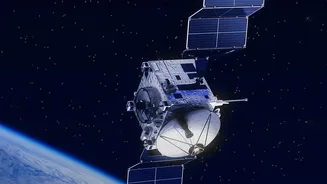
Recent advancements are revolutionizing space weather forecasting. A key breakthrough comes from NASA's PUNCH (Polarimeter to Unify the Corona and Heliosphere) mission, a constellation of four microsatellites launched in March 2025. PUNCH provides continuous, high-resolution imagery of CMEs as they travel from the Sun. In a groundbreaking test using data from a May 2025 event, scientists fed PUNCH imagery into a new computer model. By tracking the CME's leading edge across the inner solar system, the model was able to predict its arrival at Earth with an accuracy of within 30 minutes. This represents a monumental leap forward, shrinking the forecast error window tenfold and providing the kind of actionable intelligence needed to truly secure satellite assets. This new generation of physics-informed AI models promises to turn space weather forecasting from a broad alert system into a precision tool.