






Let Your Home Breathe
The first rule of monsoon home care is to fight trapped humidity. While it seems wise to shut everything against the rain, a sealed home traps damp air, leading to musty smells and mildew. Whenever there's a break in the downpour, open windows and doors
to allow for cross-ventilation. This simple act flushes out stale, humid air and brings in freshness. In high-moisture zones like the kitchen and bathroom, run your exhaust fans a little longer than usual after cooking or showering to expel steam and prevent condensation on walls and mirrors. Constant air circulation is your strongest ally against the damp, so keep ceiling fans running on a low speed, especially in rooms that stay closed. This movement helps prevent the stagnant air where mould and mildew thrive.
Swap Heavy Textiles for Lighter Fabrics
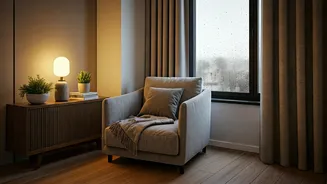
Monsoon is the time to rethink your soft furnishings. Heavy fabrics like velvet, wool, and even thick cotton act like sponges, absorbing moisture from the air, taking ages to dry, and developing a distinct musty odour. Pack away your heavy carpets, thick rugs, and velvet cushion covers. Instead, opt for lightweight, breathable materials that dry quickly. Sheer or lace curtains are a perfect choice, as they allow precious daylight and air to filter through, making rooms feel brighter and less stuffy. For bedding, cushion covers, and throws, switch to materials like pure cotton, linen, or quick-drying cotton-polyester blends. Lightweight cotton dhurries or colourful flat weaves are an excellent replacement for floor carpets, adding personality without trapping dampness.
Rearrange Furniture for Airflow
A simple but effective trick to protect your furniture and walls is strategic placement. Wooden furniture is particularly vulnerable to swelling and mould when exposed to persistent dampness. Avoid pushing sofas, cupboards, and beds right up against external walls, which are often cooler and prone to dampness. Leaving even a small gap of a few inches allows air to circulate behind the furniture, preventing moisture from getting trapped and discouraging mould from growing on the back of your valuable pieces. This is also a good time to declutter corners and other tight spaces, as clutter can restrict airflow and create pockets of damp, stagnant air. Consider applying a coat of wax or polish to wooden items before the season starts to create a protective barrier.
Fight Mustiness with Natural Solutions
That familiar monsoon smell is a sign of excess humidity. Combat it by placing natural moisture absorbers in enclosed spaces. Small bowls of rock salt, activated charcoal, or even chalk sticks placed inside wardrobes, bookshelves, and kitchen cabinets can work wonders in absorbing excess moisture. Silica gel packets, often found in new shoe boxes, are also highly effective. For a fragrant touch, add pouches of dried neem leaves, cloves, or camphor, which not only absorb moisture but also act as natural insect repellents. To keep your home smelling fresh and inviting, use scented candles or an essential oil diffuser with fragrances like sandalwood, lavender, or lemongrass. The gentle aroma helps mask damp odours and adds to the cosy atmosphere.
Brighten Gloomy Days with Colour and Light
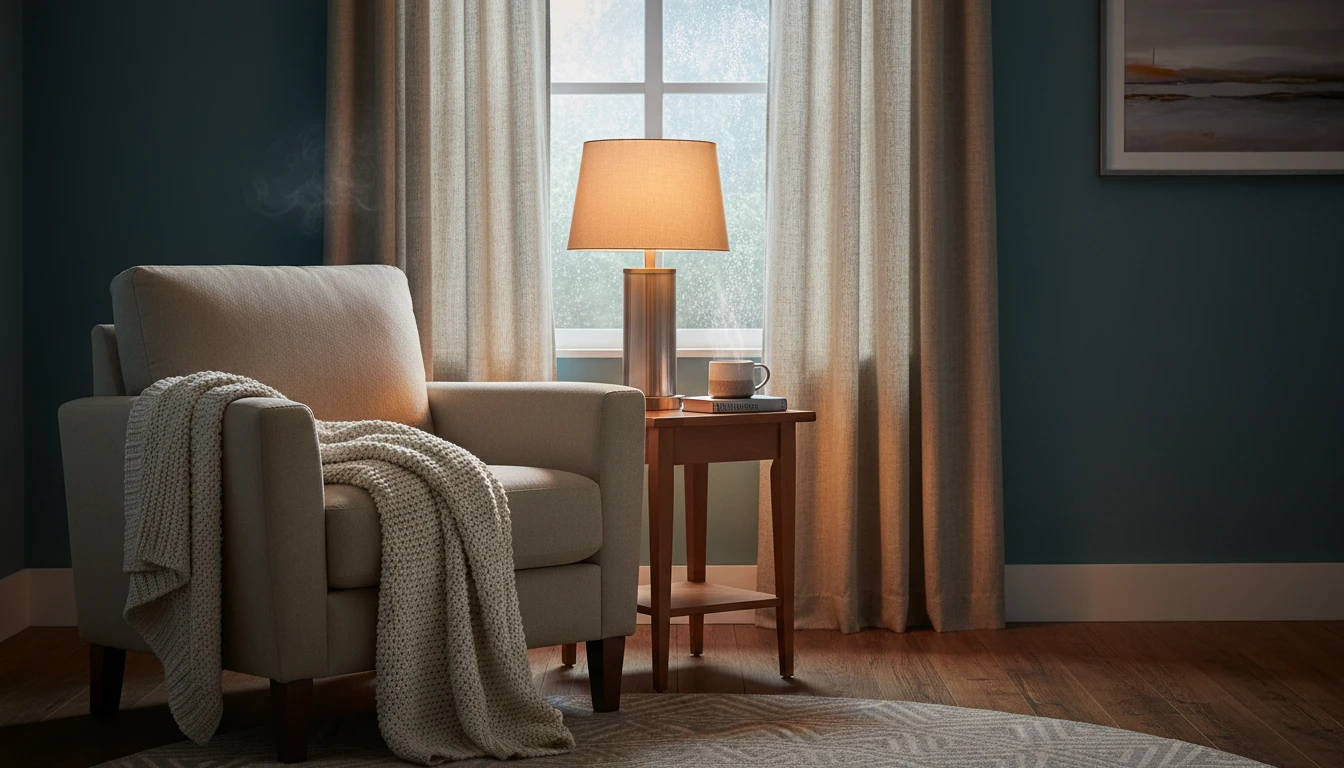
The grey, overcast skies can make interiors feel dark and somber. Counteract this by injecting pops of bright, cheerful colour into your decor. This doesn't require a major overhaul. Simply swapping out cushion covers, throws, or even artwork for ones in vibrant shades like sunshine yellow, turquoise, or fuchsia can instantly lift the mood of a room. Lighting also plays a crucial role. Since natural light is limited, enhance the ambience with warm-toned lighting. Use floor and table lamps to create soft, golden pools of light in corners or reading nooks. This layered lighting strategy makes a space feel warmer, cosier, and more inviting, providing a perfect retreat from the rain outside.