





Choose Your Luggage Wisely
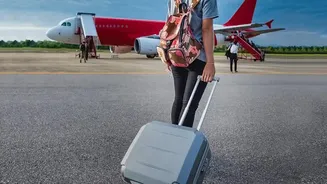
The first step to a manageable journey is selecting the right kind of bag. While large, hard-shell suitcases seem secure, they can be cumbersome on a crowded train. Their rigid shape makes them difficult to fit under berths or in overhead spaces. Consider
a sturdy backpack or a soft-sided duffel bag instead. These are more flexible and can be squeezed into irregular spots. For most trips, a single carry-on-sized roller or a compact travel backpack, plus a small personal item for valuables, is the ideal setup. The golden rule is to only pack what you can comfortably lift and carry yourself without assistance.
Pack Smart, Not Just Light
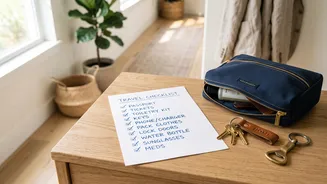
Festive travel often involves carrying gifts and essentials, making it hard to pack light. The solution is to pack smart. Roll your clothes instead of folding them to save space and minimise wrinkles. Opt for versatile clothing items that can be mixed and matched. Decant toiletries into smaller bottles and remove unnecessary packaging from new items. Keep essentials like medicines, chargers, and a water bottle in a smaller daypack that stays with you at all times. This keeps you from having to open your main suitcase on a crowded platform or in a packed compartment.
Know the Official Luggage Rules
Being aware of Indian Railways' luggage policies can prevent last-minute trouble. The free luggage allowance varies by class. For example, sleeper class passengers are generally allowed 40 kg for free, while AC 2-Tier has a limit of 50 kg. There are also size restrictions; bags larger than 100 cm x 60 cm x 25 cm are supposed to be booked in the brake van. For AC 3-Tier and AC Chair Car, the maximum size is even smaller, at 55 cm x 45 cm x 22.5 cm. If you know you'll have excess luggage, you can book it in advance online or at the station's luggage office.
Master the Art of Onboard Storage
Once you board the train, storing your luggage correctly is key. The space under the lower berth is the primary spot for larger bags. If you have a side-lower berth, you often have more dedicated space. For those on upper berths, smaller bags can be kept at the head or foot of the berth. Always store your luggage without blocking aisles, doorways, or other passengers' space. Being considerate helps maintain a peaceful environment in a shared space. If you find the space under your seat is already taken, coordinate politely with your co-passengers.
Security Is Your Top Priority
Crowded trains can unfortunately be hotspots for theft. The most common and effective security measure is to use a sturdy chain and padlock. You can find these for sale at most major railway stations. Secure your main bags by chaining them to the hooks provided under the lower berths. For your valuables—wallet, phone, documents, and electronics—never leave them in your main luggage. Keep them in a small sling bag or daypack that you can wear, use as a pillow, or keep close to you at all times, especially when you are sleeping or going to the washroom.
Avoid Prohibited and Flammable Items
During festive seasons like Diwali, Indian Railways issues strict advisories against carrying flammable items. This includes firecrackers, gas cylinders, kerosene, stoves, and even matchboxes. Carrying such items is a punishable offence under the Railways Act, 1989, and for good reason—a single spark in a crowded coach can lead to a disaster. These items will be confiscated during security checks, which are intensified during the festive rush. Plan to buy your fireworks and other festive supplies at your destination.
Use Station Facilities if Needed
If you arrive at the station early or have a long layover, don't struggle with your luggage on a crowded platform. Most major railway stations have cloakrooms or luggage lockers where you can safely store your bags for a fee. To use this service, your bags must be securely locked, and you'll need to present a valid train ticket. This can free you up to get food or simply wait in a less congested area until it's time to board.