






Hours spent sitting at a desk can lead to stiffness in your neck, back, and hips. Fortunately, you don't need a gym to counteract this. Simple, quick movement breaks can improve joint mobility and keep you feeling loose and comfortable.
Relieve Your Neck and Shoulders
Staring at a screen
often causes us to hold tension in our upper body, leading to stiffness and headaches. These gentle movements can help release that strain. First, try simple neck rotations. While sitting tall, slowly turn your head to look over your right shoulder, hold for a moment, and return to the center before repeating on the left. Next, perform some shoulder rolls. Let your arms hang loosely at your sides and roll your shoulders up towards your ears, then back, down, and forward in a smooth, circular motion. Do this five times in each direction. Finally, the chin tuck helps counteract the 'forward head' posture. Look straight ahead and gently draw your chin backward, creating a double chin, without tilting your head. Hold for five seconds and release. Repeat this several times throughout the day to keep your neck muscles from getting overtired.
Mobilise Your Spine
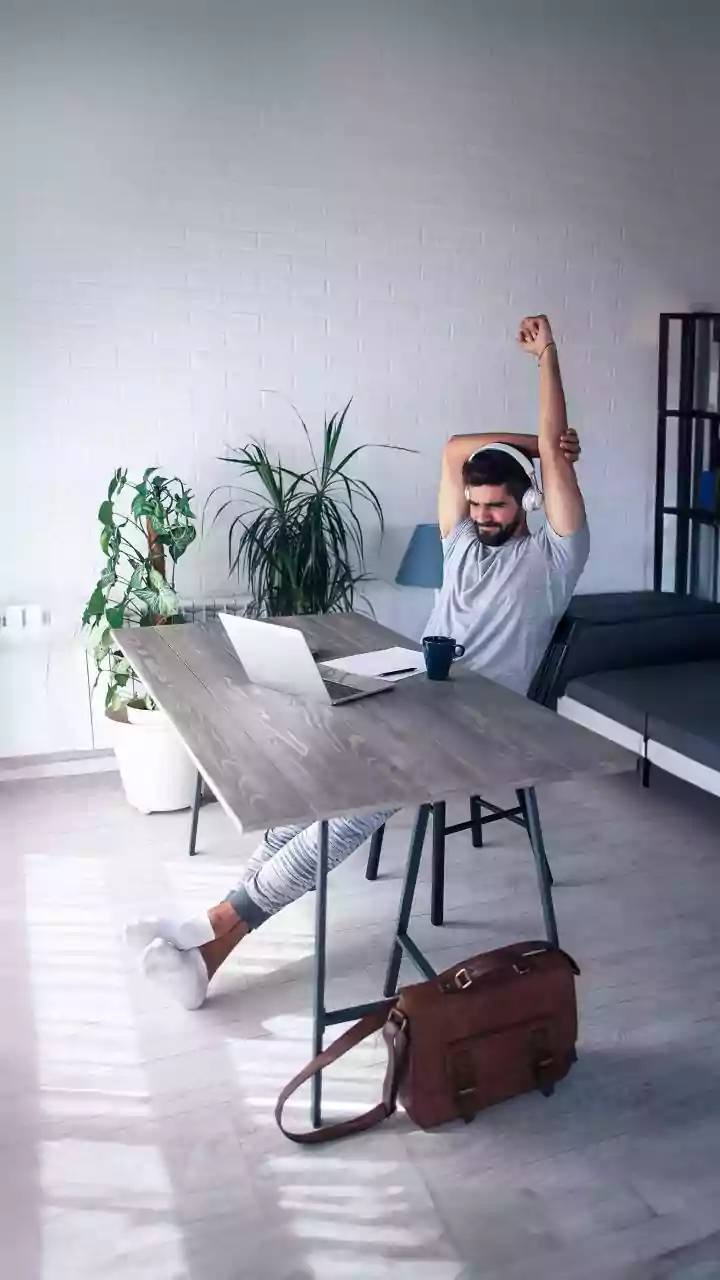
A static posture can make your entire back feel stiff and compressed. A seated spinal twist is an excellent way to introduce some gentle rotation. Sit tall with your feet flat on the floor and cross your arms over your chest. Keeping your hips facing forward, slowly twist your upper body to the right as far as feels comfortable. Hold the stretch, then return to the center and rotate to the left. Another great movement is the seated cat-cow. Place your hands on your knees and on an inhale, arch your back and look up towards the ceiling (cow). On an exhale, round your spine and drop your chin to your chest (cat). This fluid motion helps lubricate the spinal joints. An overhead stretch can also do wonders. Lace your fingers together, push your palms toward the ceiling, and lengthen your entire spine.
Open Up Your Hips
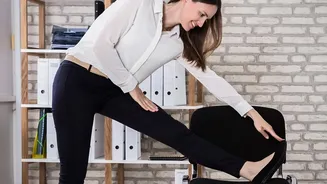
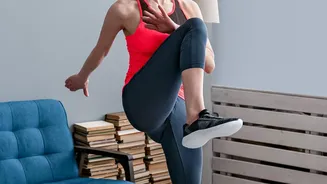
The hips are another major victim of prolonged sitting, often becoming tight and restricted. To combat this, you can perform seated hip marches. While sitting at the edge of your chair, lift one knee towards your chest as high as you comfortably can, then lower it and repeat with the other leg. This helps activate your hip flexors. For a deeper stretch, try the standing figure-four. Hold onto your desk for balance, cross your right ankle over your left knee, and sit your hips back as if you were about to sit in a chair. You should feel a stretch in your right glute and hip. Hold for 20-30 seconds and then switch sides. Even simple standing hip circles, where you shift your weight to one leg and make small, controlled circles with the other, can help improve your hip's range of motion.
Care for Your Wrists and Fingers
Typing and using a mouse for hours on end puts repetitive strain on the small joints and muscles in your hands and wrists. To give them a break, extend one arm in front of you with your palm facing down. Gently bend your wrist so your fingers point to the floor. Use your other hand to apply light pressure, pulling the fingers toward your body to stretch the top of your forearm. Hold for 15 seconds, then flip your hand so the palm faces up and repeat the stretch. Wrist circles are also beneficial; simply rotate your wrists 10 times in a clockwise direction, then 10 times counterclockwise. Finally, don't forget your fingers. Make a tight fist, hold for a few seconds, then open your hand and spread your fingers as wide as possible. This simple action can help relieve stiffness.
The Power of a Short Break
The key to making these movements effective isn't intensity, but frequency. Taking short, regular breaks is more beneficial than one long session at the end of a painful day. Research shows that even five minutes of movement every half an hour can significantly improve health markers. These brief 'movement snacks' increase blood flow, reduce muscle tension, and can even boost your focus and productivity. Set a timer to remind yourself to get up and move every hour. It’s not about transforming your workday into a workout, but about integrating small, consistent moments of mobility to counteract the effects of a sedentary job. Your body isn't designed to stay in one position all day, and giving it these small opportunities to move will pay dividends for your long term comfort and health.