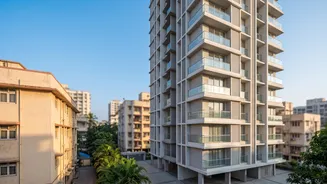






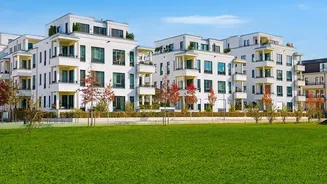
New Glamour vs. Redeveloped Charm
The choice seems straightforward. New projects offer modern designs, the latest amenities, and the promise of a hassle-free, move-in-ready lifestyle. Redeveloped properties, on the other hand, often provide access to established, high-value neighbourhoods
where new land is scarce. They might also offer larger apartment sizes as developers work with existing layouts. The 'age' here is twofold: for new builds, it's about being the first owner. For redeveloped homes, it's about the building's history and the quality of its rebirth. Understanding this distinction is the first step in making a smarter investment.
Construction Quality and Lifespan
Project age is a direct indicator of construction technology and safety standards. A brand-new building is constructed under the latest regulations, including updated seismic and fire safety codes. Its structural lifespan is typically estimated at 50-60 years from the start. A redeveloped building, however, presents a more complex picture. While the new structure is modern, its quality is heavily dependent on the developer. Problems like poor construction and corner-cutting can plague redeveloped projects. Furthermore, the original building's foundation and some structural elements, if retained, might not have been designed for a high-rise, adding another layer of risk to consider.
The Legal Labyrinth
The age and history of a project are deeply tied to its legal clarity. New projects launched after 2017 are governed by the Real Estate (Regulation and Development) Act (RERA), which mandates transparency on approvals, timelines, and financial accountability. Redevelopment projects can be murkier. They often involve complex legal histories, multiple original owners, and the critical step of transferring the land title to the housing society. A crucial document is the Occupancy Certificate (OC), which certifies a building is fit for habitation. Living in a building without a valid OC can lead to penalties and difficulties in securing loans or reselling the property. For redeveloped properties, obtaining a new OC is mandatory, and any delay is a major red flag.
Society Health and Hidden Costs
The financial health of the housing society is a long-term factor influenced by the project's age. In a new building, residents form a fresh society, which involves initial teething issues but starts with a clean slate. In a redeveloped building, you inherit an existing society, which might come with pre-existing disputes or financial mismanagement. More importantly, age affects future costs. Redevelopment often brings larger flats and modern amenities like lifts and gyms, which significantly increase monthly maintenance bills and property taxes. These higher recurring costs can be a shock for residents used to the expenses of an older, simpler building and must be factored into the total cost of ownership.
Amenities and Modern Living
A project's construction date often reflects the lifestyle expectations of that era. New constructions are designed for contemporary needs, featuring amenities like gyms, swimming pools, co-working spaces, and dedicated parking. Redevelopment projects, while providing new homes, may be constrained by the original plot size and unable to offer the same expansive amenities. A building redeveloped on a small, standalone plot may lack the compound walls, green spaces, and community feel that are often standard in new, large-scale projects. This can lead to a mismatch between the modern interior of your flat and the limited external infrastructure.