



The Promise of Polar Ice
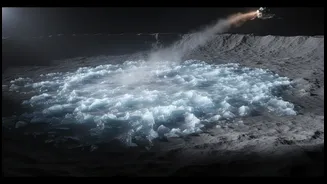
For decades, the Moon was seen as a bone-dry desert. That perception changed dramatically with the confirmation of water ice, particularly within the permanently shadowed regions (PSRs) near the lunar poles. These craters, which have not seen direct sunlight
for billions of years, act as cosmic cold traps, preserving volatile compounds like water. This discovery was a game-changer. This isn't just about finding water for astronauts to drink. Lunar ice is the cornerstone of in-situ resource utilization (ISRU), the principle of “living off the land.” By splitting water into hydrogen and oxygen, future lunar bases could produce breathable air and, critically, rocket propellant. This would dramatically reduce the cost and complexity of deep-space exploration, turning the Moon into a refuelling station for missions to Mars and beyond. The ice also holds an irreplaceable scientific record, containing clues about the origin of water in our solar system and potentially the building blocks of life.
The Unintended Consequence of Arrival
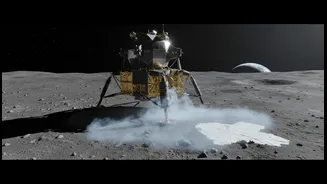
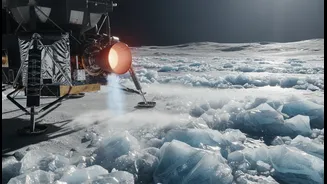
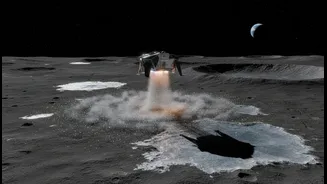
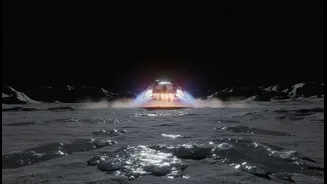
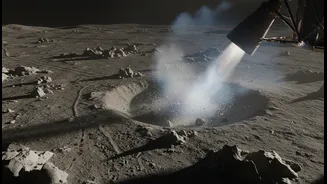
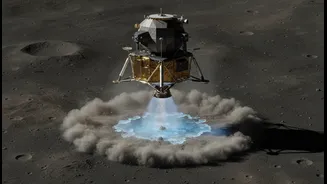
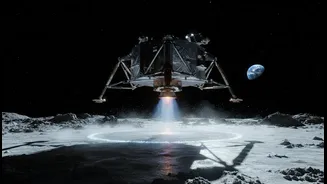
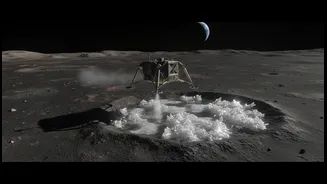
The problem arises from the fundamental physics of landing on an airless world. To slow its descent, a lander fires powerful rocket engines. The exhaust from these engines, which includes significant amounts of water vapor and other chemicals like methane, doesn't just dissipate. In the Moon's near-vacuum, the plume expands rapidly, creating a temporary, globe-spanning atmosphere. Studies and simulations, including those from Johns Hopkins Applied Physics Laboratory, show that these exhaust gases can travel vast distances in a surprisingly short time. Molecules from a landing near the South Pole can reach the North Pole in a matter of hours or days. This isn't just a localized problem; it's a global one. The effect is fast and far-reaching, a chemical footprint that spreads across the entire lunar surface.
A Dual Threat: Scientific and Resource Contamination
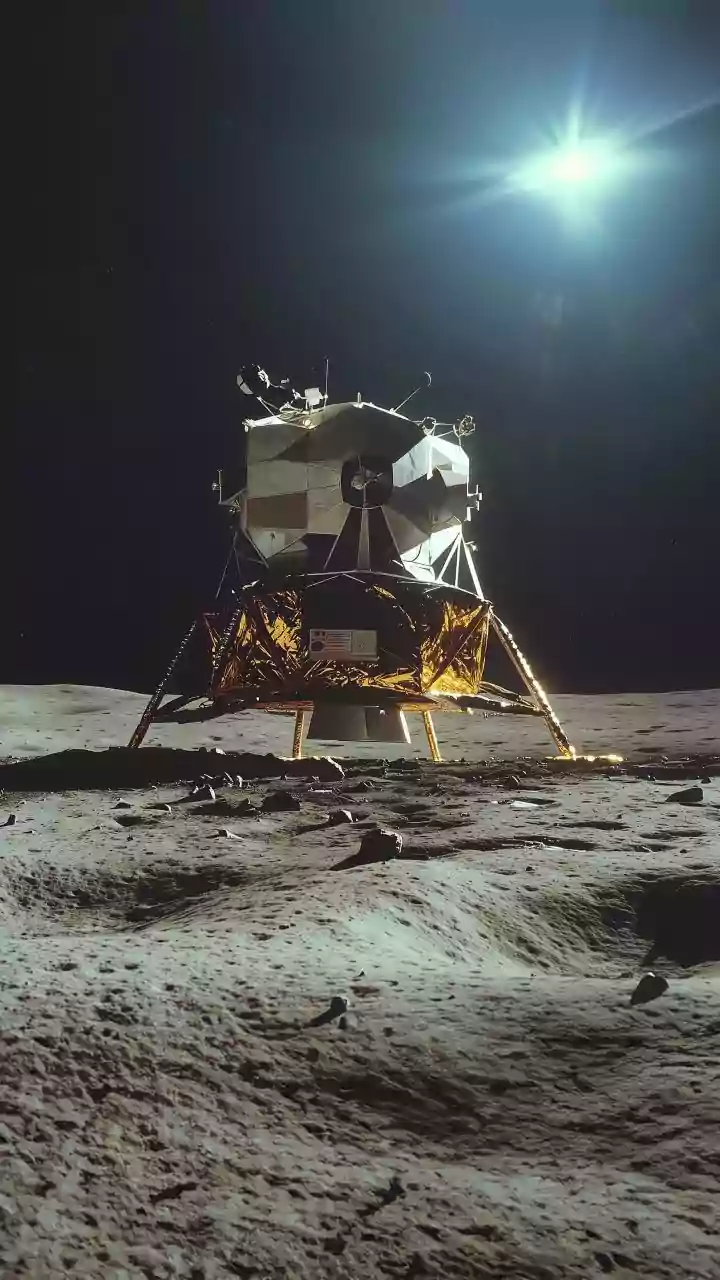
The exhaust plume presents two distinct threats. First, it jeopardizes the science. The ancient ice in PSRs is a pristine, frozen archive. Introducing modern, human-made water and organic compounds like methane could permanently contaminate this record, making it impossible to distinguish between native lunar volatiles and lander byproducts. Scientists fear we could erase the evidence before we even have a chance to read it. Second, it complicates resource extraction. Studies suggest that exhaust gases can freeze out and settle in the very same cold traps that hold the native ice, mixing with and coating the resource we hope to mine. While the Apollo-era landers were relatively small, future landers, such as SpaceX's Starship, are projected to be much larger and could deposit tons of water exhaust into these regions, potentially overwhelming the naturally occurring deposits. This makes it difficult to assess the quality and quantity of the native ice and could complicate future purification and processing efforts.
A New Planning Imperative
This challenge forces a new level of strategic thinking for mission planners at NASA, the European Space Agency, and commercial companies. The guiding question is no longer just how to land, but where and with what consequences. Several mitigation strategies are being considered. Planners could enforce mandatory standoff distances, requiring landers to touch down hundreds of kilometers from high-priority scientific zones. However, simulations show contamination can still occur over vast distances. Another approach involves developing new landing technologies. This could include engines that use different propellants with fewer contaminating byproducts or creating landing pads from lunar soil (regolith) to minimize the interaction between the plume and the surface. NASA is actively testing how plumes erode the lunar surface to better model and predict these effects. Ultimately, a crucial first step is to get better maps. Robotic scout missions are needed to precisely locate and characterize ice deposits before larger, crewed landers arrive, allowing planners to designate protected scientific zones.