






The Science of a Living Light
At the heart of this technology is bioluminescence, the same process that allows fireflies and deep-sea creatures to produce their own light. Scientists have successfully engineered plants to glow by introducing genes from bioluminescent fungi. Companies
like Light Bio have taken the lead, creating the 'Firefly Petunia' by inserting a genetic pathway from the Neonothopanus nambi mushroom. This allows the plant to convert caffeic acid, a compound it naturally produces, into light. Unlike earlier experiments that required external chemicals, these new genetically modified (GM) plants are self-sustaining; as long as the plant is healthy, its internal biological engine runs continuously, emitting a soft, ethereal glow. This breakthrough has moved glowing plants from the lab to the consumer market in some parts of the world.
From Lab Bench to City Park
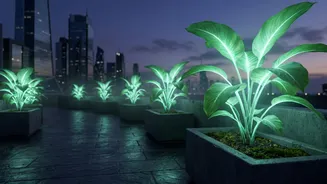
The core promise of this technology is a radical reimagining of urban lighting. Proponents envision a future where glowing trees, flowers, and shrubs line pathways, illuminate public squares, and provide ambient light in parks, reducing our reliance on the electrical grid. This isn't about replacing powerful streetlights needed for major roads, a task for which the current technology is not bright enough. Instead, it offers a sustainable, low-intensity alternative for decorative, architectural, and supplementary lighting. By providing a gentle, natural light, these living lamps could reduce the harshness of urban light pollution and create more serene public spaces, all while consuming no electricity.
The Eco-Friendly Promise
The environmental benefits are significant. Conventional public lighting is a major consumer of electricity, contributing to greenhouse gas emissions. Bioluminescent plants, by generating their own light, offer a zero-electricity alternative. This not only cuts down on energy consumption but also reduces the massive carbon footprint associated with powering a city after dark. Furthermore, these plants continue to perform their natural duties, absorbing carbon dioxide and releasing oxygen. The soft, natural quality of the light is also gentler on nocturnal ecosystems, potentially mitigating the disruptive effects of artificial light on local wildlife.
Hurdles on the Horizon
Despite the excitement, a city lit by glowing flora faces considerable obstacles. The primary challenge is brightness; the light emitted is currently too soft and ambient to serve as a primary light source for safety and navigation on busy streets. Scalability and maintenance are also major concerns. Keeping living organisms healthy in a harsh urban environment requires resources and careful management. Perhaps the biggest hurdle is public and regulatory acceptance. The use of GM organisms in open, public spaces is a sensitive issue that involves complex regulations and requires broad public trust. In the U.S., for instance, multiple agencies like the USDA and EPA would be involved in assessing the environmental safety of any such widespread deployment. The road from a commercially available petunia to a self-illuminating forest in a city centre is long and requires significant scientific and social progress.
India's Smart and Sustainable Future
For a nation like India, with its ambitious Smart Cities Mission and a pressing need for sustainable energy solutions, bioluminescent infrastructure holds unique appeal. As Indian cities rapidly urbanize, the demand for public lighting is soaring. While the current focus is rightly on deploying energy-efficient LED technology and smart, sensor-based lighting grids, bioluminescence represents a next-generation solution. In the future, these glowing plants could complement existing systems, providing eco-friendly lighting for the nation's growing number of parks, residential green spaces, and pedestrian zones. It aligns perfectly with the goal of creating cities that are not just technologically advanced but also more integrated with nature and environmentally responsible.