
The Next Frontier: A Sample Return Mission
Chandrayaan-4 is not just another landing; it's a complex, multi-stage mission designed to collect soil and rock from the Moon's south pole and return it for scientific analysis. Scheduled for around 2028, this mission will make India only the fourth
country to ever attempt such a feat. The primary goal is to collect up to 3 kilograms of lunar material, including subsurface samples that may hold clues about the presence of water ice. Unlike its predecessor, which focused on in-situ analysis, Chandrayaan-4 is about bringing pristine lunar specimens into laboratories on Earth, allowing for far more detailed study than what's possible with a rover. This mission is a crucial stepping stone, validating technologies essential for India's long-term goal of a crewed lunar landing by 2040.
The Robotic ‘Hand’: Scooping and Drilling
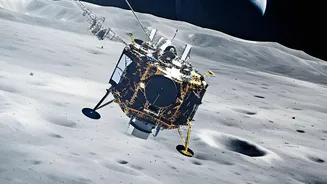
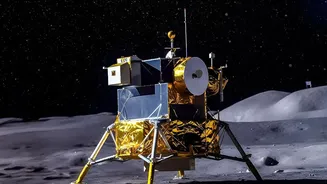
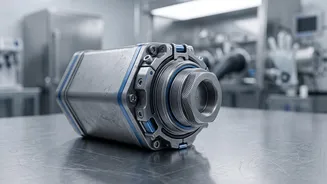
The centerpiece of the surface operation is a sophisticated robotic arm, or Surface Sampling Robot, mounted on the lander module. This arm is tasked with performing the delicate scooping operations. After a successful soft landing, it will extend and collect surface regolith (lunar soil) from around the landing site. But the mission goes deeper. In addition to the scooping mechanism, a drill will be deployed to collect subsurface samples. This is critical because materials shielded from the harsh radiation and temperature swings of the lunar surface could be better preserved. The entire collection process, which will be monitored via video cameras, is a high-stakes operation requiring immense precision in an environment millions of kilometres away.
A Complex Choreography in Space
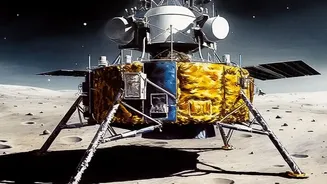
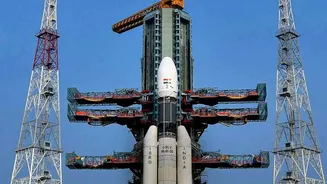
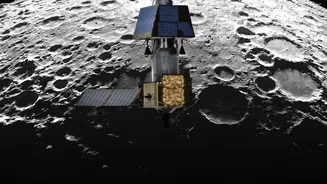
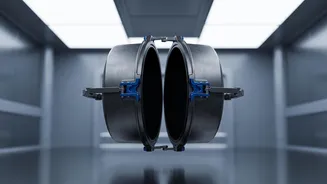
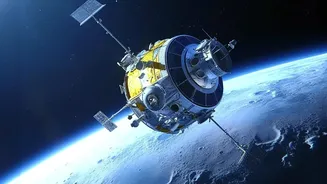
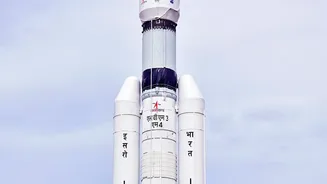
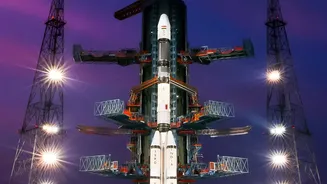
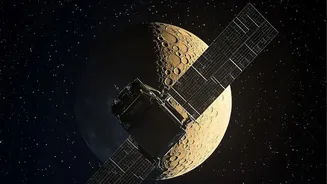
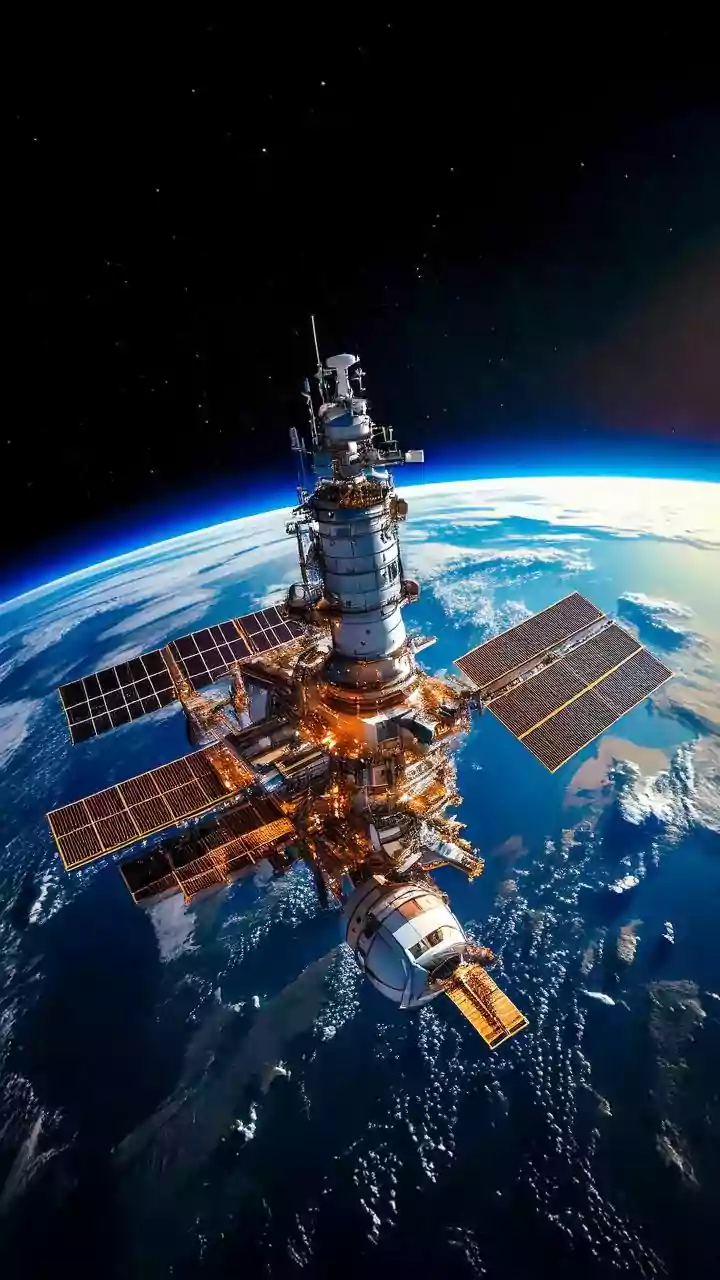
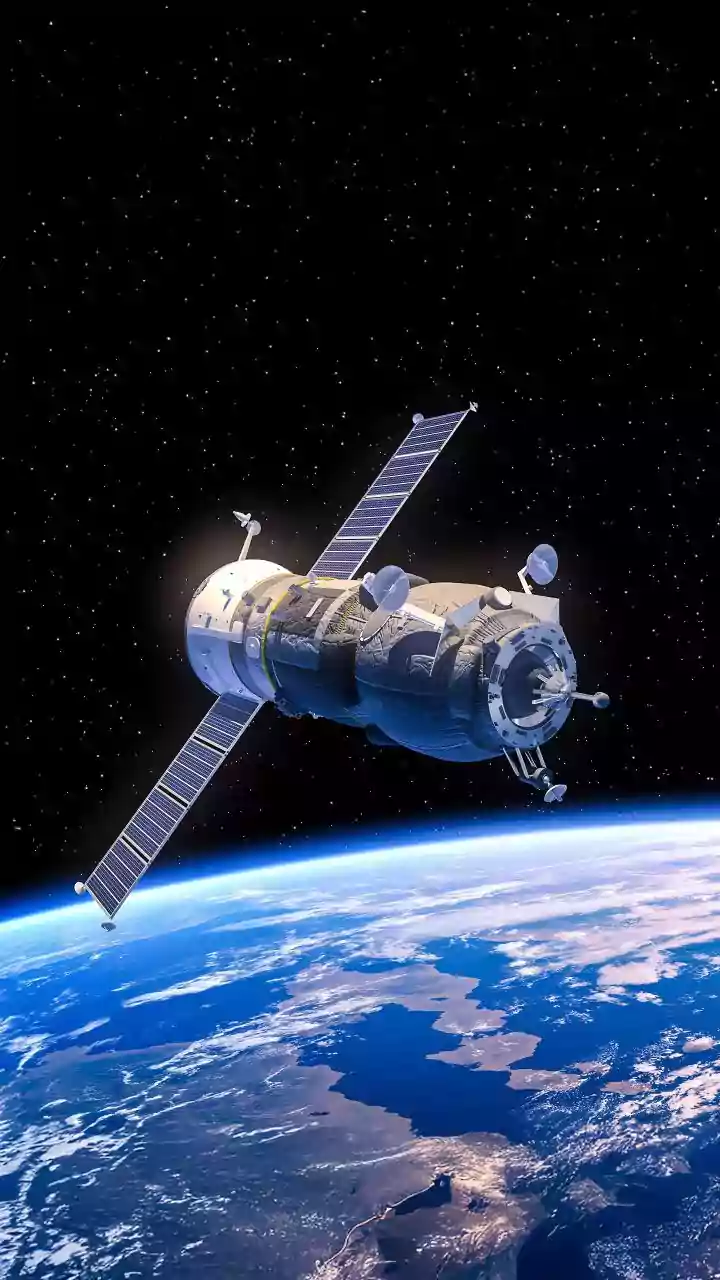
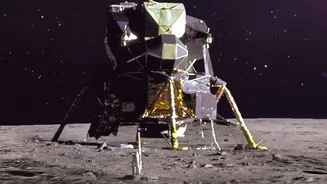
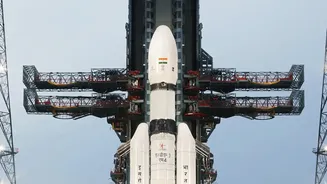
The mission's complexity is staggering, involving five separate modules launched by two of India's powerful LVM-3 rockets. The modules will first perform a docking maneuver in Earth's orbit to form a single integrated spacecraft before heading to the Moon. Once in lunar orbit, the lander and ascender modules will separate for the landing. After the robotic arm collects and transfers the samples to a container on the ascender module, this module will perform the first-ever Indian launch from another celestial body. It will lift off from the Moon, using the lander as a launchpad, and rendezvous with the transfer and re-entry modules waiting in orbit. This requires another automated docking, where the precious cargo is transferred for its journey home.
The Challenge of the South Pole
Operating robotics at the lunar south pole presents unique and formidable challenges. The region is characterized by extreme cold, with temperatures dropping low enough to threaten electronic and mechanical systems. Furthermore, the low angle of the sun creates long, dark shadows that can confuse optical sensors and landing systems, making navigation and precision operations difficult. The terrain itself is rugged and unpredictable, filled with craters and boulders that pose a risk to both landing and surface movement. The robotic arm and drill must be designed to function flawlessly in this unforgiving environment, dealing with abrasive lunar dust and extreme temperature fluctuations while being controlled with a significant time delay from Earth. Success will depend on a high degree of autonomy and resilience built into the robotic systems.
Why Bring the Moon to India?
The scientific payoff for a successful sample return is immense. Analyzing these samples on Earth will allow scientists to use advanced equipment to uncover secrets about the Moon's origin, evolution, and composition. The south pole is particularly interesting due to the potential presence of water ice in permanently shadowed regions. These samples could provide definitive proof and offer insights into the distribution and accessibility of this vital resource, which is key for future long-term human presence on the Moon. The mission will not only provide invaluable scientific data but also demonstrate a range of critical technologies, including orbital docking, lunar ascent, and high-speed re-entry, solidifying India's position as a major power in space exploration.