





How Do Plants Actually Clean the Air?
Plants are nature's original air filters. Through photosynthesis, they absorb carbon dioxide and release the oxygen we breathe. But their benefits go further. Many common houseplants can also absorb harmful airborne pollutants known as Volatile Organic
Compounds (VOCs). These chemicals, such as formaldehyde and benzene, are often released by everyday items like furniture, paint, cleaning supplies, and cooking fumes. The plant and the microorganisms in its soil work together to break down these toxins, effectively removing them from the air in enclosed spaces.
The Famous NASA Study: A Reality Check
Much of the enthusiasm for air-purifying plants comes from a 1989 NASA study, which found that certain plants were incredibly effective at removing VOCs from the air inside a sealed chamber. This research was groundbreaking, proving the concept of phytoremediation (using plants to clean the environment). However, it's important to understand the context. Our homes are not sealed space stations. Air circulates, windows open, and new pollutants enter constantly. While plants do work, their impact on the dense particulate matter (PM2.5) that characterizes Delhi's smog is limited. Recent studies suggest you would need an impractically large number of plants—sometimes hundreds—to match the performance of a good air purifier for particulate matter.
Your Smog Strategy: Plants as Partners
So, should you give up on plants? Absolutely not. The key is to see them as a vital part of a broader strategy. Think of them as a natural, beautiful supplement to mechanical air purifiers and good ventilation, not a replacement. They excel at tackling chemical pollutants that purifiers might miss and contribute to a healthier indoor ecosystem by boosting humidity and releasing oxygen. Plus, the psychological benefits of nurturing greenery indoors are well-documented, helping to reduce stress during a challenging season.
Top 5 Air-Purifying Plants for Indian Homes
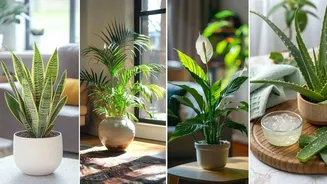
Ready to build your green army? These five plants are famously low-maintenance, readily available in India, and known for their air-cleaning abilities.1. Snake Plant (Sansevieria trifasciata): Often called 'Mother-in-Law's Tongue', this hardy plant is a superstar. It's unique because it releases oxygen at night, making it perfect for bedrooms. It's also incredibly effective at filtering out formaldehyde, benzene, and xylene.2. Money Plant (Epipremnum aureum): A staple in many Indian households, the Money Plant is more than just a symbol of good fortune. This fast-growing vine is excellent at removing VOCs like formaldehyde and carbon monoxide from the air. It's also very forgiving for beginner plant parents.3. Areca Palm (Dypsis lutescens): With its lush, feathery fronds, the Areca Palm is a powerful natural humidifier, which can be a relief during dry winter months. It's also a champ at filtering out common indoor pollutants and adds a refreshing tropical vibe to any living space.4. Peace Lily (Spathiphyllum wallisii): Recognizable by its elegant white blooms, the Peace Lily is a workhorse. It boasts high transpiration rates, meaning it's great for increasing room humidity. NASA found it effective against all three major VOCs tested: formaldehyde, benzene, and trichloroethylene.5. Spider Plant (Chlorophytum comosum): The Spider Plant is one of the easiest and most adaptable houseplants to grow. It's a fast-acting purifier, shown in some studies to remove a high percentage of toxins from the air. Its arching leaves and baby 'spiderettes' make it a beautiful addition to hanging baskets.
Making Your Green Wall Work
To get the most benefit, aim for density. While there's no magic number, a common recommendation from early research is about two good-sized plants per 100 square feet. For a typical 13 by 16-foot room, aiming for five to ten plants could create a noticeable improvement in air quality. Cluster them in areas where you spend the most time, like your bedroom or living room. Ensure they get the right amount of light and water, as healthy, actively growing plants are the most effective purifiers. A plant that is struggling won't have the energy to clean the air.