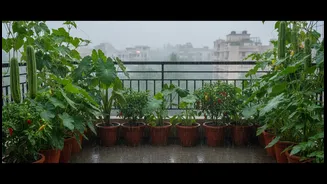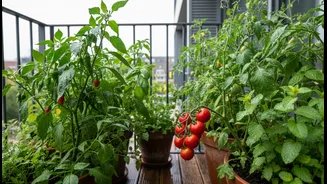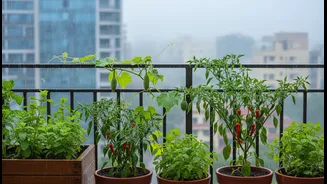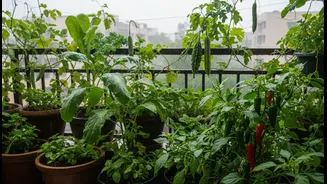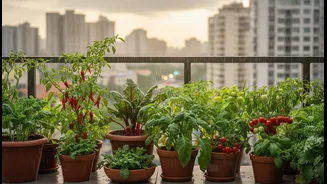





Preparing Your Monsoon Oasis
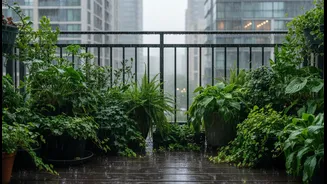
Success in monsoon gardening begins before a single seed is sown. The biggest challenge is managing water. Constant rain can lead to waterlogged soil and root rot, the primary enemy of container plants. Start by ensuring every pot has clear drainage holes.
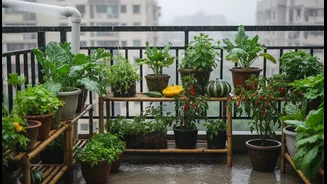
Elevating pots on stands or bricks is a simple but crucial step to allow excess water to escape freely. Opt for a light, well-draining potting mix. A combination of garden soil, coco peat, and compost is ideal as it retains moisture without becoming soggy. Heavy clay soils should be avoided. Finally, observe your balcony's sunlight pattern. Most vegetables need at least four to six hours of sun, so position your pots in the brightest spots.
Growing Glorious Greens
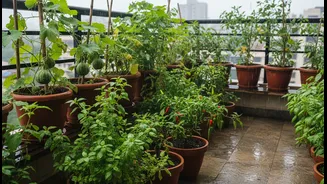
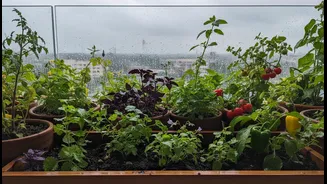
Leafy greens are some of the easiest and most rewarding vegetables to grow during the monsoon. The moist, moderate temperatures encourage rapid growth. Spinach (Palak) is a fantastic choice, often ready for harvest within four to six weeks. Amaranth (Chaulai or Rajgira) also thrives in the humidity and provides a continuous harvest. For a staple herb, plant coriander (Dhania). It grows quickly in the cool, humid weather and is perfect for garnishing everything from dals to salads. When planting greens, sow seeds directly into your pots and ensure the soil remains consistently moist but not waterlogged.
Cultivating Gourds in Containers
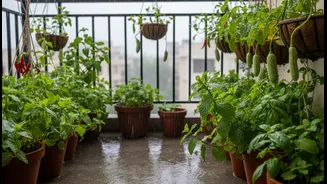
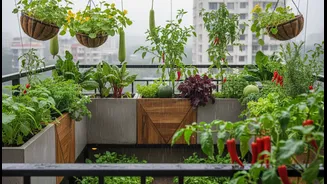
Gourds are the champions of monsoon gardening, known for their vigorous growth during the rainy season. Varieties like Bottle Gourd (Lauki), Ridge Gourd (Turai), and Bitter Gourd (Karela) perform exceptionally well. However, they are climbers and require a sturdy trellis for support. This keeps the vines and developing fruits off the wet ground, preventing rot. Gourds are heavy feeders and need large containers—at least a 12 to 15-inch pot is recommended. Use a rich, well-draining soil mix and place them where they can get plenty of sunlight. While the rain helps, you may need to hand-pollinate the flowers to ensure a good harvest.
Spicing It Up with Chillies
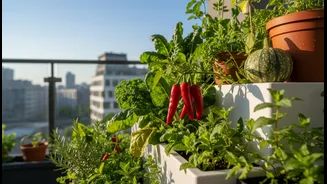
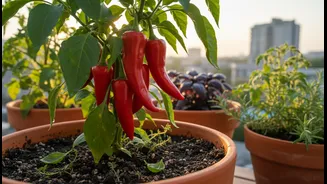
No Indian kitchen is complete without a steady supply of chillies, and they adapt beautifully to pot culture. Green chillies flourish in the warm and humid conditions of the monsoon. Growing them in containers is often easier than in the ground. Select a pot that is at least 10-12 inches deep with good drainage holes. Chilli plants need about five to six hours of sunlight daily, so a south or west-facing balcony is ideal. With regular care, a few plants can provide a continuous supply of fresh chillies to spice up your meals throughout the season.
Aromatic and Hardy Herbs
Fresh herbs can transform a simple meal, and many grow wonderfully during the monsoon. Mint (Pudina) is incredibly easy to grow and loves moist conditions, but it's best to keep it in a container to control its spread. Holy Basil (Tulsi) is another must-have, known for its immunity-boosting properties. It requires well-drained soil and should be watered only when the topsoil feels dry to prevent rot. Lemongrass is another great choice that adds a fresh, citrusy aroma and flavour to teas and soups. It thrives in the rain but requires good drainage.
Essential Monsoon Care
Beyond choosing the right plants, monsoon gardening requires a few adjustments to your routine. Avoid overwatering; always check if the top inch of soil is dry before adding more water. High humidity attracts pests and fungal diseases. Proactively spray a neem oil solution (5ml per litre of water) every 10-14 days to keep them at bay. Ensure good air circulation by not overcrowding your pots. Pruning is also essential. Regularly remove any yellowing leaves or broken stems to redirect the plant's energy into healthy growth and reduce the risk of disease. Lastly, remember to empty any water that collects in trays under the pots to prevent mosquito breeding.