






AI's Unquenchable Thirst for Power
Artificial intelligence is no longer a niche technology; it is rapidly becoming the backbone of modern industry. But this progress comes at a steep price. The massive data centres required to train and run advanced AI models are incredibly power-hungry,
with some facilities consuming as much electricity as a small city. According to the International Energy Agency, global electricity consumption from data centres is projected to more than double by 2030, with AI being the primary driver of this growth. This surge is creating a bottleneck, not of computing power, but of electrical power and land. In many regions, the demand for new data centres is outstripping the capacity of local grids to support them, leading to project delays and rising energy costs. Communities are also raising concerns over the immense water usage required for cooling these terrestrial facilities. This scalability crisis is forcing tech giants to rethink the fundamental architecture of AI infrastructure.
A Space-Based Solution
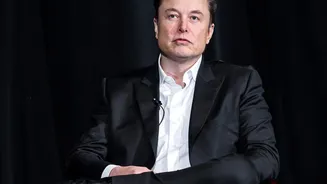
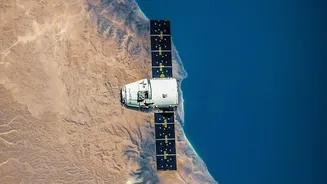
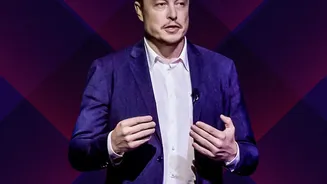
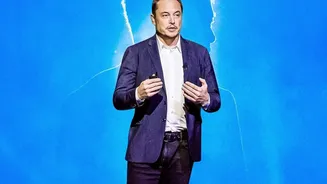
In response to these earthly constraints, Elon Musk has proposed a radical alternative: leveraging SpaceX to build and support data centres in orbit. The vision involves a constellation of satellites that are, in effect, floating data centres. The core idea is to bypass terrestrial bottlenecks entirely. In space, there is access to near-constant solar power without atmospheric interference or weather, providing a virtually inexhaustible energy source. Furthermore, the vacuum of space offers a unique cooling advantage. While it is a thermal insulator, the cold background of space allows for massive radiative cooling systems that could dissipate heat from powerful processors more efficiently than the energy-intensive water and air-cooling systems used on Earth. Musk argues that in the long term, moving AI compute off-planet is the 'only way to scale'.
Starship, Starlink, and Orbital Compute
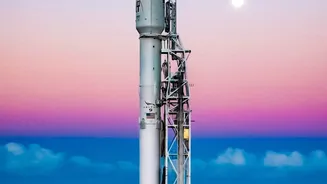
This futuristic plan hinges on two of SpaceX's flagship technologies: Starship and Starlink. Starship, with its massive payload capacity and focus on full reusability, is presented as the key to making the deployment of heavy AI satellites economically viable. These would not be small satellites; Musk has described them as potentially enormous structures with large solar arrays and heavy radiators. Once in orbit, these data centres would need to connect back to Earth. This is where the Starlink constellation comes in. With its thousands of existing satellites connected by high-speed laser links, Starlink provides the blueprint for a global communication network that could transfer data between orbital data centres and ground stations with low latency. This would allow for AI model training to occur in space, while the results are beamed down to users across the globe. SpaceX has reportedly begun significant infrastructure planning, including expanding a satellite factory in Texas, to support this long-term vision.
A Vision or a Viable Plan?
Despite the compelling logic, the concept of orbital data centres is still largely theoretical and faces monumental challenges. Experts point to significant hurdles, including the physics of dissipating heat in a vacuum, protecting sensitive electronics from cosmic radiation, and the immense cost and complexity of launching and maintaining such a massive constellation. Some have questioned whether the idea is a serious proposal or a publicity stunt to drive investment. However, Musk's companies are already making moves that align with this strategy. xAI, Musk's AI venture, has reportedly merged with SpaceX, and the company is already building massive terrestrial data centres while planning for a future in space. Whether this vision of space-based AI becomes a reality remains to be seen. It is a long term, ambitious gamble. For now, it serves as a powerful illustration of the immense infrastructural shifts required to support the next generation of artificial intelligence, forcing the industry to look beyond the planet for solutions.