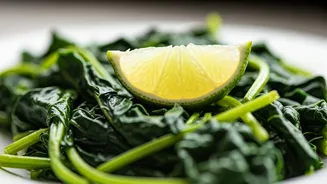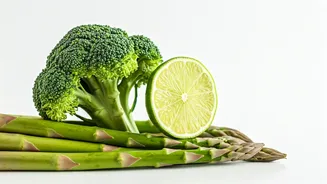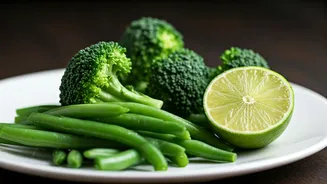




The Science of Sad, Drab Greens
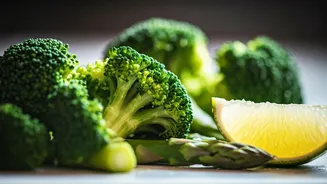
The brilliant colour in green vegetables like broccoli, beans, and asparagus comes from chlorophyll. [3] Unfortunately, chlorophyll is a sensitive pigment. When you heat vegetables, two things happen that spell trouble for their colour. First, the heat itself
starts to break down the chlorophyll molecules. [5, 11] Second, the cooking process damages the plant's cell walls, releasing natural acids that are normally kept separate. [1, 19] When these acids come into contact with the chlorophyll, they trigger a chemical reaction that transforms the vibrant green into a dull, greyish-green compound known as pheophytin. [2, 3] The longer the vegetables are cooked, the more this transformation occurs.
The Acid Question: Friend or Foe?
The headline suggests a lime trick, which brings up an important question about acidity. Since vegetables' own acids are part of the problem, what happens when we add more from a source like lime or lemon juice? Most culinary science shows that adding acid directly to cooking green vegetables actually speeds up the colour-draining process. [2, 19] This is why a green bean salad tossed in vinaigrette will turn dull if left to sit. [1] So, the trick isn't to add lime juice into the pot while your veggies are boiling or steaming. The real secret lies in *when* and *how* you apply both heat and acid.
The Pro Technique: Blanch and Shock
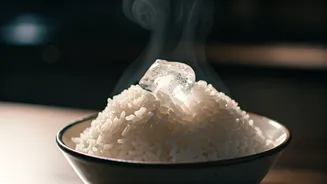
The most effective method used by chefs to keep vegetables bright green is a two-part process called blanching and shocking. Blanching involves cooking the vegetables briefly in a large pot of rapidly boiling, well-salted water. [9, 13] This quick, high-heat cooking is just long enough to tenderize the vegetable but short enough to minimize chlorophyll damage. Shocking is the crucial next step: immediately transferring the vegetables from the boiling water into a bowl of ice water. [3, 16] This halts the cooking process instantly, 'locking in' that vibrant green colour and perfect crisp-tender texture. [3] Without the ice bath, the residual heat in the vegetables would continue to cook them, leading to softness and colour loss. [13]
The Real Lime Trick: A Flavourful Finish
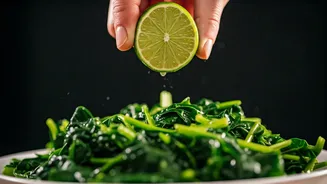
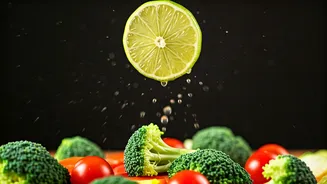
This is where the lime trick truly shines. Once your vegetables have been blanched and shocked, their colour is stable. They are perfectly cooked and beautifully green. Now is the time to add your acid. Drain the cooled vegetables well, and just before serving, toss them with a squeeze of fresh lime juice, a drizzle of good olive oil, and a sprinkle of salt. By adding the lime at the end, you get its bright, zesty flavour as a complement to the fresh-tasting vegetable, without any risk of it turning the chlorophyll brown. [2] This method gives you the best of both worlds: perfect colour and a punch of flavour.
A Step-by-Step Guide to Perfection
Ready to try it? Here’s how to put it all together for the greenest vegetables of your life.
1. Prepare Your Ice Bath: Before you start cooking, fill a large bowl with ice and water. Keep it next to your stove.
2. Boil Your Water: Bring a large pot of water to a rolling boil. Be generous with the salt; it should taste like the sea. This not only seasons the vegetables but can also help protect the chlorophyll. [1]
3. Blanch (Briefly!): Drop your vegetables into the boiling water. Cook for just 2-5 minutes, depending on the vegetable. They should be tender but still have a bite. [1, 9]
4. Shock and Chill: Using a slotted spoon, immediately move the vegetables from the boiling water to the ice bath. Let them cool completely. [14]
5. Drain and Dress: Remove the vegetables from the ice water and drain them well. Pat them dry. Now, finish with your squeeze of lime, oil, and any other seasonings right before you serve.