








The Alluring Promise of a Quick Fix
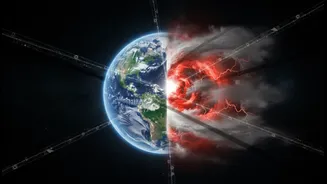
With global efforts to cut carbon emissions falling short, the climate crisis is pushing humanity toward a difficult crossroads. This has intensified interest in geoengineering—the deliberate, large-scale manipulation of Earth’s climate systems to counteract
global warming. These are not small-scale solutions; they are planetary interventions often presented as a last-ditch effort to pull the world back from the brink. The appeal is obvious: the potential for a rapid cooling effect that could, in theory, buy humanity more time. But this promise comes with a heavy dose of risk, and many in the scientific community argue that we are dangerously unprepared to deploy such powerful technologies.
Two Paths, Many Dangers
Geoengineering largely falls into two categories. The first, Carbon Dioxide Removal (CDR), focuses on pulling existing carbon out of the atmosphere through methods like mass tree planting or direct air capture machines. While considered less risky, scaling these technologies to a meaningful level presents enormous challenges in land use and cost. The second, and more controversial, category is Solar Radiation Management (SRM). This involves reflecting a small fraction of sunlight back into space to cool the planet. Proposed methods include injecting reflective sulfate particles into the stratosphere—mimicking the cooling effect of a large volcanic eruption—or brightening marine clouds over the ocean to make them more reflective. While SRM could potentially lower global temperatures within years, not decades, it does nothing to address the root cause of climate change: greenhouse gas concentrations. It's a 'mask', not a cure, for the planet's fever.
A Cascade of Unforeseen Consequences
Scientists are raising the alarm about a host of potential side effects from these technologies. One of the biggest fears surrounding SRM is its potential to disrupt global weather patterns in unpredictable ways. Studies have shown that injecting aerosols into the atmosphere could significantly alter rainfall, potentially triggering droughts in some regions while causing floods in others. Another major concern is the so-called 'termination shock'. If an SRM system were deployed for years and then suddenly stopped for any reason—be it political instability, lack of funds, or war—global temperatures would rebound with terrifying speed, at a rate two to four times faster than the warming we are experiencing now. This could cause devastating impacts on ecosystems and societies unable to adapt. Furthermore, some SRM methods could damage the ozone layer, increasing harmful UV radiation.
What It Means for India
The stakes are particularly high for India and the broader South Asian region. The Indian monsoon is a complex weather system that is the lifeblood for agriculture and hundreds of millions of people. Climate models suggest that geoengineering, especially if deployed unevenly across the hemispheres, could severely weaken or shift the monsoon, leading to catastrophic droughts and impacting food and water security. One study noted that a poorly executed SRM experiment could trigger locust swarms in Africa that eventually reach India and Pakistan, devastating crops. These technologies carry a risk of disproportionately harming nations in the global south, which are already more vulnerable to climate impacts. The potential for transboundary harm—where one country's actions have severe consequences for its neighbors—is immense, and there is currently no international law to manage such a scenario.
A Call for Global Rules and Restraint
Given the profound risks, the overwhelming consensus among concerned scientists is not necessarily a total ban on research, but a pressing need for caution, transparency, and robust international governance. Many argue that these technologies must not be seen as a substitute for cutting fossil fuel emissions. The fear is that the mere possibility of a techno-fix could create a 'moral hazard,' discouraging governments and corporations from taking the difficult steps needed for true decarbonization. Researchers are calling for an internationally agreed-upon strategy to guide any future research and prevent a rogue actor from unilaterally deploying a technology that could have global consequences. Before turning the Earth into a laboratory, the world must fully understand what is at stake.