







The Sobering Numbers
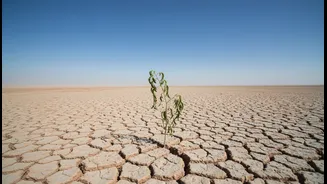
The Southwest Monsoon arrived in Goa around June 5, but its performance was weak. For most of the month, rainfall was alarmingly low. By June 20, the state had a massive 71% rainfall deficit, receiving only 166mm against a normal of 573mm. This placed
it in the "Large Deficient" category and marked one of the driest starts to June in nearly two decades. Although heavy showers in the final week helped narrow the gap, the month still ended with an overall deficit of about 34%. More worrying, the monsoon weakened again in early July, pushing the seasonal deficit back up to 26.7% as of July 9 and raising temperatures nearly three degrees above normal.
Anxiety in the Paddy Fields
For Goa’s farmers, the monsoon is a lifeline. The deficient rainfall in June created widespread anxiety, particularly among paddy cultivators. Agricultural activities in many villages came to a near standstill. Farmers who would normally be transplanting seedlings held back, waiting for the rain that was slow to come. The prolonged dry spell caused soil moisture to deplete, with farmer groups in South Goa fearing their crops would wither. While the Director of Agriculture noted that government support and mechanisation have provided some resilience, the initial dry spell caused significant concern and forced many to delay crucial sowing activities. This dependence on timely rain highlights the vulnerability of the agricultural sector to increasingly erratic weather patterns.
A Rippling Effect on Water Supply
A weak monsoon doesn't just affect farms; it threatens the state’s entire water supply. With a poor start to the season, concerns mounted over declining water levels in reservoirs and groundwater tables. Even before the full June data was in, officials warned that water restrictions might be necessary from July 1 if the rains didn't improve. This isn't a new problem, but it's becoming more acute. Experts have long warned that Goa's traditional water management systems are being dismantled by unchecked development, which seals natural ground that would otherwise absorb rainwater. This leads to a paradox: a state that receives abundant rainfall overall faces summer water shortages and depleting groundwater, a crisis of mismanagement as much as meteorology.
Goa as a National Bellwether
This is where Goa’s story becomes a story for all of India. What is happening in the country's smallest state is a concentrated version of a crisis unfolding nationwide. Goa’s economy is famously linked to tourism, but both its agriculture and its main industry depend on a stable environment—one that is now under threat. The struggle between development and ecological preservation, the reliance on a predictable monsoon, and the challenge of managing water for residents, farmers, and industry are not unique to Goa. From the water stress in Bengaluru to the unpredictable monsoons affecting farmers in Maharashtra and the Himalayan states, the themes are the same. Goa, with its sensitive coastal ecology and high economic stakes, is simply a canary in the coal mine. Its dry June is a powerful reminder that climate variability is no longer a distant threat but a present and recurring reality that demands better planning, policy, and water governance everywhere.