


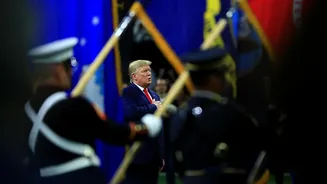
With midterm elections in the rearview mirror, attention pivots to a fundamental question of American power: what can a president, in this case Donald Trump, actually do in foreign policy, and how much can a new Congress stand in the way?
The President's Constitutional Edge
The U.S. Constitution
grants the president significant authority in foreign affairs. Article II names the president the 'Commander in Chief' of the armed forces and gives them the power to make treaties and appoint ambassadors. This foundation allows presidents to direct diplomacy, respond to foreign events, and lead the military. Over time, presidents have interpreted these powers broadly, often claiming the authority to act decisively on the world stage, especially during crises. This includes the ability to use military force to repel an attack and to gather foreign intelligence. A president like Trump, known for a preference for unilateral action, can leverage these inherent powers to shape international relations with considerable speed and independence.
The Power of the Pen: Executive Agreements
One of the most powerful tools a president has to bypass a potentially hostile Congress is the executive agreement. Unlike formal treaties, which require the 'advice and consent' of a two-thirds majority in the Senate, executive agreements do not. This allows a president to forge international pacts on everything from trade to environmental policy to nuclear proliferation on their own authority. For instance, the Iran nuclear deal and the Paris Agreement on climate change were executive agreements, not treaties. This means a future president could withdraw from them without congressional approval. While courts have held that these agreements cannot violate the Constitution or existing federal law, they provide a president with immense flexibility, a tool someone like Trump has used to reshape U.S. commitments abroad quickly.
Congress's Ultimate Check: The Power of the Purse
While the president can propose and direct, Congress holds the ultimate power of the purse. The Constitution explicitly gives Congress the authority to appropriate federal funding for all government activities, including defense, diplomacy, and foreign aid. This is perhaps the most effective check on a president's foreign policy ambitions. If Congress, particularly one controlled by an opposing party after the midterms, disagrees with a policy—be it a military operation or a foreign aid commitment—it can simply refuse to fund it. Lawmakers can pass appropriations bills with specific restrictions, limiting how money can be used and effectively halting a president's plans. This power ensures that even a president with broad authority cannot sustain a foreign policy agenda without at least some legislative cooperation.
The War Powers Dilemma
The division of war powers is a point of constant tension. Only Congress can formally declare war, but the president is the Commander in Chief. This ambiguity has led to presidents deploying forces without congressional authorization. In 1973, Congress passed the War Powers Resolution over President Nixon's veto to reclaim some of this authority. The law requires the president to notify Congress within 48 hours of committing armed forces to military action and forbids those forces from remaining for more than 60 days without congressional authorization. However, presidents from both parties have often questioned the resolution's constitutionality and, in some cases, ignored its deadlines. A new Congress controlled by Democrats, for example, could use the resolution to challenge ongoing military actions or restrict funding for them, creating a direct confrontation with the White House.
What Midterms Really Change
Midterm elections that shift control of Congress don't strip a president of their core foreign policy powers, but they can create significant new obstacles. A new majority in the House and Senate can launch investigations, hold public hearings, and subpoena administration officials, putting a president's foreign policy decisions under a microscope. They can reject nominations for key posts like ambassadors and cabinet secretaries, slowing down the diplomatic machine. While a president like Trump can still impose tariffs or withdraw from international agreements unilaterally, a newly empowered opposition can use its control over funding and legislation to challenge these moves. The dynamic becomes less about the president's absolute power and more about a political struggle, where persuasion and public support become crucial for advancing any agenda.