

A Monumental Chariot for the Sun God
Built around 1250 CE by King Narasimhadeva I of the Eastern Ganga dynasty, the Konark Sun Temple is one of India's most spectacular architectural feats. The entire complex was conceived as a colossal chariot for Surya, the Hindu Sun God, emerging from
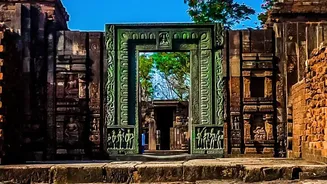
the sea to traverse the sky. This grand vision was brought to life using three types of stone: laterite for the core, durable chlorite for doorframes and key sculptures, and khondalite for most of the detailed surface carvings. Though the main temple tower, once estimated to be over 200 feet tall, has since collapsed, the surviving assembly hall (Jagamohana) and dance pavilion (Natamandapa) stand as a testament to the Kalinga architectural style's zenith. Designated a UNESCO World Heritage Site in 1984, the temple remains a profound symbol of artistic and spiritual devotion.
The Wheels of Time
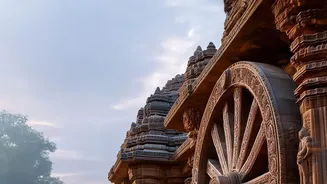
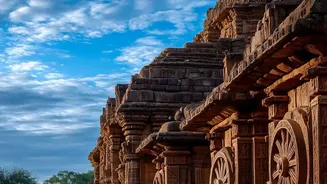
Perhaps the most iconic features of Konark are the 24 massive wheels carved into the temple's base, each measuring nearly 10 feet in diameter. These are not mere decorations. Symbolically, the 12 pairs of wheels represent the 12 months of the year, while the seven stone horses pulling the chariot represent the seven days of the week. But their function was also scientific; each wheel is a functional sundial. The eight wider spokes on each wheel mark three-hour intervals known as 'prahars', while the thinner spokes help delineate shorter periods. By observing the shadow cast by the sun, one could accurately calculate the time of day, making the entire temple a sophisticated astronomical instrument. These wheels, intricately decorated with motifs of foliage and celestial beings, serve as a powerful symbol of the 'Wheel of Life', representing the endless cycle of creation and time.
A Chronicle of 13th-Century Life
While Konark is famous for its erotic 'mithuna' carvings, these sculptures are just one small part of a much larger story. The temple walls are a comprehensive tapestry of 13th-century society, offering a vivid glimpse into both royal and common life. The artists immortalised everyday scenes with remarkable detail: a teacher with his students, women wringing out their hair or applying makeup, musicians playing instruments, and families taking leave for a pilgrimage. You can find depictions of military processions, royal hunts, and merchants travelling in caravans. These carvings move beyond religious iconography to become a social document, celebrating the full spectrum of human experience—from the mundane to the monumental—all under the watchful eyes of the Sun God.
The Meaning in the Motifs
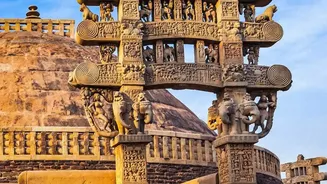
Every sculpture at Konark was imbued with meaning. At the entrances, powerful 'gajasimha' statues depict a lion standing atop an elephant, which in turn crushes a man. This is often interpreted as a warning against the destructive power of pride (the lion) and wealth (the elephant) overwhelming humanity. Carvings of dancers and musicians on the Natamandapa are so detailed that they illustrate the postures of Odissi dance and the specific instruments used in that era. Elsewhere, you'll find carvings of deities like Vishnu and Shiva, celestial dancers known as 'apsaras', and mythical creatures. Even the so-called erotic sculptures, often associated with tantric beliefs about the union of cosmic energies, are seen by scholars as symbols of fertility, auspiciousness, and the celebration of life in all its forms.
The Living Legacy of Craft
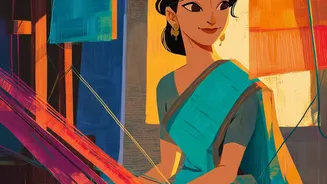
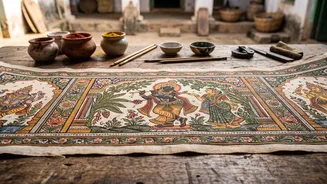
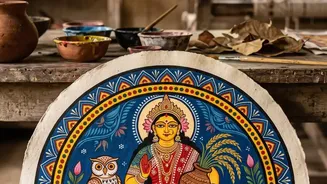
The incredible skill that shaped Konark's stones did not disappear when the temple was completed. It lives on in the craft villages of Odisha, forming a tangible link between the 13th century and today. A short journey from the temple, villages like Raghurajpur serve as hubs for artisans who are direct descendants of these traditions. Here, every home is a workshop where artists practice Pattachitra (intricate cloth scroll painting), palm-leaf etching, and stone carving. These crafts often depict the same mythological scenes and deities found on Konark's walls, using techniques passed down through generations. Visiting these artisan communities completes the story, showing how the 'language of stone' has evolved into a vibrant, living heritage that continues to define the cultural soul of Odisha.