




The Old Way: The Limits of Chemical Rockets
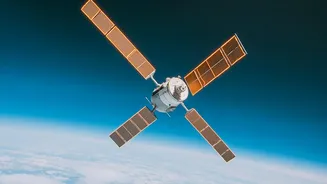
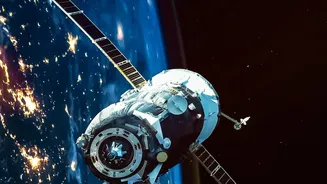
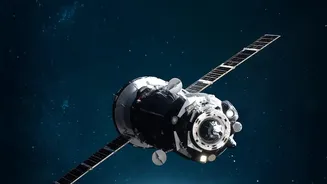
For decades, satellites have relied on chemical propulsion to navigate space. Think of it like a series of controlled explosions. These systems mix fuel and an oxidizer to create a powerful, immediate burst of thrust. This method is excellent for big,
fast manoeuvres, like getting a satellite from its initial launch path into its final 36,000-kilometre-high geostationary orbit. However, this power comes at a cost. Chemical propellants are heavy and finite. A significant portion of a satellite's launch weight is just fuel, which limits the space and weight available for the actual payload—the transponders, sensors, and scientific instruments that do the work. Once the fuel runs out, the satellite's ability to adjust its orbit or avoid debris ends, effectively concluding its useful life, which is typically around 15 years for modern communication satellites.
The Electric Advantage: Slow and Steady Wins the Race
Electric propulsion (EP) systems work on a completely different principle. Instead of a quick, powerful burn, they use electrical power, usually generated by the satellite's solar panels, to accelerate and expel tiny amounts of propellant (like xenon or argon gas) at extremely high speeds. This creates a very gentle but continuous thrust. While a chemical rocket is a sprinter, an electric thruster is a marathon runner. It produces far less force at any given moment, meaning it can't be used to launch a rocket from Earth. But in the vacuum of space, this persistent, tiny push adds up. The key advantage is incredible fuel efficiency. Electric thrusters can be up to ten times more efficient than chemical ones, meaning a satellite needs to carry significantly less propellant mass—sometimes reducing it by as much as 90%.
ISRO’s Indigenous Leap Forward
While ISRO has experimented with electric propulsion before, such as on the GSAT-9 satellite which used a Russian-made system, the agency has been focused on developing its own indigenous technology. This effort is a major step towards 'Aatmanirbhar Bharat' in space technology. ISRO has successfully developed and tested its own Stationary Plasma Thrusters, a type of Hall-effect thruster that uses electric and magnetic fields to accelerate propellant. Recent successes include long-duration life tests of these thrusters, proving their reliability for long missions. This home-grown capability is crucial, as it frees India from reliance on foreign technology and allows for full control over the design and integration of these advanced systems into its satellites.
More Power, Longer Life, Lower Cost
The benefits of this upgrade are transformative. By drastically reducing the amount of fuel a satellite needs to carry, ISRO can go in two directions. Firstly, it can launch satellites with the same capabilities on smaller, less expensive rockets, significantly cutting mission costs. Secondly, and perhaps more importantly, it can use the weight savings to pack more payload onto the satellite. A communication satellite that would have weighed four tonnes with chemical propulsion can now weigh just two tonnes, but have the power and transponder capacity of the original, heavier satellite. This directly translates to more services, better coverage, and a higher return on investment. It also extends the operational life of satellites, allowing them to maintain their orbits and function for five to ten years longer than their chemical counterparts.
Paving the Way for Future Missions
This technological mastery is not just about improving today's communication satellites. It is a foundational capability for the future of India's space ambitions. The high efficiency of electric propulsion is ideal for long-duration deep-space missions where carrying massive amounts of chemical fuel is impractical. Missions to other planets or asteroids become more feasible. Furthermore, as the business of space becomes more commercial, with private companies launching large satellite constellations, having cost-effective and long-lasting satellite platforms is a major competitive advantage. While electric propulsion has the drawback of being slow—taking months instead of a week to raise a satellite to its final orbit—the long-term benefits in efficiency and lifespan are seen as a winning trade-off.