



Not Your Grandmother's Blanket
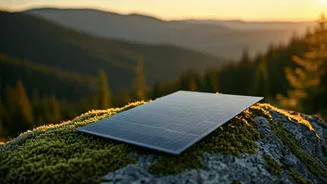
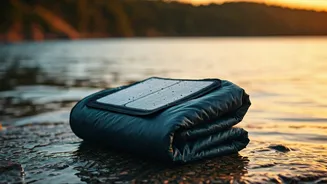
First, let's clear up a common misconception. When you hear 'blanket', you probably think of something soft and warm. A solar-powered blanket isn't for snuggling. Instead, think of it as a large, flexible, and foldable sheet of solar panels. The 'blanket' description
comes from its ability to be spread out over a large surface—like a tent, a backpack, or the ground—to soak up sunlight, and then folded down into a compact, book-sized package for easy transport. They are designed for one primary purpose: to generate electricity from the sun, anywhere you are.
How Does the Magic Happen?
The technology itself isn't magic, but it certainly feels like it. These blankets are embedded with an array of photovoltaic (PV) cells, the same core technology found in rooftop solar panels. When sunlight strikes these cells, they excite electrons, creating a direct current (DC) of electricity. This power is then channelled to built-in USB ports (often including both USB-A and the faster USB-C) where you can directly plug in your devices. Most models don’t have an internal battery; their job is to generate power in real-time. For best results, travellers often use them to charge a power bank during the day. This creates a portable energy reservoir you can use to juice up your phone, GPS unit, or headlamp after the sun goes down.
The Promise of True Freedom
For the modern Indian traveller, the appeal is immense. Think of the possibilities. You could be on a multi-day trek in the Himalayas, documenting your journey without worrying about your camera dying. Or perhaps you're camping in the Western Ghats, able to power a small lantern and your phone for emergencies. Even on a long road trip through Rajasthan, you can simply lay the blanket on your dashboard or roof rack during a lunch stop and top up your gadgets. It’s about detaching from the grid without being disconnected from your essential tools. The 'waterproof' aspect is a crucial feature, making these blankets resilient enough for India’s diverse climates, from monsoon treks to coastal humidity.
Choosing Your Power Source
As this technology becomes more popular, a range of options is appearing on the market. If you're considering one, there are a few key things to look for. First is wattage, which determines charging speed. A small 15-25 watt panel is great for charging a phone or power bank, while larger 50-100 watt versions can charge laptops or multiple devices at once. Second, consider portability. Check the weight and folded dimensions to ensure it fits your travel style. A backpacker will prioritise a lightweight model, while someone on a car-camping trip can afford a heavier, more powerful one. Finally, look at durability. Features like ETFE lamination (a high-strength fluorine polymer) and a good IP rating for water and dust resistance ensure your investment will survive the rigours of the great outdoors.
Is It for Everyone?
While impressive, solar blankets aren't a perfect solution for every traveller. They are entirely dependent on sunlight, so on overcast days or in heavily forested areas, their performance will drop significantly. They are an additional item to carry, and the higher-wattage models can be an investment. For a casual city-hopper, a simple power bank is likely more than enough. But for adventure travellers, trekkers, campers, cyclists, and anyone who loves venturing off the beaten path, these devices represent a significant leap forward. They offer a sustainable, reliable source of power that enhances safety and convenience in the wild.