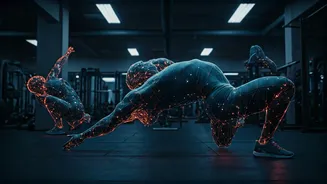









What Exactly Is Animal Flow?
Imagine moving with the power of a gorilla, the grace of a leopard, and the stability of a crab. That’s the essence of Animal Flow. Developed by American fitness expert Mike Fitch, it’s a ground-based movement system that combines elements from various
disciplines, including yoga, gymnastics, and breakdancing. Unlike traditional workouts that isolate muscles, Animal Flow uses quadrupedal (four-limbed) movements to train your body as one integrated system. It’s all about using your own bodyweight to perform a series of interconnected movements, or 'flows,' that build strength, enhance flexibility, and improve motor control. It looks cool, but more importantly, it feels incredible and delivers powerful results without needing a single dumbbell.
Why It's a 'Functional' Powerhouse
The term 'functional fitness' gets thrown around a lot, but Animal Flow is a prime example of it in action. Functional fitness means training your body to handle real-life activities with ease and without injury—whether that’s lifting a heavy suitcase, playing with your kids, or simply getting up off the floor gracefully. Animal Flow excels here because its movements require you to stabilize and move your body in multiple planes of motion. You’re constantly engaging your core, improving communication between your brain and your muscles (proprioception), and strengthening the small stabilizing muscles around your joints. The result is a body that is not just strong in the gym, but resilient, coordinated, and capable in everyday life.
The Building Blocks of Flow
Animal Flow is a structured system with six key components, but beginners will focus on the fundamentals. The first step is always Wrist Mobilisations—essential for preparing your hands and wrists for bearing weight. Next come Activations, which are static holds designed to 'wake up' specific muscles. Then you learn Form-Specific Stretches, which are full-body stretches that start in an animal form and move through a long range of motion. Finally, the most famous part: the Traveling Forms. These are the dynamic 'animal' movements like the Ape, Beast, and Crab that are used to move across the floor. By mastering these individual components, you can eventually link them together into seamless, creative sequences.
Three Foundational Moves to Try
Ready to get started? Focus on mastering the form of these three basic positions.
1. The Beast: Start on all fours with your hands under your shoulders and knees under your hips. Tuck your toes and lift your knees just an inch or two off the floor, keeping your back flat like a tabletop. Engage your core. This is your Static Beast, a powerful activation for your entire body.
2. The Crab: Sit on the floor with your knees bent and feet flat. Place your hands on the floor behind you, fingers pointing towards your feet. Lift your hips off the ground until your torso is parallel to the floor. This is Static Crab, which opens the chest and strengthens the posterior chain (glutes, hamstrings, back).
3. The Underswitch: This is a simple transition that teaches you the essence of flow. Start in the Beast position. Simultaneously lift your right hand and left foot off the floor. Pivot on your grounded foot and hand, pulling your left leg through the space underneath your body to land in the Crab position. Practice slowly on both sides.
How to Begin Your Flow Journey
The beauty of Animal Flow is its scalability. You can start right now, in your living room. Begin by practicing the foundational forms like Beast and Crab, holding them for 10-20 seconds at a time. Pay close attention to your wrist health by performing gentle mobilisations before each session. As you get more comfortable, practice the Underswitch to move between Beast and Crab. The goal isn't speed; it's control. Focus on silent, precise movements. While you can learn a lot from online tutorials, consider finding a certified Animal Flow instructor for a class or workshop to ensure your form is correct and to learn how to combine the moves into more complex and rewarding flows.