






A Fundamental Economic Dilemma
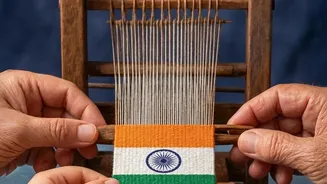
At the heart of India's cotton policy is a classic conflict. On one side are approximately 60 lakh cotton farmers who need remunerative prices for their produce. On the other is the country's massive textile and apparel industry, the second-largest employer,
which requires competitively priced raw materials to thrive on the global stage. If domestic cotton prices soar, spinning mills lose their competitive edge, affecting the entire value chain from yarn to garments. If prices crash, farmers face distress. The government's strategy is a perpetual attempt to find a middle ground that supports both these vital sectors of the economy.
The Import Duty Lever
The primary tool in the government's arsenal is the adjustment of the 11% import duty on cotton. When domestic cotton prices rise sharply, often due to lower-than-expected crop output or increased demand, the government can temporarily remove this duty. This makes it cheaper for mills to import cotton from countries like the US, Brazil, and Australia. The influx of imported cotton increases the overall supply in the market, which helps to cool down or 'stabilise' soaring domestic prices. These duty-free windows, like the one implemented from June to October 2026, are often announced for a fixed period to address immediate price pressures during lean supply seasons.
Who Decides and When?
Decisions on cotton import duties are a collaborative process involving multiple government bodies, including the Ministry of Textiles, Ministry of Commerce, and Ministry of Finance. These decisions are heavily influenced by lobbying from powerful industry groups. Textile bodies, like the Confederation of Indian Textile Industry (CITI) and the Southern India Mills' Association (SIMA), actively advocate for duty removal when raw material costs spike, arguing it's essential for global competitiveness. The trigger for such action is typically when domestic cotton prices become significantly uncompetitive compared to international rates, threatening the viability of India's textile exports, which are targeted to reach $100 billion by 2030.
Relief for the Textile Industry
For the downstream textile industry, duty-free imports offer significant relief. Access to cheaper raw materials is crucial, especially for the thousands of small and medium-sized spinning mills. It allows them to manage their production costs better, stabilise yarn prices, and fulfill export orders without losing out to competitors in countries like Bangladesh and Vietnam, who already have duty-free access to cotton. Furthermore, mills often need to import specific high_quality, contamination_free cotton to meet the exacting standards of international buyers, a need that becomes more acute when domestic quality is a concern.
The Farmer's Side of the Story
While beneficial for industry, the import strategy is contentious for farmers. Allowing cheaper, often subsidised, foreign cotton into the market can depress domestic prices, especially if imports arrive during the harvest season. This directly impacts farmer incomes. Critics argue that this policy puts the burden of industrial competitiveness on the agricultural sector. To cushion this impact, the government has a Minimum Support Price (MSP) mechanism, where the Cotton Corporation of India (CCI) procures cotton if market prices fall too low, ensuring a baseline income for farmers. However, a surge in cheap imports can strain the CCI's operations and still cause market prices to dip below farmers' expectations.
A Quest for Long-'Term Stability
The frequent switching on and off of import duties highlights the reactive nature of the policy. Industry bodies often push for a more stable, long-'term policy framework instead of temporary waivers. Other ideas that have been floated include a Price Stabilisation Fund (PSF) to create a buffer stock of cotton, which can be released to manage extreme price volatility. Such a fund, alongside a renewed Technology Mission on Cotton to improve domestic yields and quality, is seen by some as a more sustainable solution than relying solely on ad-'hoc import duty adjustments. Ultimately, the goal remains to create a predictable environment that fosters growth across the entire cotton value chain, from the farm to the factory.