




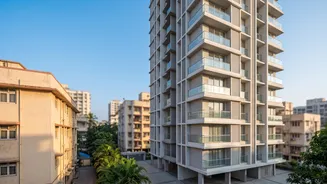
An Urban Survival Imperative
For decades, buying a home in Mumbai meant looking for new projects in emerging suburbs. In 2026, that model has been turned on its head. The city has all but run out of vacant land, making redevelopment the primary engine of housing supply. A recent
report highlighted this shift, noting that for the first time, sales from redeveloped properties have outpaced launches of new projects. This isn't just a trend; it's an "urban survival imperative." Since 2020, over 1,000 redevelopment projects have been launched, accounting for a significant portion of the city's residential supply. This boom is driven by necessity: thousands of old, dilapidated cessed buildings and housing societies need urgent replacement. For buyers, this means new homes are now rising in old, established neighbourhoods, offering modern amenities without the long wait for infrastructure to develop in peripheral areas.
The Impact on Property Prices
Redevelopment doesn't just change the skyline; it resets property values. When an old, low-rise building is replaced by a modern tower, the capital value can surge by 40-50%. For instance, a flat valued at ₹1 crore before redevelopment could be worth ₹1.4 to ₹1.6 crore after, often with more space. This upward pressure affects entire micro-markets. Key redevelopment corridors like Worli, Bandra-Khar, and Kandivali-Borivali have seen property values appreciate by 20-30% in just three years. However, this wave also drives up rental prices. When a society goes for redevelopment, displaced residents flood the local rental market, creating a demand-supply gap that has pushed rents up significantly.
A New Checklist for Homebuyers
Buying into a redevelopment project requires a different kind of due diligence compared to a traditional new build. The most critical question is: how real is the project? Vague promises of "going for redevelopment" are a classic sales pitch, but they can lead to years of limbo. Your checklist must be rigorous. First, verify the developer's track record, specifically with completed redevelopment projects, not just launches. Second, ensure the project is registered with the Maharashtra Real Estate Regulatory Authority (MahaRERA). RERA registration is mandatory and provides a public record of timelines, promoter details, and a formal channel for grievances. Third, scrutinize the legal paperwork, including the Development Agreement which outlines terms for existing residents. Finally, confirm which banks have approved the project for home loans, as this is a strong indicator of the project's legal and financial health.
Navigating the Risks and Regulations
While the opportunity is significant, the risks are real. Project delays due to complex approvals, legal disputes between stakeholders, or the developer's financial instability are common challenges. A stalled project can trap a homebuyer's capital for years. To mitigate these risks, recent regulations have introduced crucial safeguards. A key rule now requires developers to furnish a bank guarantee of around 20% of the project cost, which acts as a safety net against project abandonment. Furthermore, the consent requirement for a society to proceed with redevelopment has been reduced from 70% to 51% of members, speeding up the decision-making process. MahaRERA also mandates that 70% of funds collected from buyers be kept in a separate escrow account, preventing developers from diverting money to other projects.