

The Foundation: Banana Leaf and Rice
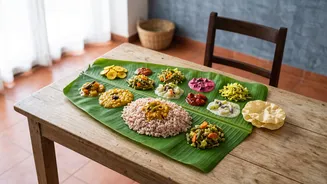
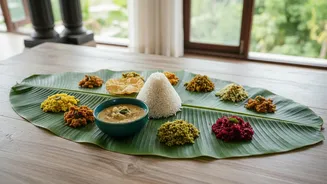
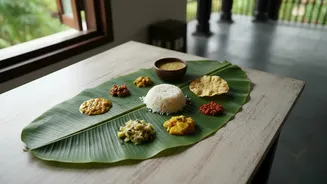
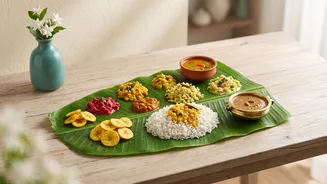
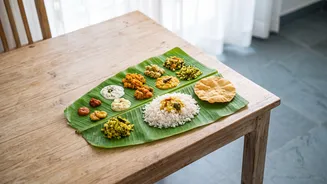
A Sadya is traditionally served on a fresh banana leaf, with the narrow end pointing to the diner's left. This eco-friendly plate is where the magic unfolds. The first items are placed on the top half of the leaf, starting from the left. These are the accompaniments.
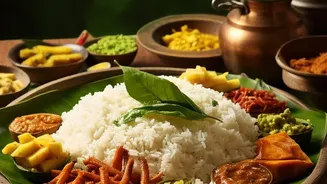
Then, a generous portion of Kerala’s native red rice, known as Matta rice, is served on the bottom half, forming the centerpiece of the meal. The feast officially begins with the serving of Parippu, a simple but delicious moong dal curry, often topped with a spoonful of ghee.
Pickles and Crunchy Sides
On the top left corner of the leaf, a selection of flavour-packed condiments and crunchy items are placed. This includes essential pickles like spicy mango and lime (Achar) and the iconic Inji Puli, a sweet, sour, and spicy paste made from ginger, tamarind, and jaggery. Alongside these are crunchy banana chips, both salted (Upperi) and a sweeter version coated in jaggery called Sharkara Varatti. A crispy, fried pappadam is also a must-have, providing a delightful textural contrast to the soft rice and curries.
The Vegetable Ensemble: Thoran, Avial, and Olan
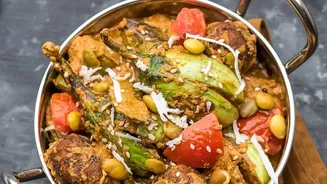
The top half of the leaf is adorned with a vibrant array of vegetable dishes. A Thoran is a dry stir-fry of finely chopped vegetables like cabbage or beans with grated coconut. Avial is a celebrated mixed vegetable dish, thick with a sauce of ground coconut and yogurt, symbolizing abundance. Then there is Olan, a much milder and subtler curry made with ash gourd and cowpeas gently simmered in coconut milk, serving as a palate cleanser between spicier items. You might also find Erissery, a sweet and savoury dish of pumpkin and red beans in a toasted coconut paste.
The Core Curries: Kalan, Pachadi, and Kichadi
These dishes bring a complex range of flavours. Kalan is a thick, sour curry made with yam or raw banana in a yogurt and coconut gravy. Pachadi and Kichadi are two similar-looking yogurt-based dishes that are often confused. Pachadi is typically sweeter and can be made with fruits like pineapple or vegetables like beetroot in a yogurt base. Kichadi is its spicier cousin, usually made with vegetables like cucumber or bitter gourd in a mustard-seasoned yogurt.
The Main Gravies: Sambar and Rasam
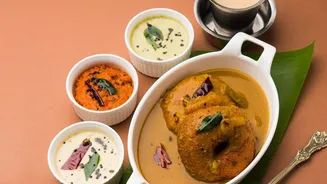
After the initial round with Parippu, the next course involves Sambar. This famous South Indian stew is a tangy and spicy lentil-based curry filled with vegetables like drumstick, pumpkin, and carrots. It’s poured over rice and mixed with the various vegetable sides. Towards the end of the savoury courses, Rasam is served. This is a thin, peppery, and tamarind-based soup that is known to aid digestion. A final serving of spiced buttermilk, called Moru, often concludes this part of the meal, cooling the palate.
The Sweet Finale: Payasam
No Sadya is complete without dessert. Payasam, a rich and creamy pudding, is the grand finale of the feast. A traditional Sadya will often feature at least two varieties. Popular versions include Palada Payasam, made with milk and delicate rice flakes, and Ada Pradhaman, a richer version made with rice pasta flakes, jaggery, and coconut milk. Another favourite is Parippu Payasam, made with lentils and sweetened with jaggery. A ripe banana is often served alongside the payasam to complete the experience.