



A Mission with a Dual Purpose
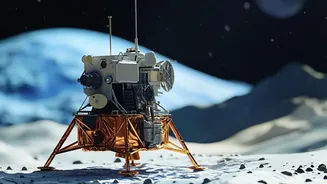
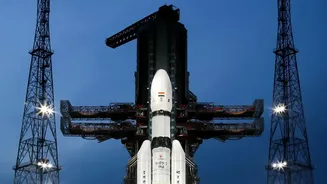
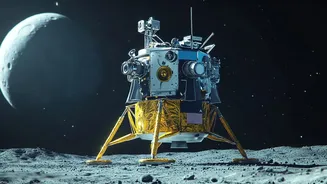
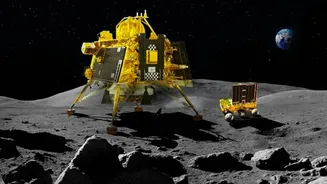
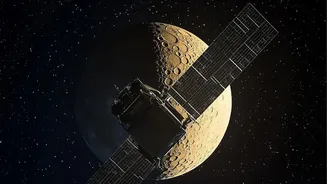
The world watched in August 2023 as the Vikram lander made its flawless touchdown near the Moon's south pole, a historic first for India and the world. But as the lander and Pragyan rover prepared to study the lunar surface, the Propulsion Module that
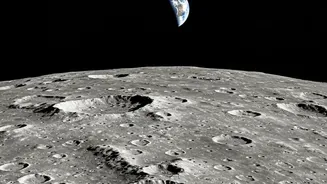
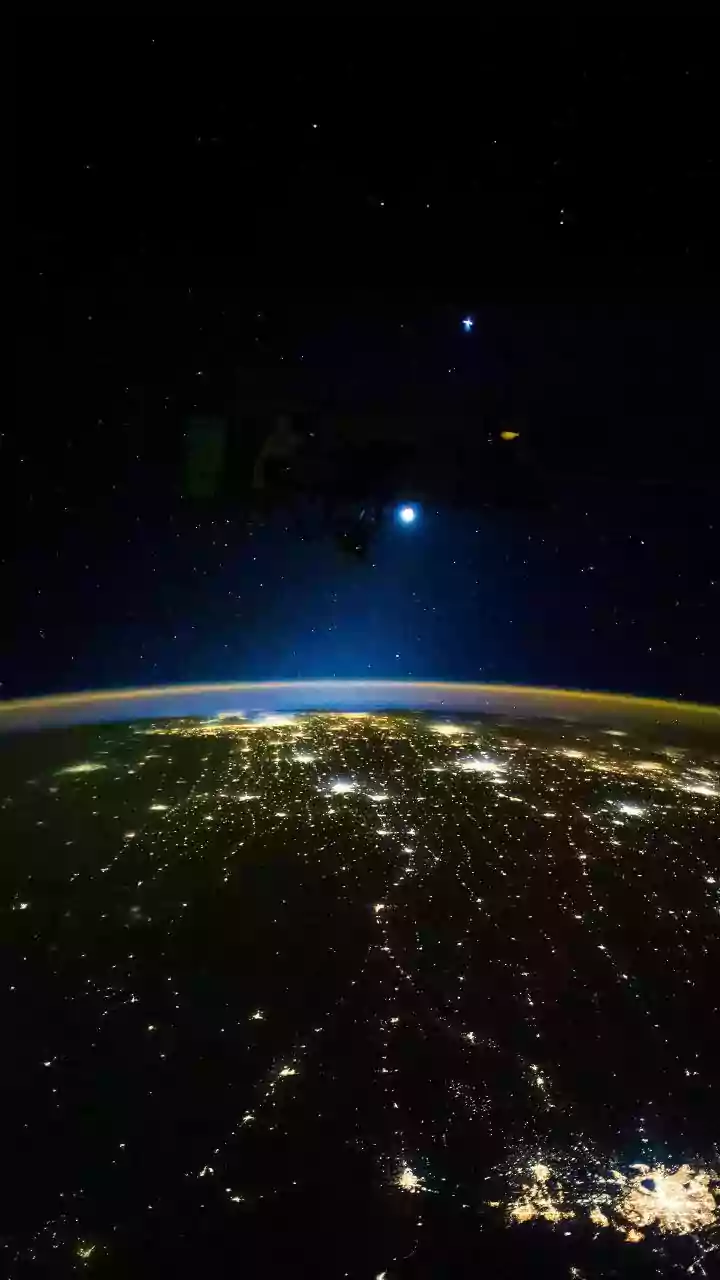
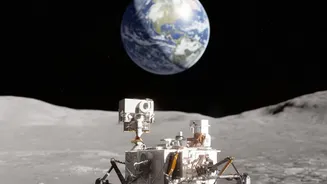
carried them into lunar orbit began a secondary mission of its own. Instead of looking at the Moon, it turned its gaze 384,400 kilometres back towards home. Onboard was a single, highly specialised instrument: SHAPE, or the Spectro-polarimetry of Habitable Planet Earth. This experimental payload was not designed to learn something new about our own planet, but to see it through the eyes of a distant alien telescope.
The Science of SHAPE
The primary goal of the SHAPE instrument was to study Earth as if it were an exoplanet—a planet orbiting a star far beyond our solar system. It works by analysing the light reflected from our planet in the near-infrared spectrum. Specifically, it measures the spectral and polarimetric signatures of this light. Think of it like this: a 'spectrum' breaks down light into its constituent colours, revealing which gases are in the atmosphere. 'Polarimetry' studies how light waves are oriented after bouncing off surfaces like clouds, oceans, and continents. By capturing this detailed 'light signature' of Earth, a known habitable world, ISRO scientists are building a reference model. This model essentially becomes a fingerprint for a life-sustaining planet.
What Earth's Signature Revealed
From its vantage point in lunar orbit, SHAPE observed Earth over a significant period, collecting data as our planet rotated and orbited the sun. These observations captured how Earth's light signature changes depending on what part of the planet is visible—vast blue oceans, green landmasses, or bright white clouds. The data provides a comprehensive profile of how a habitable planet's reflected light and its polarisation varies. This is crucial because when we observe a tiny, distant exoplanet, we only see it as a single point of light. The findings from SHAPE will allow scientists to interpret the subtle changes in that single point of light to infer the presence of clouds, oceans, and potentially even atmospheric compositions favourable for life.
A Blueprint for Finding New Worlds
The data gathered by SHAPE is more than just a scientific curiosity; it's a vital contribution to one of the biggest questions in astronomy: Are we alone? To date, more than 5,000 exoplanets have been confirmed, but knowing which ones might host life is an immense challenge. The Chandrayaan-3 experiment provides a crucial benchmark. Future, more powerful telescopes can now compare the light signatures they collect from distant exoplanets against the detailed template provided by SHAPE. If the light from a faraway world has similar spectral and polarimetric characteristics to Earth's, it would be a strong candidate for a habitable environment, worthy of much closer study. ISRO has made the payload data accessible to international researchers, further cementing India's role as a key player in the global search for life beyond our solar system.