



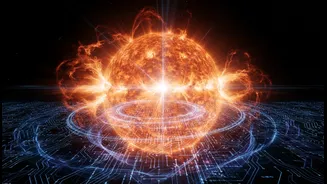


The Sun's Turbulent Weather
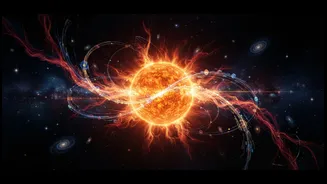
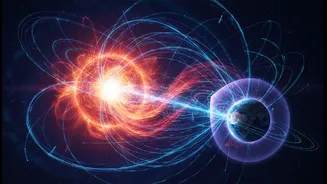
When we think of weather, we think of rain or sunshine. But there's another kind of weather that originates 93 million miles away: space weather. The Sun is not a static ball of light; it's a dynamic star with an 11-year cycle of activity. During this
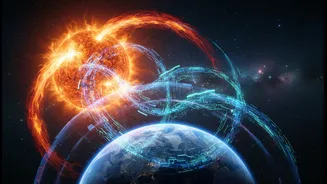
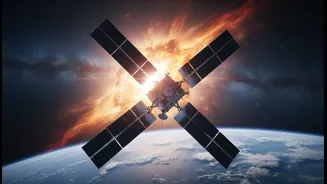
cycle, it can unleash powerful solar flares and coronal mass ejections (CMEs). A solar flare is an intense burst of radiation, while a CME is a massive eruption of solar plasma hurled into space. When these events are aimed at Earth, they can have significant consequences for our technology-dependent world. We are currently in Solar Cycle 25, a period of increasing solar activity expected to peak around 2025, making these events more frequent and powerful.
Satellites in the Firing Line
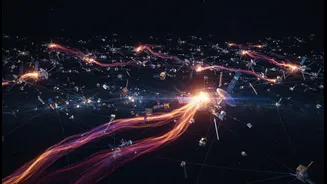
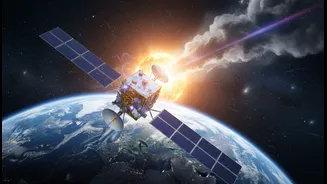
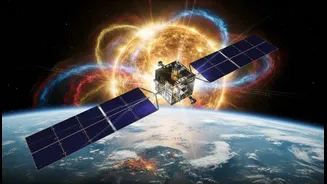
Satellites orbiting outside Earth's protective atmosphere are highly vulnerable to space weather. During a solar storm, the Earth's upper atmosphere can heat up and expand, increasing the atmospheric drag on satellites in low-Earth orbit (LEO). This extra drag can slow a satellite down, causing its orbit to decay and potentially leading to a premature re-entry or collision with other objects. In a stark 2022 example, a minor solar storm caused the loss of 40 newly launched Starlink satellites by increasing atmospheric drag. Beyond drag, high-energy particles from the sun can damage sensitive electronics, degrade solar panels, and cause phantom commands that can disrupt a satellite's function. Severe storms can permanently destroy a satellite by frying its internal circuits.
The First Line of Defence: Forecasting
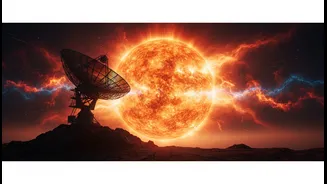
Just as meteorologists forecast hurricanes to allow communities to prepare, space weather forecasters monitor the Sun to provide advance warning of incoming solar storms. Organizations like the National Oceanic and Atmospheric Administration's (NOAA) Space Weather Prediction Center (SWPC) in the United States serve as official sources for these forecasts, alerts, and warnings. Forecasters use data from a global network of ground-based instruments and satellites to track sunspots, coronal holes, and other indicators of solar activity. By modeling the trajectory and intensity of CMEs, they can provide crucial lead time—from one to four days—for satellite operators, airlines, and power grid managers to take protective measures.
A New Frontier for Careers
The growing risk to our multi-billion dollar space infrastructure has created a niche but rapidly expanding job market. The field needs a new generation of space weather specialists, analysts, and scientists. These roles involve monitoring solar activity, interpreting vast amounts of data, and developing predictive models to improve forecasting accuracy. Professionals in this area typically have a strong educational background in physics, atmospheric science, astronomy, or a related field, often requiring at least a bachelor's degree. Technical skills are paramount, with a high demand for proficiency in programming languages like Python and MATLAB for data analysis and modeling, as well as familiarity with satellite data processing tools.
The Growing Space Weather Industry
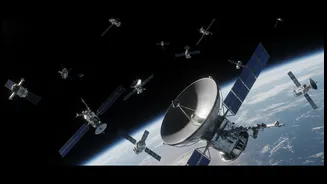
The demand for space weather expertise extends beyond government agencies like NOAA and NASA. A growing ecosystem of private companies now offers specialized forecasting and data analysis services. Companies like Spire Global and Planet Labs operate their own satellite constellations to gather atmospheric and Earth observation data. Others are developing advanced AI models to predict solar flares with greater accuracy. This commercialization is creating diverse career opportunities, from research scientists and data analysts to software engineers and project managers. These roles are found in aerospace and defense firms, satellite operations companies, and dedicated space weather consultancies, all working to safeguard our assets in an increasingly crowded orbital environment.