
The Sun’s Turbulent Breath
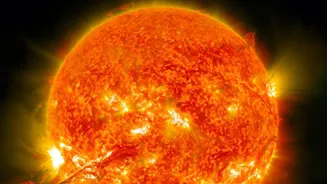
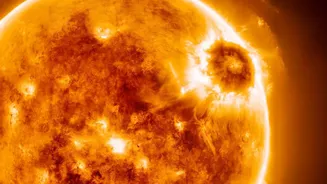
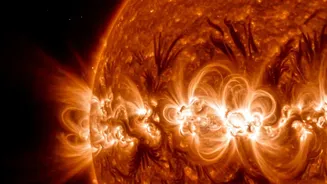
The solar wind is a continuous stream of charged particles—mostly protons and electrons—flowing from the Sun's upper atmosphere, the corona. This isn't a gentle breeze; it's a turbulent current that can travel at hundreds of kilometres per second. Sometimes,
the Sun releases massive clouds of this plasma and magnetic fields, known as Coronal Mass Ejections (CMEs). These are the "dynamic solar wind disturbances" that Aditya-L1 is built to study. When a CME is aimed at Earth, it can slam into our planet's magnetic field, triggering geomagnetic storms that threaten satellites, communication networks, and even power grids on the ground.
Meet the Wind Watchers: ASPEX and PAPA
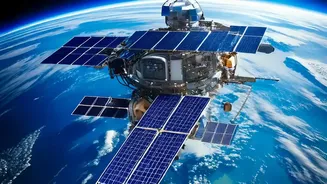
To study this chaotic environment, Aditya-L1 uses a suite of seven instruments. Three of these perform 'in-situ' observations, meaning they directly sample the particles and magnetic fields around the spacecraft. For understanding the solar wind, two payloads are critical: the Aditya Solar Wind Particle Experiment (ASPEX) and the Plasma Analyser Package for Aditya (PAPA). Working in tandem, they provide a comprehensive profile of the solar wind’s composition, energy, and direction, giving scientists the raw data needed for high-precision analysis.
ASPEX: Separating the Solar Stream
The ASPEX payload is designed to understand how solar wind particles get accelerated. It consists of two main components. The first is the Solar Wind Ion Spectrometer (SWIS), which measures ions like protons and alpha particles (helium nuclei) in the lower energy ranges. It can distinguish between them, which is crucial because a higher ratio of alpha particles to protons can be a key indicator of an approaching CME. The second component, the SupraThermal and Energetic Particle Spectrometer (STEPS), focuses on higher-energy particles. By measuring particles across a wide energy spectrum and from different directions, ASPEX helps build a complete picture of the solar wind's structure and the forces driving it.
PAPA: A Portrait of Plasma
While ASPEX focuses on a broad range of particles, the PAPA payload provides a detailed analysis of the low-energy plasma that makes up the bulk of the solar wind. It also has two sensors: the Solar Wind Electron Energy Probe (SWEEP) and the Solar Wind Ion Composition Analyser (SWICAR). SWEEP measures the energy and direction of electrons, while SWICAR does the same for ions, identifying their mass and charge. This allows scientists to determine the composition of the solar wind with great accuracy. The PAPA sensors have already proven their worth by successfully detecting the signatures of CMEs, observing the sharp increase in both electron and ion counts as the disturbances passed the spacecraft.
Why High-Precision Data Matters
Studying the solar wind isn't just an academic exercise; it's fundamental to protecting our technologically dependent society. The high-precision data from Aditya-L1's sensors provides crucial input for space weather forecasting models. Early and accurate warnings about incoming CMEs give satellite operators time to put their spacecraft into safe mode, power grid managers time to protect their systems from geomagnetically induced currents, and airlines time to reroute flights away from polar regions where radiation exposure is higher. By understanding the composition and dynamics of these solar disturbances, ISRO's mission provides a vital early-warning system for Earth, helping to mitigate the worst effects of the Sun's powerful outbursts.