









Why Your Dog Needs More Than a Walk
A daily walk is great for physical exercise and potty breaks, but it often isn't enough to satisfy a dog's brilliant mind. Dogs, especially breeds developed for working roles, are hardwired to solve problems, hunt, and use their senses. When they live
indoors without these outlets, they can become bored, which may lead to unwanted behaviours like destructive chewing, excessive barking, or anxiety. Mental stimulation, often called 'canine enrichment', is just as crucial as physical activity. It allows dogs to engage in their natural behaviours in a safe and controlled way, leading to a calmer, happier, and more well-behaved companion. Tapping into their most powerful sense—smell—is one of the easiest and most effective ways to provide this enrichment.
What Exactly is a Sensory Track?
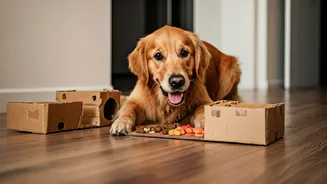
Think of it as a DIY puzzle for your dog's nose. A sensory track is a simple, temporary course you create inside your home that encourages your dog to use their sense of smell to find a reward. Instead of just handing them a treat, you make them work for it by following a scent trail. The 'track' is made from cardboard, which is perfect for this purpose because it’s free, readily available, and holds scent well. By arranging pieces of cardboard, you create a path and hiding spots for treats, turning a small area of your living room into an exciting sniffing safari. It’s a low-effort, high-reward activity that taps directly into their innate desire to forage and explore.
Gathering Your Supplies (It’s Easy)
The beauty of this activity is that you likely have everything you need right now. There’s no need for a trip to the store. Here's your short list: * **Cardboard:** Any kind will do. Delivery boxes, cereal boxes, or shoe boxes are all perfect. The more you have, the more complex your track can be. * **Scissors or a Box Cutter:** To break down and shape the cardboard. * **High-Value Treats:** Use something your dog absolutely loves and that has a strong smell. Small pieces of cheese, boiled chicken, or fragrant dog treats work much better than dry, bland kibble. The goal is to motivate them to search. That's it. The main components are trash-to-be-recycled and your dog's favourite snack.
How to Build Your Track in Minutes
1. **Prep Your Cardboard:** Break down your boxes so you have several flat pieces of various sizes. You can also create 'tunnels' by keeping some boxes intact or cutting 'doors' into them. Create a few smaller, folded pieces that can act as simple 'pockets' or 'flaps' to hide treats under. 2. **Lay Out the Path:** In a clear area of a room, start arranging the cardboard on the floor. For a beginner dog, create a simple, straight line. For a more advanced dog, you can make it a winding path or scatter the pieces randomly in a designated zone. 3. **Scent the Track:** Take a few high-value treats in your hand. Rub them on various spots along the cardboard path to leave a scent trail. This helps guide your dog and teaches them the 'game'. 4. **Hide the Rewards:** Place small treats at intervals along the track. Start by placing them in plain sight. Then, start hiding them under flaps of cardboard, inside a partially closed box, or beneath an overturned piece.
Let the Sniffing Games Begin
Before you let your dog loose, have them sit and wait in another room or on their bed. This builds anticipation. Bring them to the start of the track and use an encouraging cue like "Find it!" or "Go search!" Let them explore at their own pace. Resist the urge to point out the treats. The entire point is for them to use their nose, not their eyes or your guidance. If they seem confused, you can tap a spot near the beginning of the track to encourage them to lower their head and sniff. Praise them enthusiastically every time they find a treat. Keep the first few sessions short and successful to build their confidence.
Keeping It Fresh and Challenging
Once your dog masters the basic track, you can easily increase the difficulty. Try making the path longer or more complex. Use fewer, more strategically hidden treats so they have to work harder. You can also build 'up' by stacking a few sturdy boxes to create different levels. Another great variation is to place a few pieces of cardboard without any treats, forcing them to sniff more carefully rather than just assuming every piece has a reward. Always supervise your dog during this activity to ensure they are finding the treats and not just chewing on and ingesting the cardboard.