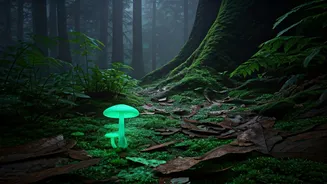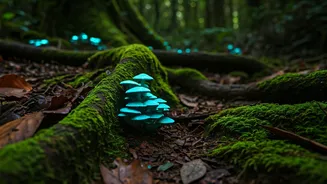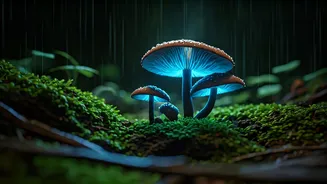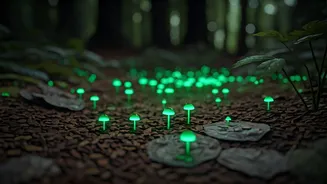






The Science of the Glow
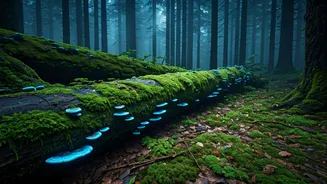
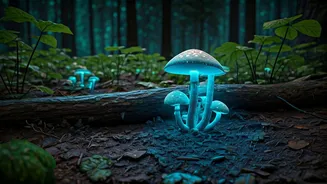
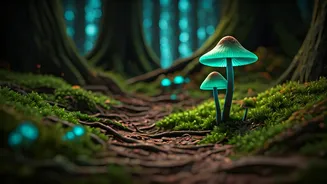
This magical glow, known as bioluminescence, isn't just for show. It's a chemical reaction. Fungi produce compounds called luciferins, which, when mixed with an enzyme called luciferase and oxygen, release energy in the form of a cool, greenish light.
Scientists believe there are several reasons for this display. The glow can attract nocturnal insects that help spread the mushroom's spores, similar to how flowers use colour to attract bees. It might also act as a warning, telling fungus-eating animals to stay away. Whatever the reason, this natural light creates one of the most enchanting spectacles in the wild.
Mycena Fungi: The Forest's Fairy Lights
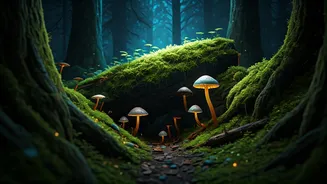
When you think of glowing mushrooms, you're likely picturing a species of *Mycena*. This genus contains over 500 species, and more than 70 of them are known to be bioluminescent. They are often tiny, delicate mushrooms that grow on decaying wood, earning them the nickname "forest fairy lights." During the day, they look like any other small brown mushroom. But at night, their stems and sometimes their caps emit a steady, otherworldly glow. Photographers often use long-exposure shots to capture their faint but persistent light, creating images where the forest floor looks like it's been sprinkled with fallen stars. These fungi are found all over the world, from Japan to Brazil, each with its own unique glowing characteristic.
India's Glowing Wonders: Meghalaya's Marvels
You don't have to travel to a faraway fantasy land to witness this magic. India has its own glowing treasures, particularly in the lush forests of the Western Ghats and the Northeast. In 2020, scientists officially identified a new species of bioluminescent fungi in Meghalaya. Named *Roridomyces phyllostachydis*, it was first spotted by locals who noticed glowing bamboo sticks. These tiny mushrooms, with caps just a few millimetres wide, light up the forest floor during the monsoon season. This discovery confirmed what local communities had known for generations and highlighted India as a hotspot for bioluminescent biodiversity. For nature lovers and photographers in India, the monsoon season in states like Meghalaya and Goa now offers a chance to hunt for this natural neon light.
Ghost Fungus: An Eerie Beauty
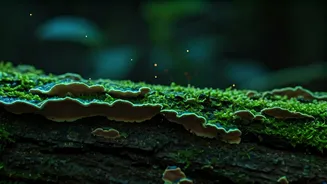
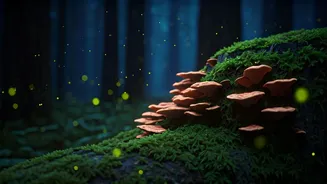
Not all glowing fungi are delicate and dainty. The Ghost Fungus (*Omphalotus nidiformis*) of Australia is a large, impressive mushroom that grows in overlapping clusters on the bases of trees. Its glow is much brighter and more striking than many other species, emitting a ghostly green light that is visible to the naked eye. The name is fitting; stumbling upon a cluster of these in a dark forest can be a spooky and unforgettable experience. Its toxicity adds to its mystique—while beautiful to look at, it's poisonous if eaten. The strong glow of the Ghost Fungus makes it a favourite subject for night-time photographers, who can capture its eerie luminescence without needing extremely long exposures.
Capturing the Magic: The Photographer's Challenge
The photographers who bring us these images are masters of patience and technical skill. Shooting bioluminescence is incredibly difficult. The light emitted by fungi is often very faint, requiring long exposure times—sometimes several minutes for a single shot. This means the camera must be perfectly still on a tripod, and the photographer must contend with complete darkness, forest noises, and insects. They often use a technique called "light painting," using a small torch to briefly illuminate the non-glowing parts of the mushroom or its surroundings to provide context and depth to the image. It's a delicate balance of art and science, perfectly capturing a phenomenon that is itself a blend of the two.