







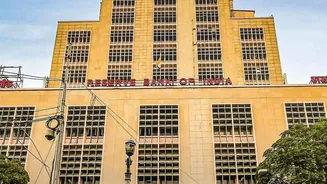
A recent Reserve Bank of India bulletin highlighted a crucial trend: steady Foreign Direct Investment (FDI) is providing a vital buffer against the exit of more volatile foreign portfolio funds. But what does this mean for India's economy?
Two Sides of Foreign Capital
In any growing
economy, foreign capital is a key ingredient for growth, but not all money is created equal. It primarily arrives in two forms: Foreign Direct Investment (FDI) and Foreign Portfolio Investment (FPI). Think of FDI as a long-term commitment. It is 'sticky money'. This happens when a foreign company invests in building a factory, acquiring a significant stake in an Indian firm, or setting up operations here. This type of investment creates jobs, transfers technology, and builds lasting infrastructure. FPI, on the other hand, is often called 'hot money'. It involves purchasing financial assets like stocks and bonds. These investors are not involved in management and can enter and exit the market quickly, often in response to global economic shifts, interest rate changes, or market sentiment.
A Balancing Act in Action
Recent data reveals a fascinating dynamic. While India has seen significant outflows from portfolio investors, strong FDI inflows have helped stabilise the situation. Concerns over global uncertainties, rising interest rates in developed nations like the U.S., and domestic market valuations have prompted FPIs to withdraw funds. In fact, foreign ownership of Indian equities recently fell to a near 15-year low. This exodus puts pressure on the Indian rupee and can create market volatility. However, the latest RBI data indicates that robust FDI has served as a crucial counterbalance. Even as FPIs have been selling, long-term investors continue to show confidence in India’s growth story, injecting more stable capital into the economy.
Why 'Sticky Money' Matters More
The stability offered by FDI cannot be overstated. Because FDI involves physical assets and long-term business strategies, it is not easily or quickly reversed. An international company that has spent years building a manufacturing plant in India is unlikely to abandon it due to short-term market fluctuations. This long-term perspective provides a foundation for sustainable economic activity. It signals deep-seated confidence in the country's fundamentals, such as a strong domestic demand and a resilient industrial sector. In contrast, FPI outflows, while disruptive, are often cyclical. The RBI and government often watch these flows closely, as sudden reversals can impact currency stability and overall market health.
Implications for the Indian Economy
This trend of strong FDI offsetting FPI outflows is a sign of India's maturing economy. It suggests a growing resilience against the kind of global financial shocks that can disproportionately harm emerging markets. For the average person, this stability is important. A stable currency, supported by strong FDI, helps keep the cost of imports, like crude oil and electronics, in check. It also gives the central bank more room to manage domestic inflation and interest rates without being solely dictated by volatile capital flows. According to RBI reports, sectors like financial services, manufacturing, and retail have been major beneficiaries of these FDI inflows, with countries like Japan and Singapore being key sources.
The Road Ahead
While the current balance is a positive sign, policymakers remain watchful. The government and the RBI are aware of the concerns that drive portfolio outflows, including discussions around capital gains tax structures and the relative attractiveness of other global markets. Finance Minister Nirmala Sitharaman has acknowledged the changed global investment environment and the need to listen to investor concerns. The ongoing strength of FDI is a testament to India's long term appeal, but ensuring that the environment remains attractive for all types of foreign capital is a continuous effort. For now, the steady hand of direct investment is providing a welcome shield, proving that in a world of financial turbulence, long term commitment is a powerful anchor.