



The Cosmic Delivery Service
The idea isn't science fiction. It's a well-supported hypothesis called pseudo-panspermia. This theory proposes that while life itself may have started on Earth, the fundamental raw materials — complex organic molecules — were created in space and delivered
to our planet. For decades, scientists have been finding tantalising evidence. Meteorites that have crashed into Earth have been discovered to contain the building blocks of life. These aren't just simple chemicals, but include crucial components like amino acids, which are the molecules that form proteins, and nucleobases, the fundamental units of our DNA and RNA.
Life's Ingredients in a Space Rock
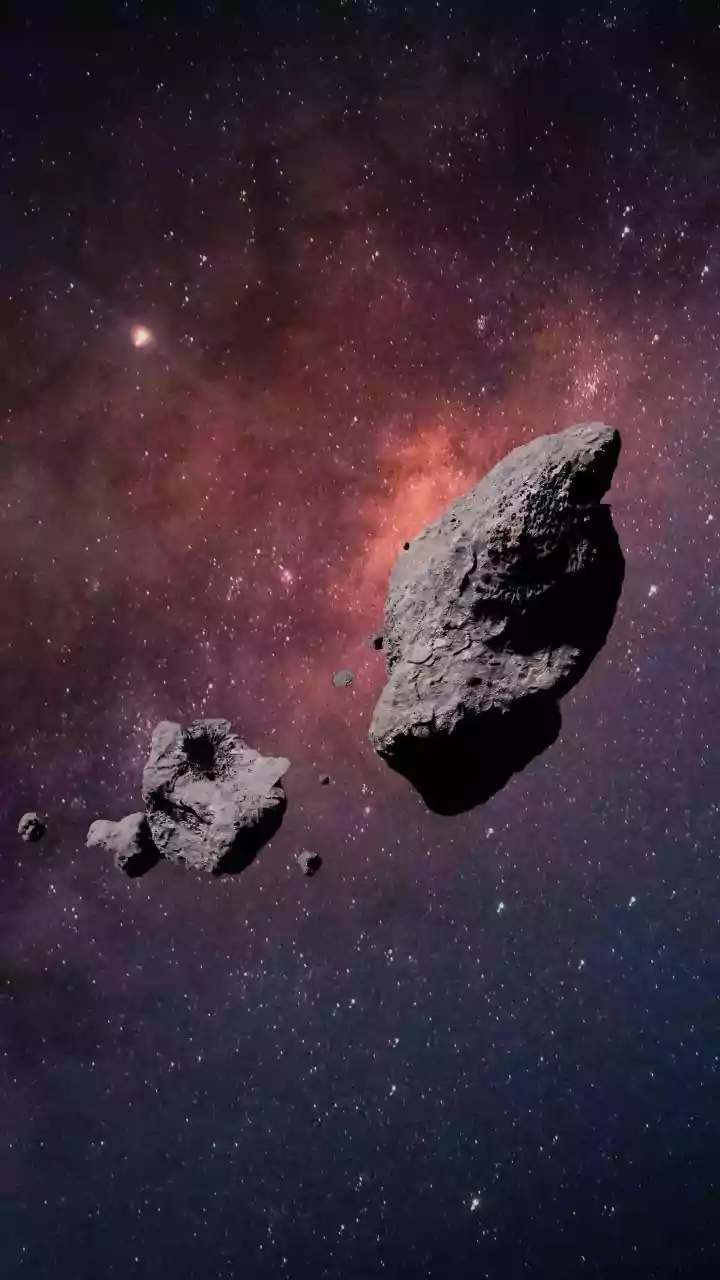
When scientists talk about organic molecules, they mean complex compounds based on carbon, often including hydrogen, nitrogen, and oxygen. These are essential for all known life. Discoveries in meteorites like the famous Murchison meteorite, which fell in Australia, showed that space rocks can act like cosmic time capsules, carrying these precious compounds. More recently, analysis of samples brought back from asteroids like Ryugu and Bennu have confirmed that these celestial bodies are rich in organic materials, further strengthening the case that these ingredients are common throughout our solar system. A meteorite that landed in New Jersey in 2024 was also found to contain a variety of organic molecules, some of which are rare on Earth.
From Interstellar Clouds to Earth
So how do these molecules form in the first place? The process begins in the vast, cold clouds of gas and dust that exist between stars. In these interstellar nurseries, simple atoms stick to icy dust grains. Bombarded by ultraviolet radiation from nearby stars, these simple molecules are broken apart and recombine into more complex structures. Over millions of years, this cosmic chemistry creates a rich stew of organic compounds. This material then gets incorporated into new stars and planetary systems, including our own. During the early, chaotic days of the solar system, a period known as the Late Heavy Bombardment, Earth was constantly struck by comets and asteroids. It is believed these impacts, while destructive, also delivered a steady supply of water and these vital organic building blocks to the young planet’s surface.
Just Add Water?
Receiving a package of ingredients doesn't automatically bake a cake. The biggest question scientists are still grappling with is how these non-living chemical components made the leap to biology. The discovery of these molecules in space is not proof of extraterrestrial life; rather, it's proof that the raw materials for life are not unique to Earth. The universe appears to be a prolific factory for the building blocks of life. The delivery of these molecules to a warm, watery, and geologically active early Earth could have provided the perfect primordial soup from which the first living organisms could emerge through a process known as abiogenesis. While some theories like panspermia suggest fully formed microbes could travel between planets, the evidence is much stronger for the delivery of the basic chemical ingredients.