



The Ultimate Safety Guarantee
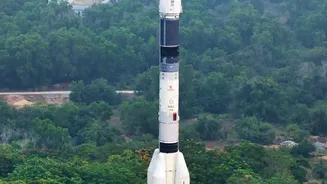
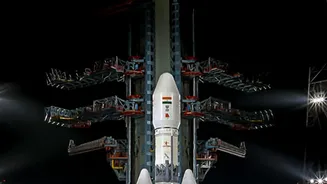
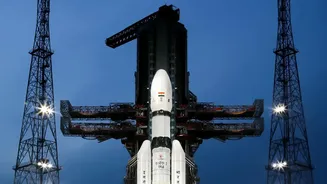
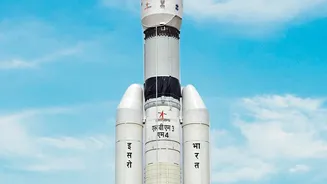
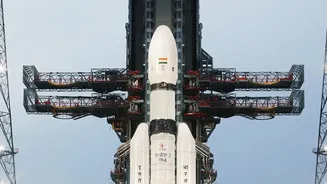
Sending humans to space is exponentially more complex than launching satellites. The absolute, non-negotiable priority is crew survival. This is the core principle behind the series of exhaustive tests for the Gaganyaan programme. ISRO is simulating every
potential failure to build a spacecraft with robust safety nets. Central to this is the Crew Escape System (CES), which acts like a highly advanced ejection seat for the entire crew capsule. If any anomaly is detected during launch, the CES is designed to fire powerful motors that pull the crew module away from the rocket in milliseconds, carrying the astronauts to a safe distance before parachutes deploy for a gentle landing. This system has already been tested successfully in a dramatic in-flight abort demonstration where it pulled the capsule away from a rocket travelling faster than the speed of sound.
Testing for a Safe Return
A successful mission isn't just about reaching orbit; it's about coming home. A significant part of the current test campaign revolves around the crew module's return journey. One of the most important trials is the Integrated Air-Drop Test (IADT). In these tests, a simulated crew module, weighing nearly 5.7 tonnes, is lifted by an Indian Air Force Chinook helicopter to an altitude of about 3 kilometres and dropped. This test validates the entire parachute deployment sequence, which is a complex, multi-stage process. It involves a series of smaller drogue and pilot parachutes that stabilise and slow the capsule before three massive main parachutes open to ensure a soft splashdown in the sea. The success of these drop tests builds confidence in the system that will ultimately be responsible for the final, gentle touchdown of the crew.
Thousands of Tests for One Goal
The scale of testing is immense, with some officials noting that around 8,000 tests have already been conducted for the Gaganyaan programme. Recent ground-based qualification trials have focused on other life-critical events. One such test validated the Crew Module Uprighting System (CMUS), which uses inflatable bags to ensure the capsule stays upright after splashing down in the ocean, even in rough seas. Another confirmed the clean separation of the umbilical cords that connect the crew module to the service module before re-entry. A third test ensured the module's structure can withstand the pyrotechnic force of the apex cover being blown away to deploy the parachutes. Each test, whether on the ground or in the air, is a deliberate step towards building a human-rated system where every component has proven its reliability.
The Road to India's First Crewed Flight
These safety tests are crucial milestones on the path to the first uncrewed Gaganyaan mission (G1), which is targeted for the final quarter of 2026. This will be followed by further uncrewed missions before the first historic crewed flight, currently planned for 2027. Group Captain Angad Pratap, one of the four astronauts selected for the mission, has noted that such delays and rigorous testing are a natural part of developing a new human spaceflight programme from scratch. The astronauts are deeply involved in the process, contributing their operational knowledge to the spacecraft's design. As ISRO meticulously checks and re-checks every system, India is not just building a spacecraft; it is laying the foundation for a future that includes its own space station and even crewed lunar missions.