




Meet the Astronaut-Physician
Anil Menon is not a typical astronaut, if such a thing even exists. Born in Minneapolis, Minnesota, to an Indian father and a Ukrainian mother, his career is a remarkable blend of medicine, military service, and aerospace innovation. He is a lieutenant
colonel in the U.S. Space Force and an actively practicing emergency medicine physician. His experience isn’t confined to hospital emergency rooms; he has been a first responder on the front lines of global crises, including the 2010 earthquake in Haiti and the 2015 earthquake in Nepal. He has even provided medical care to climbers at Mount Everest. This background in what’s known as “wilderness medicine”—providing care in extreme and remote environments—makes him uniquely suited for the challenges of space. Before being selected as a NASA astronaut in 2021, he had already supported ISS crews as a flight surgeon, living and working in Russia for months at a time.
The Mission at a Glance
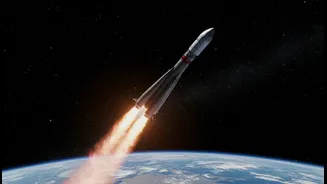
Menon’s first spaceflight is scheduled to launch on Tuesday, July 14, 2026, from the Baikonur Cosmodrome in Kazakhstan. He will be flying aboard a Roscosmos Soyuz MS-29 spacecraft alongside Russian cosmonauts Pyotr Dubrov and Anna Kikina. Their destination is the International Space Station (ISS), where Menon will serve as a flight engineer for Expeditions 74 and 75. The mission is a long-duration stay, projected to last approximately eight months, with a return to Earth planned for April 2027. While aboard the orbiting laboratory, he will join an international crew of astronauts and cosmonauts, continuing the two-and-a-half-decade legacy of continuous human presence in low-Earth orbit. NASA will provide live coverage of the launch and docking, making the event accessible worldwide.
The Doctor Is In... Orbit
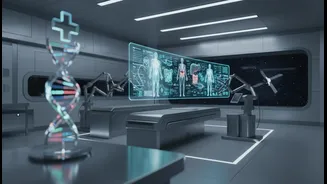
This is where Menon's story gets particularly interesting. His mission isn't just about getting to space; it's about figuring out how humans can live there for longer and venture farther. A significant portion of his eight-month stay will be dedicated to medical and biological science. He will conduct experiments to better understand how long-duration spaceflight affects the human body, particularly focusing on changes to blood flow, blood composition, and vein structure in microgravity. Crucially, he will also test technologies that could be vital for future deep-space missions to the Moon and Mars. This includes attempting to produce intravenous (IV) fluids from the station’s drinking water and using artificial intelligence with augmented reality to perform ultrasounds, a step toward more autonomous medical care for astronauts far from home.
From SpaceX Pioneer to NASA Astronaut
Before putting on the NASA suit, Menon was a pivotal figure in the commercial space race. In 2018, he joined SpaceX as its very first flight surgeon. In that role, he was instrumental in building the company's medical program from the ground up to support human spaceflight. He helped launch the first humans on a commercial spacecraft during the historic Demo-2 mission and supported subsequent crewed flights, ensuring the health and safety of astronauts flying on the Crew Dragon capsule. This experience places him at the intersection of NASA's legacy and the new era of commercial partnerships that are driving the future of space exploration. His career path reflects the modern reality of spaceflight, where public agencies and private companies work hand-in-hand.
A Legacy in the Stars
For many in India and across the diaspora, Menon's mission is a profound source of pride. He follows in the footsteps of other astronauts of Indian origin like Kalpana Chawla and Sunita Williams, continuing a legacy of contribution to human space exploration. His connection to India is personal; he spent a year in the country as a Rotary Ambassadorial Scholar to support polio vaccination efforts. His journey from a young man working on public health in India to a NASA astronaut preparing to conduct advanced medical research in orbit is a powerful narrative. Understanding this full context is the smarter way to follow his mission. It's not just about watching a rocket launch; it's about appreciating the journey of a uniquely qualified individual whose work on the ISS will help pave the way for humanity's next giant leap.