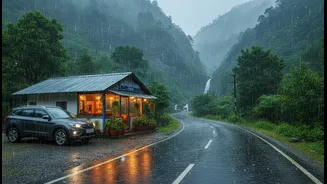









The Hazards of Monsoon Driving
Driving during the monsoon is unlike any other time of year. The most significant dangers include poor visibility due to heavy rain and fog, and slippery roads that dramatically increase braking distances. Waterlogging can conceal deep potholes or wash
away parts of the road, creating new, unseen dangers. In hilly areas, the risk of landslides is a serious concern, which can block routes or prove fatal. The combination of these factors makes it essential to approach any monsoon journey with extra caution and meticulous planning. A sudden downpour can reduce visibility to near zero in seconds and turn a familiar road into a treacherous path.
Why Daylight Driving is Non-Negotiable
The single most effective safety rule for a monsoon trip is to drive only during daylight hours. Good visibility allows you to spot hazards like potholes, debris, or waterlogged patches well in advance. At night, heavy rain can scatter the light from your headlights, creating glare and making it even harder to see lane markings or the edge of the road. Driving in the daytime also means you are more likely to encounter other people and find help if you run into trouble. Wildlife is also more active at dusk and dawn, adding another potential hazard to driving in low-light conditions. Plan your travel itinerary to ensure you reach your destination well before sunset.
Strategically Planning Your Route and Stops
Not all roads are created equal, especially in the monsoon. Before you leave, research your route thoroughly. Stick to national highways and major roads, as they are generally better maintained and have proper drainage. Avoid smaller, lesser-known shortcuts that Google Maps might suggest, as these can be more susceptible to damage and landslides. Check weather forecasts and local travel advisories for your intended route. Plan for reliable and safe stops along the way. Instead of pushing through a long drive, break it up with overnight halts in towns with good lodging options. Knowing you have a safe place to rest removes the pressure to continue driving in risky conditions if the weather turns severe.
Your Pre-Trip Vehicle Checklist
A well-prepared car is a safe car. Before embarking on a monsoon road trip, a thorough vehicle check is essential. Pay close attention to your tyres, ensuring they have adequate tread depth to grip wet roads and prevent aquaplaning. Check your braking system, as wet conditions can reduce its efficiency. Replace worn-out wiper blades to ensure a clear, streak-free view. Finally, test all your lights — headlights, taillights, brake lights, and indicators — as they are crucial for being seen by other drivers in low visibility. Topping up all essential fluids like engine oil, coolant, and brake fluid is also a wise precaution.
On-the-Road Safety Practices
Once you are on your way, adopt a defensive driving mindset. Reduce your speed significantly below the posted limits to give yourself more time to react. Maintain a much larger following distance between your vehicle and the one in front, as stopping takes longer on wet roads. Never attempt to drive through a waterlogged area if you are unsure of its depth; as little as a foot of water can be enough to stall most cars and cause serious engine damage. If visibility becomes too poor during a heavy downpour, the safest option is to pull over to a secure location and wait for the rain to subside. When driving on wet roads, apply the brakes gently to avoid skidding.
Essential Items for Your Monsoon Emergency Kit
Even with the best planning, things can go wrong. A well-stocked emergency kit can be a lifesaver. Your kit should include a first-aid box, a powerful flashlight with extra batteries, and a portable power bank for your phone. Pack non-perishable snacks and plenty of drinking water in case you get stranded. A tow rope, jumper cables, and a basic tool kit are also invaluable. It's also smart to have waterproof jackets or ponchos and a few towels or blankets to stay dry and warm. Keeping these essentials handy ensures you are prepared for unexpected delays or emergencies on the road.