


Venus and the Moon: A Brilliant Pair
September kicks off with a beautiful sight in the evening sky. On September 2, the dazzlingly bright planet Venus will appear very close to Spica, the brightest star in the constellation Virgo. A few evenings later, on September 14, look for a slender
crescent Moon cozying up to Venus, creating a stunning photo opportunity shortly after sunset. Venus will be exceptionally bright this month, reaching its peak brilliance on September 22, making it an unmissable beacon in the west after the Sun goes down.
The Moon's Tour of the Planets
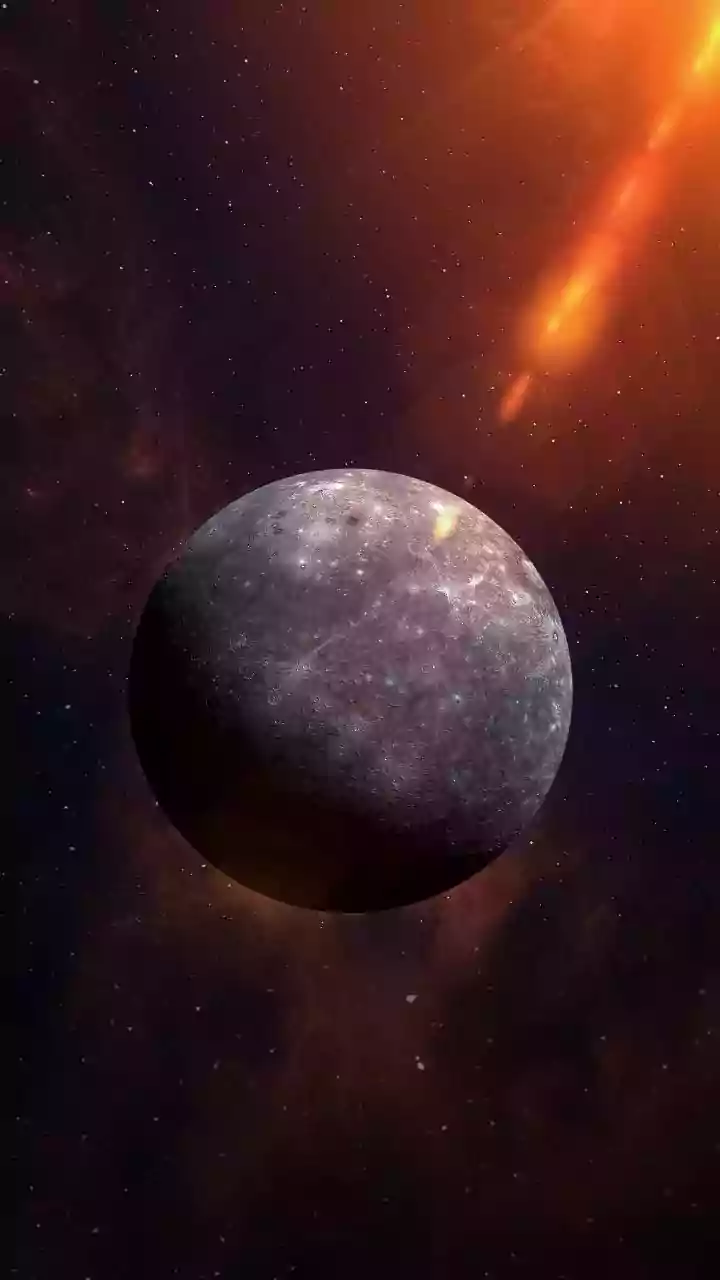
The Moon acts as our celestial guide throughout the month, pointing the way to several planets. From September 6 to 14, the Moon will make a series of close approaches to Mars, Jupiter, Mercury, and Venus. Key dates for your calendar include the Moon's proximity to Mars on September 6 and Jupiter on September 8. These conjunctions are easily visible to the naked eye and offer a great way to identify the planets as they wander across the star fields.
The September Equinox: A Moment of Balance
Mark your calendars for September 23, the date of the September Equinox in 2026. For the Northern Hemisphere, this event signals the astronomical start of autumn. On this day, the Sun shines directly over the equator, and the lengths of day and night are nearly equal across the globe. In India, the equinox officially occurs in the early morning at 5:35 AM IST. It represents a point of balance in Earth's journey around the Sun before the nights begin to grow noticeably longer.
Neptune at Opposition: A Challenge for Observers
For those with a telescope, September 26 presents a unique opportunity. The distant ice giant Neptune will be at opposition, meaning Earth will be directly between it and the Sun. This is the point in the year when Neptune is at its closest and brightest, appearing in the constellation Aquarius. While it will still be too faint to see with the naked eye, a good telescope and a dark sky away from city lights will reveal it as a tiny, blueish disk. It's a rewarding challenge for dedicated amateur astronomers.
The Harvest Moon Lights Up the Night
The month concludes with the beautiful Full Harvest Moon on September 26. This particular full moon is named 'Harvest Moon' because it is the one that falls closest to the autumnal equinox. Historically, its bright light, rising around sunset for several consecutive evenings, helped farmers extend their workday to bring in the harvest. Look for the full moon to rise in the east as the sun sets in the west, painting the sky with a brilliant glow. This full moon is also known as the Corn Moon and marks Bhadrapada Purnima in the Hindu calendar.
Minor Meteor Showers
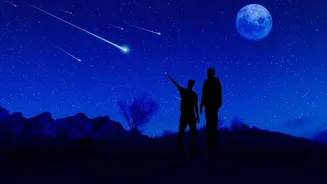
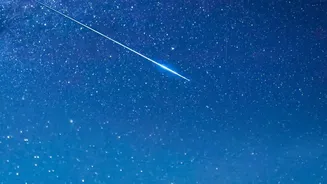
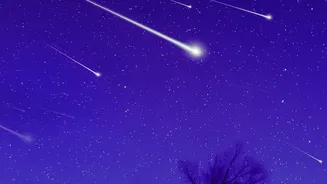
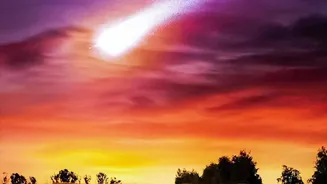
While September doesn't host any major meteor showers like the Perseids in August or the Geminids in December, there is some minor activity. The Epsilon-Perseid meteor shower peaks around September 9, but it is a weak shower, producing only a handful of meteors per hour. The Orionids become active from September 26, though their peak isn't until October. Your best bet for seeing 'shooting stars' this month is to find a dark location during the New Moon on September 11, when the sky will be at its darkest, and simply watch for sporadic meteor activity.