




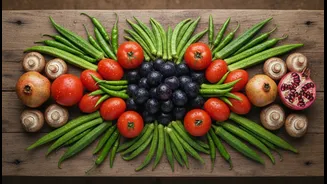



Why Your Diet Needs a Monsoon Makeover
The rainy season, known in Ayurveda as 'Varsha Ritu', is a time when our digestive fire, or 'Agni', is considered to be at its weakest. The damp, humid environment is also a perfect breeding ground for bacteria, making our bodies more susceptible to infections.
This is why cravings for heavy, fried snacks like pakoras and samosas, though tempting, can lead to bloating and indigestion. Shifting to a diet of warm, light, and freshly-cooked meals is one of the most effective ways to support your gut health and strengthen your immunity during this time. Choosing ingredients that are naturally harvested during this season ensures they are at their nutritional peak, offering more flavour and health benefits.
Embrace these Monsoon Vegetables
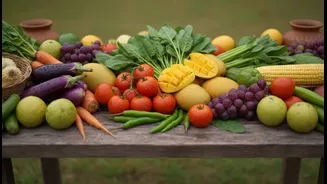
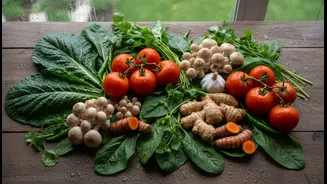
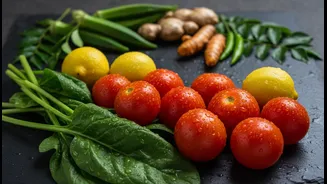
While it's wise to be cautious with raw leafy greens which can harbour contaminants, the monsoon offers a bounty of other incredible vegetables. Gourds are the stars of the season. Vegetables like bottle gourd (lauki), bitter gourd (karela), ridge gourd (turai), and pointed gourd (parwal) are light, easy to digest, and packed with essential nutrients. Bitter vegetables are traditionally consumed during this time to support liver function and immunity. Other good choices include corn (bhutta), tomatoes, beans, and okra (bhindi). These vegetables grow above ground and have a natural resilience to the season's challenges. Steaming or cooking them in light curries is an excellent way to enjoy their benefits.
Power Up with Seasonal Fruits
Monsoon is a wonderful time for fruits that boost your Vitamin C intake, a crucial antioxidant for a strong immune system. Juicy lychees, though their season is brief, are packed with antioxidants. Pears are another excellent choice, being nutrient-dense, low in calories, and high in fibre. Don't miss out on jamun, a low-calorie fruit loaded with iron, potassium, and vitamins. Pomegranates and papayas are also highly recommended for their immunity-boosting and digestive properties. It's best to buy whole fruits and cut them just before eating to avoid contamination that can occur with pre-cut fruits sold in the open.
The Magic of Spices and Herbs
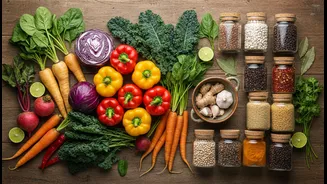
Indian kitchens are already treasure troves of spices that are particularly beneficial during the monsoon. Ginger, garlic, and turmeric are a powerful trio with antiviral, antibacterial, and anti-inflammatory properties. Incorporating them into your daily cooking—in dals, soups, or teas—can help fight infections and soothe flu-like symptoms. Other spices like cumin (jeera), black pepper (kali mirch), and ajwain (carom seeds) aid digestion and prevent the bloating and heaviness that can be common in this season. A warm cup of herbal tea made with ginger and tulsi can be a wonderfully comforting and healing daily ritual.
Grains and Pulses for Comfort and Health
When it comes to staple foods, think light and easy to digest. Khichdi, made from rice and moong dal, is the quintessential monsoon comfort food for good reason. It's a balanced, one-pot meal that nourishes without burdening the digestive system. Moong dal in general, whether as a soup or a simple dal, is highly recommended. Old grains like barley and wheat are also considered good choices. Opting for warm, freshly prepared meals over stale or refrigerated food is a simple but critical rule for staying healthy.