





The Old Way vs. The New Way
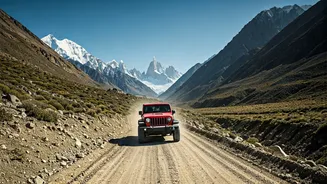
For decades, a Himalayan drive was a test of pure mechanical skill and brute-force engineering. It required a rugged 4x4, an expert driver who could master techniques like cadence braking, and a healthy dose of luck. A mistake on a slippery incline or a steep,
gravelly descent could be catastrophic. While the thrill of that challenge remains, the margin for error was perilously small. Today’s advanced SUVs have introduced a new layer of safety: an electronic co-pilot. These systems don’t replace driver skill, but they provide an intelligent safety net, reacting faster than any human can to prevent a loss of control. They transform a journey of constant anxiety into one of managed adventure, opening up these majestic landscapes to more drivers.
Mastering Descents: Hill Descent Control (HDC)
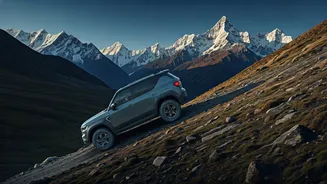
Imagine descending from a high pass like Zoji La. The road is steep, narrow, and covered in loose gravel. The old technique involved using a low gear and manually pumping the brakes to avoid overheating them and losing control. Hill Descent Control (HDC) automates this entire process. With the push of a button, the system uses the ABS to individually brake the wheels, keeping the vehicle at a slow, constant speed (typically 5-10 km/h) without you ever touching the brake pedal. This allows you to focus 100% on steering through the treacherous path ahead. It prevents skids caused by locking wheels and ensures your brakes remain cool and effective for when you really need them. It's not a gimmick; it’s a game-changer for steep, low-traction descents.
When Grip is Gold: ESP and Traction Control
Himalayan weather is famously unpredictable. A sunny road can quickly become a slushy mess or, worse, develop patches of black ice. This is where an Electronic Stability Program (ESP) and Traction Control System (TCS) become your most important safety features. TCS detects when a wheel starts to spin due to lack of grip and automatically reduces engine power or applies the brake to that wheel, redirecting power to the wheels that still have traction. ESP is even smarter. It uses sensors to detect if the vehicle is starting to skid or swerve (oversteer or understeer). If it senses a loss of control, it instantly brakes individual wheels to bring the SUV back in line. On a winding mountain road with a sheer drop on one side, this split-second intervention can be the difference between a minor scare and a major incident.
The Uphill Battle: Hill Start Assist (HSA)
One of the most common—and stressful—situations in the mountains is stopping on a steep incline, perhaps behind a truck or for a traffic jam. When you move your foot from the brake to the accelerator, the vehicle can roll backwards. Hill Start Assist (HSA) solves this. The system automatically holds the brakes for 2-3 seconds after you release the pedal, giving you ample time to accelerate smoothly without rolling back. While it sounds simple, it reduces driver fatigue and prevents dangerous rollbacks into vehicles behind you or towards a cliff edge. It's a small feature with a huge impact on confidence and safety during a long mountain climb.
Smarter Than 4x4: Terrain Response Systems
While a traditional 4x4 system provides power to all four wheels, modern Terrain Response systems (found in vehicles from Tata, Mahindra, Land Rover, and more) act like a central brain for the drivetrain. These systems allow the driver to select a mode—like 'Snow,' 'Mud & Ruts,' or 'Rock Crawl'—from the dashboard. Each mode adjusts multiple vehicle parameters simultaneously: throttle response, gear shifts, traction control sensitivity, and power distribution. In 'Snow' mode, for instance, the throttle becomes less sensitive to prevent wheelspin, and the traction control becomes more aggressive. This intelligent adaptation ensures the SUV is perfectly configured to handle the specific challenge you’re facing, providing optimal grip and stability without requiring you to be a pro off-roader.