




Goodbye Sticker, Hello eVisa
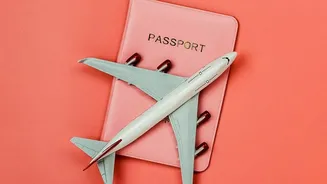
The familiar visa sticker, or vignette, that has long been a fixture in Indian passports is now a thing of the past for UK travel. Britain has completed its transition to a fully digital system where successful applicants are issued an electronic visa,
or eVisa. This means your permission to travel is a secure digital record linked to your passport, accessible via a UK Visas and Immigration (UKVI) online account. The application process itself remains familiar: you apply online, then attend a Visa Application Centre to provide biometric data like fingerprints and a photo. However, the key difference is in the outcome. Instead of a physical sticker, you receive a notification to access your status digitally.
The Significance of Five Lakh Visas
The headline figure of 'more than five lakh' refers to the over 500,000 visas granted to Indian nationals in the year ending March 2026, according to official Home Office statistics. This number firmly establishes India as one of the UK's most critical travel markets. The breakdown of these numbers reveals a wide range of travellers, from tourists and business people to a huge contingent of students. In the year ending March 2026, over 90,000 sponsored study visas were granted to Indian nationals, making them the largest group of international students in the UK. This massive volume of travellers is precisely why the shift to a more efficient digital system is so significant.
Clearing Up a Common Confusion
It's important to distinguish the new eVisa from the UK's other new system, the Electronic Travel Authorisation (ETA). The ETA is a simpler, cheaper pre-travel clearance for nationalities that do not need a visa for short stays, such as citizens of the US, Canada, and EU countries. Indian passport holders are not eligible for the ETA and must still apply for a standard visa for their travel purpose, be it tourism, work, or study. The new eVisa system for Indians digitises the visa you already have to apply for; it does not replace the need for that visa with an ETA. The change is about how the visa is issued and verified, not the requirement itself.
A Boost for UK-India Ties
This move is not happening in a vacuum. It aligns with the UK's broader strategy to strengthen its relationship with India, as outlined in the UK-India 2030 Roadmap. By making the immigration process more streamlined and secure, the UK aims to encourage more legitimate travel that benefits both economies. The sheer number of travellers has led to increased air connectivity, with the average number of weekly flights between the two countries rising to 178 in 2026. Looking forward, Britain’s national tourism agency, VisitBritain, forecasts that visits from India could reach nearly one million a year by 2030, with spending projected to hit £1.5 billion.
The Real Travel Lesson
So, what is the ultimate lesson from this shift? It’s twofold. First, it highlights the unstoppable trend of border digitisation. Physical documents are being replaced by secure, digital proof of identity and permission, a model being adopted worldwide to enhance security and efficiency. For travellers, this means ensuring your online details are always accurate and your passport is correctly linked to your UKVI account to avoid issues. Second, and more importantly, it underscores the growing influence of the Indian traveller. As hundreds of thousands of Indians travel abroad for leisure, business, and education, countries are being compelled to modernise their systems to manage the volume and facilitate smoother journeys. The UK's eVisa shift is a clear acknowledgement that making travel easier for Indians is no longer just a courtesy, but a strategic necessity.