




The Magic of Korean Cucumbers
In Korean cooking, cucumbers are more than just a garnish; they are a key ingredient in a variety of beloved side dishes known as banchan. These small dishes are served alongside the main course, adding layers of flavour, texture, and colour to every
meal. Korean cucumber preparations are celebrated for their signature crunch and their ability to balance spicy, sweet, and tangy notes. Using ingredients like gochugaru (Korean chilli flakes), sesame oil, garlic, and vinegar, these recipes turn a simple vegetable into something truly special. Whether you're a seasoned fan of Korean food or a curious newcomer, these dishes are incredibly easy to make and enjoy at home.
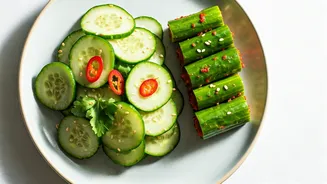
The Classic: Oi Muchim (Spicy Cucumber Salad)
Oi Muchim is arguably the most famous Korean cucumber dish, and for good reason. It’s a fast, fresh, and fiery salad that comes together in minutes. To make it, thinly slice cucumbers (Persian or English work well) and toss them with a dressing of gochugaru, soy sauce, sesame oil, minced garlic, a little sugar, and a splash of rice vinegar. Some recipes call for salting the cucumbers for about 15 minutes first to draw out excess water, which helps them stay extra crunchy. After a thorough mixing, the salad can be served immediately for a super fresh taste or chilled for 30 minutes to let the flavours meld. It’s the perfect, zesty companion to grilled meats, rice bowls, or even as a standalone snack.
The Kimchi Version: Oi Sobagi (Stuffed Cucumber Kimchi)
For those who love the complex, fermented tang of kimchi, Oi Sobagi is a must-try. This dish involves stuffing small cucumbers with a flavourful paste, creating a unique summer kimchi that's both crunchy and bold. Typically, pickling cucumbers are cut with a cross pattern, leaving the base intact to create a pocket. These are brined in salt to soften them slightly. The filling is a vibrant mixture of Korean chives (buchu), carrots, garlic, ginger, and a generous amount of gochugaru, often bound with a little fish sauce or a sweet rice flour paste. After stuffing, the cucumbers are left to ferment at room temperature for a day or two before being refrigerated. The result is a delightfully spicy and tangy pickle that gets more delicious with time.
The Long-Lasting Pickle: Oiji (Salt-Fermented Cucumbers)
Oiji is a traditional Korean method of preserving cucumbers for the long term. Unlike vinegar-based pickles, oiji is fermented simply in salt water, which gives it a deep, tangy flavour and a wonderfully chewy and crunchy texture. The process often involves pouring a boiling salt brine over whole cucumbers and letting them ferment for several days, sometimes re-boiling the brine to ensure proper preservation. Because they are quite salty on their own, oiji are not typically eaten straight from the jar. Instead, they are thinly sliced, soaked in fresh water to reduce saltiness, and then squeezed dry. From there, they can be seasoned (muchim-style) with gochugaru, sesame oil, and garlic to create a savoury side dish that pairs perfectly with rice.